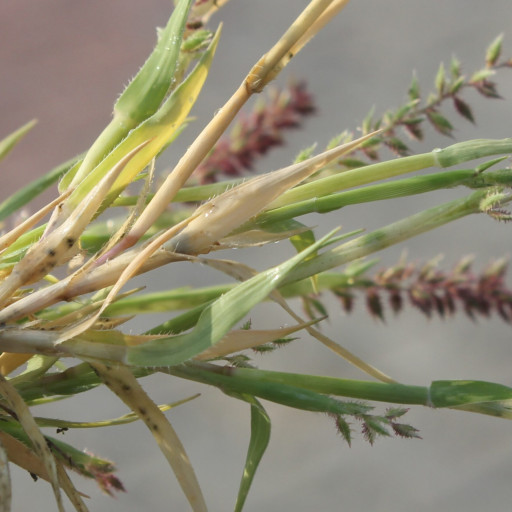
Plant Overview
Often called the Stalked Bur Grass or "Large Carrot-seed Grass," Tragus racemosus is a globetrotting survivor that has spread across the world by hitching rides on unsuspecting travelers. This low-growing annual is famous (or infamous) for its spiky seed heads that act like natural Velcro, clinging to socks, animal fur, and hiking boots to colonize new territories.
🔍 How to Identify
- 🌾 The Seed Head: The most distinct feature is the cluster of "burs"—small, prickly seeds covered in hooked spines that look like tiny, prehistoric maces.
- 🍃 Leaf Margins: The leaf blades are short and flat, featuring very distinct, stiff white hairs along the edges (margins) that make them feel rough to the touch.
- 🌱 Growth Habit: It typically grows in small, spreading tufts that stay close to the ground, creating a "mat" effect in sandy or disturbed soil.
🏡 In Your Garden
- 🏜️ Soil Preference: This grass is a specialist in "tough" spots. It thrives in sandy, gravelly, or compacted soils where more delicate plants might wither, often appearing along the edges of driveways or footpaths.
- 👟 The Hitchhiker Strategy: It doesn’t rely on the wind to spread; it relies on movement. Because the seeds are designed to grab onto anything that brushes past, a single walk through a patch can result in you "planting" it all over your property.
⚠️ Safety & Toxicity
- 🐕 Physical Irritant: While not chemically toxic to humans or pets, the burs are a significant mechanical nuisance. They can become painfully lodged in a dog's paws, between toes, or even inside long-haired coats.
- 🌵 Barefoot Warning: The dried seed heads are sharp enough to be quite uncomfortable for barefoot gardeners or children playing in the grass.
✨ Fun Fact
The genus name Tragus is derived from the Greek word for "goat." This is likely a nod to the plant’s rugged nature and its tendency to grow in the harsh, dry environments where goats are often found grazing.

Detailed Care Instructions
To grow Tragus Racemosus plant, also known as bottlebrush grass or lovegrass, follow these steps:
- Soil: Choose a well-draining soil mix with equal parts of sand, loam, and compost. This plant can tolerate a wide range of soil types, but it prefers slightly acidic to neutral pH levels (around 6.0-7.5).
- Location: Select a sunny spot for your Tragus Racemosus plant. It thrives in full sun but can tolerate partial shade as well.
- Planting: Sow the seeds directly in the soil in the spring or early summer when the temperature starts to warm up. Lightly press the seeds into the soil and cover them with a thin layer of soil mix. Space each seed 6-12 inches apart.
- Watering: Keep the soil consistently moist but not waterlogged. Water the plant deeply once or twice a week, depending on the weather and soil conditions. Avoid overwatering, as it can lead to root rot.
- Mulching: Apply a layer of organic mulch around the plants to help retain moisture, suppress weed growth, and regulate soil temperature.
- Fertilizer: Tragus Racemosus is a native grass that doesn't require much fertilization. However, you can apply a slow-release, balanced fertilizer once or twice a year in early spring or late summer to give it a boost.
- Maintenance: Trim the plant in late winter or early spring to remove dead or damaged foliage. This will encourage new growth and maintain a tidy appearance.
- Pests and Diseases: Tragus Racemosus is generally resistant to pests and diseases. However, keep an eye out for possible issues like aphids or fungal diseases. If necessary, treat pests with insecticidal soap or remove affected plant parts.
- Propagation: This plant can self-seed or spread naturally through rhizomes. If you want to propagate it further, collect seeds from mature plants in late summer and sow them in pots or trays filled with potting soil. Transplant the seedlings outdoors when they are large enough to handle.
- Division: Tragus Racemosus can also be divided in early spring. Dig up the clump and carefully divide it into smaller sections, making sure each section has roots and foliage. Replant the divided sections in prepared soil.
By following these guidelines, you should be able to grow a healthy and flourishing Tragus Racemosus plant.

Place in a bright room that is sun drenched almost all day. Or directly in a south-facing window.

The plant should be watered evenly, ensuring that the water reaches the roots but does not oversaturate the soil. It is important to water the plant regularly, but not excessively, as it prefers moist but well-drained soil. It may be beneficial to check the moisture level of the soil before watering, and adjust the frequency accordingly. During the growing season, the plant may require more frequent watering, but in the dormant season, it may require less. It is also important to use room temperature water and avoid getting water on the foliage to prevent fungal or bacterial growth.
To fertilize this plant, choose a well-balanced, all-purpose fertilizer. Follow the package instructions for dosage and frequency, but generally apply the fertilizer during the plant's active growing season, which is typically in the spring and summer months. Be sure to water the plant thoroughly before and after applying the fertilizer to avoid any damage to the roots. Additionally, consider supplementing with organic nutrients, such as compost or worm castings, to improve the soil quality and promote healthy growth.
For the Tragus Racemosus plant, it is best to use a well-draining soil that is rich in organic matter. This plant prefers a slightly acidic soil pH, so it is important to avoid using soil that is too alkaline. A good soil mix could be a combination of peat moss, perlite or vermiculite, and a small amount of sand for drainage. It is also important to ensure that the soil is kept moist but not waterlogged, as too much water can lead to root rot. Adding a layer of mulch on top of the soil can help retain moisture and keep the roots cool.
Tragus Racemosus plant can be propagated using stem cuttings. To do this, select a healthy stem from the parent plant and cut it just below a node. Remove all leaves from the bottom half of the stem and dip the cut end in rooting hormone powder. Plant the stem cutting in a pot filled with well-draining soil and keep it in a warm, bright location with indirect sunlight. Water the cutting regularly and mist it daily to keep the humidity high. In a few weeks, the cutting should develop roots and new growth.








