Plant Overview
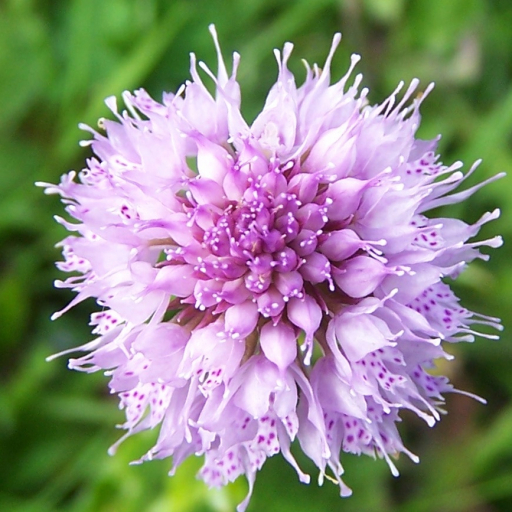
Often called the Globe Orchid or Round-headed Orchid, this botanical gem looks like a delicate pink sphere floating above the alpine grasses. Found primarily in the mountainous meadows of Europe, it is a prized sight for hikers and wildflower enthusiasts who explore high-altitude slopes. Its name honors the Austrian botanist Joseph Traunsteiner, reflecting its deep roots in European botanical history.
🔍 How to Identify
- 🌸 The Flower Head: Unlike most orchids that grow in long spikes, these tiny flowers are packed into a dense, pyramid-shaped cluster that becomes almost perfectly spherical as it matures.
- 🎨 Color Palette: The blooms range from a soft, pale lilac to a vivid rose-pink, often marked with tiny, darker purple freckles on the three-lobed "lip" of each tiny floret.
- 🍃 Leaf Structure: The plant features slender, unspotted, bluish-green leaves that clasp the stem and point strictly upwards, giving it a very tidy, vertical silhouette.
🏡 In Your Garden & Habitat
- 🏔️ Mountain Specialist: This orchid is a true "calcicole," meaning it craves limestone-rich soils. It is usually found in subalpine meadows where the air stays cool and the ground is consistently moist but never soggy.
- 🍄 Fungal Partnerships: Like many wild orchids, it survives through a complex "handshake" with underground mycorrhizal fungi. Because it relies on these specific local fungi to germinate and grow, it is notoriously difficult to cultivate in a standard home garden and should never be dug up from the wild.
⚠️ Safety & Toxicity
- ✅ Safe Status: Traunsteinera globosa is generally considered non-toxic to humans, cats, and dogs.
- 🛑 Conservation Alert: While it isn't poisonous, it is a protected species in many countries. Picking or damaging these plants is often illegal and highly detrimental to the local ecosystem, as they take many years to reach flowering maturity.
✨ Fun Fact
- 🐝 The Great Bamboozle: This orchid is a master of "food-deception." It produces absolutely no nectar, but its vibrant shape and scent trick bees and flies into visiting anyway. By the time the insect realizes there is no sugary snack, it has already been dusted with pollen to carry to the next flower!

Detailed Care Instructions
To successfully grow Traunsteinera Globosa plant, follow these steps:
- Choose the right location: Traunsteinera Globosa prefers partial shade to full shade. Find a spot in your garden that receives filtered sunlight or dappled shade throughout the day.
- Prepare the soil: The plant prefers well-draining, loamy soil with a slightly acidic pH (around 6.0 to 6.5). Amend the soil with organic matter like compost or peat moss to improve drainage and add nutrients.
- Sow the seeds: Traunsteinera Globosa is typically grown from seeds. Sow the seeds in late summer or early fall, as they require a cold stratification period to break dormancy. Sow the seeds on the soil surface and gently press them down. Do not cover them with soil, as the seeds need light for germination.
- Provide consistent moisture: Keep the soil consistently moist but not waterlogged, as excessive moisture can cause rot. Water the plants regularly, especially during dry periods. Avoid overhead watering, if possible, as it can lead to fungal diseases.
- Mulch the area: Apply a layer of organic mulch around the plants to retain moisture, suppress weed growth, and provide insulation.
- Monitor and maintain: Regularly monitor the plants for any signs of pests or diseases, and take appropriate action if needed. Remove any weeds that compete for nutrients and space.
- Wait for blooming: Traunsteinera Globosa plants typically bloom in late spring to early summer. Be patient, as it may take a few years for the plants to establish and produce flowers.
- Propagation: If you already have a Traunsteinera Globosa plant, you can propagate it by dividing the rhizomes in late summer or early fall. Carefully dig up the plant, separate the rhizomes, and replant them in a suitable location.
Remember, Traunsteinera Globosa is a rare and endangered plant species in some regions, so it is important to ensure that you are sourcing it responsibly and legally.

Place in a bright room that is sun drenched almost all day. Or directly in a south-facing window.

To water this plant, it is important to keep the soil consistently moist, but not waterlogged. Allow the top inch of soil to dry out slightly before watering again. Water the plant deeply once a week, allowing the water to soak into the soil deeply, and making sure to avoid getting water on the leaves. Use room temperature water that is free of chlorine or other chemicals. Consider using rainwater or filtered tap water.
The Traunsteinera Globosa plant should be fertilized once a month during its growing season, which is typically from spring to summer. Use a balanced fertilizer with equal amounts of nitrogen, phosphorus, and potassium. Dilute the fertilizer to half strength and apply it to the soil around the base of the plant. It's important not to over-fertilize the plant, as this can result in burn or damage to the roots. Only fertilize during the growing season and avoid fertilizing during the plant's dormant period.
The soil should be well-draining and slightly alkaline with a pH between 6.5 and 7.5. It should be rich in organic matter and nutrients such as phosphorus and potassium. A mixture of sandy loam and peat moss can be used as a growing medium. It is important to avoid using heavy clay soils as they can retain too much water and lead to root rot. Additionally, the soil should not be too wet or too dry as this can also adversely affect the growth of the plant. Generally, Traunsteinera Globosa prefers a slightly moist but not waterlogged soil.
To propagate this plant, you will need to start by identifying a healthy and mature plant that you want to propagate. Carefully dig around the root system of the plant and gently remove a portion of the rhizome. Make sure the rhizome is healthy and has several growth points.
Separate the rhizome into smaller pieces, keeping at least one growth point per division. Use a sharp and clean knife to cut the rhizome into small sections, making sure each section has some roots and foliage attached.
Prepare a well-draining potting mix and place the rhizome sections on the surface of the soil, making sure the growth points are facing up. Cover the rhizomes with a thin layer of soil, water them lightly, and place the pot in a bright and warm location. Keep the soil moist but not overly wet, and avoid waterlogging the plant.
The rhizomes should begin to sprout in a few weeks. Once the new growth reaches at least 4 inches tall, you can transplant the young plants into individual pots or directly into the garden. Be sure to keep them well-watered and fertilized as they establish themselves.








