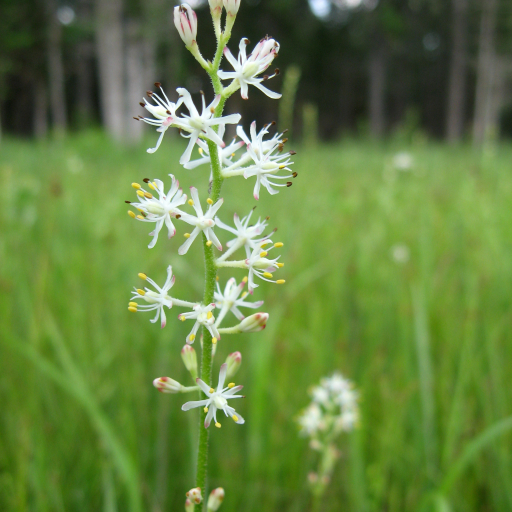
Plant Overview
Known as the Coastal False Asphodel, this elegant wildflower hides a sticky secret beneath its delicate white blossoms. Found primarily in the moist, sun-drenched savannahs of the Southeastern United States, it was long thought to be a simple, non-predatory lily relative. However, recent botanical breakthroughs have revealed that this "wolf in sheep's clothing" is actually a cryptic carnivore, trapping and digesting insects to survive in nutrient-poor soils.
🔍 How to Identify
- 🌸 The Inflorescence: It features a dense, spike-like cluster (raceme) of small, star-shaped creamy white flowers that bloom from the bottom upward.
- 🍯 Sticky Stems: The flowering stalk is covered in tiny, reddish glandular hairs that produce a glue-like resin designed to snare small flies and gnats.
- 🍃 Grass-like Foliage: Its leaves are long, narrow, and bright green, forming a basal tuft that can easily be mistaken for ornamental grass when the plant is not in bloom.
🏡 In Your Garden
- 💧 Soggy Feet Required: This species is a true wetland specialist, thriving in bogs and wet pine barrens. In a garden setting, it requires acidic, peat-heavy soil that stays consistently saturated to mimic its marshy native habitat.
- ☀️ Sun Seeker: Unlike many delicate woodland lilies, Triantha racemosa craves full sun. High light levels are essential for the plant to produce enough energy for its sticky traps and to fuel its brilliant summer flowering.
⚠️ Safety & Toxicity
- 🛡️ Non-Toxic: Triantha racemosa is not known to be poisonous to humans, cats, or dogs. It is safe to handle and grow in residential settings.
- 🐜 Sticky Residue: While the plant isn't toxic, the resin on the stems is incredibly tacky. It won't harm your skin, but it can be a bit difficult to wash off if you brush against the flowering stalks.
✨ Fun Fact
For centuries, scientists missed its carnivorous nature because the plant is a "smart" hunter. It keeps its sticky traps located on the stem, safely away from its flowers. This ensures it doesn't accidentally eat the very bees and butterflies it needs for pollination—a brilliant evolutionary compromise known as the "pollinator-prey conflict."

Detailed Care Instructions
Triantha racemosa, also known as rush lily, can be grown successfully in a garden or outdoor container. Here are some tips for growing this plant:
- Location: Choose a location that receives full to partial sun, as rush lilies thrive in bright, indirect light.
- Soil: Plant rush lilies in well-draining soil that is rich in organic matter. They prefer slightly acidic soil with a pH of 6.0 to 6.5.
- Watering: Keep the soil consistently moist, but not waterlogged. Water the plant regularly, especially during dry periods.
- Fertilization: Apply a balanced fertilizer to the plant in spring and summer to promote healthy growth and blooming.
- Propagation: Rush lilies can be propagated by division. Divide the plant in early spring or late summer to create new plants.
- Pruning: Trim back any dead or yellowing foliage to promote new growth and maintain the plant's appearance.
- Pest and disease control: Keep an eye out for any pests or diseases that may affect rush lilies, and treat them promptly with appropriate methods.
By following these tips, you can successfully grow Triantha racemosa plants in your garden or outdoor container.

To water the Triantha Racemosa plant, it is important to provide a consistent and even watering schedule. This plant thrives in moist soil, so it is essential to keep the soil consistently damp, but not waterlogged. When watering, ensure that the water reaches the roots of the plant to promote healthy growth. During the growing season, water the plant regularly, making sure that the soil does not dry out completely between waterings. In the winter months, reduce the frequency of watering to prevent the roots from becoming waterlogged. It is also beneficial to water the plant in the morning to allow excess moisture to evaporate throughout the day, reducing the risk of fungal diseases. Consider using a watering can or a gentle spray nozzle on a hose to water the plant gently and evenly. Monitor the soil moisture and adjust the watering schedule as needed to maintain optimal growing conditions for the Triantha Racemosa plant.
To fertilize the Triantha Racemosa plant, use a balanced liquid fertilizer diluted to half strength. Apply the fertilizer to the soil around the plant, avoiding contact with the foliage. Fertilize the plant once a month during the growing season, which is typically in the spring and summer months. Be sure to water the plant thoroughly after fertilizing to help the nutrients reach the root system. Avoid over-fertilizing as this can lead to nutrient imbalances and damage to the plant.
Triantha racemosa plants typically prefer a moist, well-draining soil that is rich in organic matter. A sandy loam soil with a slightly acidic to neutral pH level is ideal for these plants. The soil should be kept consistently moist, but not waterlogged, to ensure optimal growth and health of the plant. Adding organic mulch around the base of the plant can help retain moisture in the soil and provide additional nutrients as it breaks down. It is also recommended to fertilize the soil periodically with a balanced, slow-release fertilizer to promote healthy growth and vibrant blooms.
Triantha racemosa plant can be propagated through division of the rhizomes. To propagate this plant, carefully dig up the mature plant in the early spring or fall when the plant is dormant. Use a sharp, sterilized knife to cut the rhizomes into smaller sections, making sure each division has at least one healthy shoot or bud.
Plant the divided rhizomes in a well-draining soil mix and water thoroughly. Keep the newly planted divisions consistently moist but not waterlogged. Place the pots in a warm, bright location with indirect sunlight.
With proper care and maintenance, the divided rhizomes should start sending up new shoots and roots within a few weeks. Once the new growth is well-established, the propagated Triantha racemosa plants can be transplanted into the garden or larger containers.








