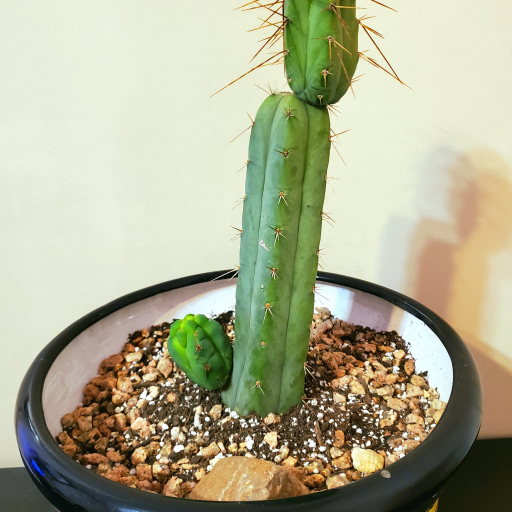
Plant Overview
Known to the world as the Bolivian Torch or Achuma, this striking columnar cactus hails from the high-altitude deserts of the Bolivian Andes. It has long been revered by indigenous cultures as a "sacred" plant, often appearing in shamanic traditions alongside its more famous cousins, the San Pedro and Peruvian Torch. With its glaucous blue-green skin and formidable spines, it adds a touch of ancient, sculptural beauty to any arid garden or bright windowsill.
🔍 How to Identify
- 🌵 Columnar Growth: This cactus grows vertically like a green skyscraper, reaching heights of up to 15 feet in the wild, though it remains much smaller in domestic pots.
- 🍯 Honey Spines: It is characterized by long, needle-like spines that range from honey-yellow to brown, typically emerging in groups of 2 to 4 from the areoles.
- 🎨 Glaucous Skin: The stem has a distinct matte, bluish-green hue (glaucous) which acts as a natural "sunscreen" against the intense mountain sun.
🏡 In Your Garden
- 🏜️ Drainage is Vital: Because it evolved in rocky, mountain terrain, this cactus is extremely sensitive to "wet feet." Use a gritty, mineral-heavy soil mix to ensure water never sits around the roots, as it is more prone to rot than some other Trichocereus species.
- ☀️ Sun Seeker: While it loves bright light, young plants can sunburn if moved from a dark room to direct summer sun too quickly. Gradually acclimate it to help it develop that beautiful blue waxy coating.
- 🌬️ Dormancy Needs: In the winter, it prefers to stay dry and cool. Stopping all watering during the coldest months prevents "etiolation"—the unattractive, thin, stretched growth that happens when a plant tries to grow without enough light.
⚠️ Safety & Toxicity
- 🌵 Physical Danger: The spines are very long and sharp; they can easily pierce skin or thin gardening gloves. Place it away from high-traffic areas where people or pets might brush against it.
- 🧪 Internal Toxicity: The Bolivian Torch contains various alkaloids, including mescaline. If ingested by pets or children, it can cause severe gastrointestinal distress, disorientation, and neurological effects. It should be treated as a decorative ornamental only.
✨ Fun Fact
In Bolivian folklore, a specific variation of this cactus with only four ribs is known as the "Cactus of the Four Winds." It is considered exceptionally lucky, and finding one in the wild is said to be a sign of great spiritual favor.

Detailed Care Instructions
To grow Trichocereus bridgesii, commonly known as Achuma or Bolivian torch cactus, follow these steps:
- Obtain a healthy Trichocereus bridgesii plant: You can buy a small plant or obtain a cutting from a mature plant.
- Choose a suitable pot: Use a well-draining pot with sufficient drainage holes to prevent waterlogging.
- Prepare the soil: Mix cactus soil or a well-draining potting mix with perlite or pumice to create a loose, porous medium that allows excess water to drain quickly.
- Plant the cactus: Place the plant in the pot, ensuring that the roots are well-covered with the soil mixture. Leave around 1-2 inches of space between the top of the soil and the rim of the pot to prevent overflow during watering.
- Watering: Trichocereus bridgesii prefers slightly moist soil. Water the plant thoroughly but allow the soil to dry out between waterings to avoid overwatering. During winter or dormancy months, water sparingly.
- Sunlight: Provide your cactus with bright, indirect sunlight. Trichocereus bridgesii can tolerate full sun but can also thrive in partial shade.
- Temperature and humidity: Trichocereus bridgesii is a hardy plant that can tolerate a wide range of temperatures. However, it prefers temperatures between 65-95°F (18-35°C). The plant can tolerate low humidity levels but can benefit from occasional misting during hot and dry periods.
- Fertilization: Apply a balanced cactus fertilizer or a slow-release granular fertilizer once every few months during the growing season to promote healthy growth.
- Repotting: As the cactus grows, you may need to repot it into a larger container to accommodate its expanding root system. Repotting is usually done every 2-3 years during spring.
- Pruning and maintenance: Trichocereus bridgesii rarely requires pruning. However, you can trim off any dead or damaged parts using clean, sterilized pruning shears.
- Pests and diseases: Keep an eye out for signs of pests such as mealybugs or spider mites. Remove them manually or use an appropriate insecticide if necessary. Avoid overwatering to prevent root rot.
Remember, the growth rate of Trichocereus bridgesii can vary depending on factors such as light, temperature, humidity, and care. Patience and consistent care are key to successfully growing this cactus.

Place in a bright room that is sun drenched almost all day. Or directly in a south-facing window.

When watering a Trichocereus Bridgesii plant, it is important to follow a few guidelines to ensure proper hydration without explicitly using its common names. Here's a detailed approach:
1. Observe the moisture level: Before watering, assess the soil moisture by gently inserting your finger about an inch deep into the soil. If it feels dry at this level, it indicates a need for watering.
2. Use clean water: Choose clean, room temperature water for irrigating the plant. It is advisable not to use hard water or heavily fluoridated water as they can be detrimental to the plant's health.
3. Pour watering slowly: Avoid pouring water rapidly and instead, pour it slowly and gradually around the base of the plant. This method helps to prevent excessive runoff and ensures that the water reaches the root system.
4. Allow drainage: Wait for a few moments and allow excess water to drain out from the bottom of the container. The plant should not sit in standing water, as this can lead to root rot and other problems. Ensure that the pot has drainage holes to facilitate water flow.
5. Schedule watering frequency: The frequency of watering depends on various factors such as the plant's environment, pot size, and the time of year. Generally, during the growing season or in warmer climates, you may need to water more frequently. However, it is advisable not to overwater, as Trichocereus Bridgesii plants are susceptible to root rot.
6. Monitor signs of thirst: To determine if the plant needs watering, observe its visual cues. Signs of a thirsty plant may include droopy or wrinkled stems, an overall dull appearance, or soil pulling away from the edge of the container. However, each plant is unique, so it is important to familiarize yourself with your specific Trichocereus Bridgesii plant's watering preferences over time.
Remember, it's crucial to adapt these guidelines based on individual plant needs and the specific conditions in which it is grown.
To properly fertilize the Trichocereus Bridgesii plant:
- Choose a well-balanced fertilizer: Select a fertilizer with a nitrogen (N), phosphorus (P), and potassium (K) ratio of around 10-10-10 or 20-20-20. This will provide a balanced nutrient supply to the plant.
- Dilute the fertilizer: Follow the instructions on the fertilizer packaging to determine the proper dilution ratio. Generally, a dilution of 1 teaspoon of fertilizer per gallon of water is suitable. Adjust the amount as per the instructions.
- Water the plant thoroughly: Before applying the fertilizer, water the plant thoroughly. This ensures that the soil is moist and helps prevent any potential fertilizer burn.
- Apply the diluted fertilizer: Pour the diluted fertilizer solution evenly around the base of the plant, avoiding direct contact with the stem or leaves. Take care not to over-fertilize, as this can harm the plant.
- Repeat at appropriate intervals: Generally, fertilizing every 4-6 weeks during the growing season (spring and summer) is recommended. However, adjust the frequency based on the specific recommendations provided by the fertilizer manufacturer.
- Monitor plant health: Regularly observe the plant for any signs of nutrient deficiency or excess, such as yellowing or browning of leaves. Adjust the fertilizer application if necessary.
Remember, it is important to research and understand the specific nutrient requirements of the Trichocereus Bridgesii plant to ensure successful fertilization.
When selecting soil for the cultivation of a Trichocereus Bridgesii plant, it is essential to consider its natural habitat and growing conditions. The ideal soil mixture for this plant should mimic its native environment to promote healthy growth and development.
Trichocereus Bridgesii plants are native to the Andes Mountains in South America, where they typically grow in rocky, well-drained soils. Therefore, a well-aerated and sandy soil mix is highly recommended. This type of soil allows for excellent drainage, which is crucial to prevent waterlogging and root rot.
To create the optimal soil mix, it is advisable to use a combination of organic and inorganic materials. A mix containing approximately 70% sandy soil or cactus-specific potting mix and 30% perlite or pumice is often preferred. This combination ensures proper drainage, while the added perlite or pumice adds extra porosity to the soil, enabling air circulation around the roots.
Organic materials, such as compost or aged cow manure, can also be added to the soil mix as they provide essential nutrients for the plant's growth. However, it's important not to overdo the organic matter as it can lead to excessive moisture retention, which may cause root issues.
Furthermore, it is worth mentioning that Trichocereus Bridgesii plants prefer a slightly acidic to neutral soil pH, ranging from 6.0 to 7.0. Testing the pH level of the soil periodically can help ensure the plant is in an optimal environment.
When repotting the Trichocereus Bridgesii plant, it is recommended to do so during the active growing season to minimize stress on the plant. Additionally, using a pot with ample drainage holes and a layer of rocks or gravel at the bottom can further facilitate proper drainage.
Overall, providing your Trichocereus Bridgesii plant with a well-draining, sandy soil mix will help mimic its natural habitat and provide the optimal conditions for healthy growth and development.
Trichocereus Bridgesii is a cactus species that can be propagated through various methods. Here's how you can propagate it:
- Obtaining the plant: Acquire a mature Trichocereus Bridgesii plant from a reputable source. It is important to start with a healthy and well-established specimen for successful propagation.
- Taking cuttings: Using a clean, sharp knife or pruning shears, select a healthy branch or stem segment from the parent plant. Ensure that the cutting is at least 6-12 inches long, as longer cuttings tend to root more successfully.
- Preparing the cutting: Allow the cutting to dry and callus over for a few days. This helps prevent rot as the cutting initiates root development. Place the cutting in a warm, well-ventilated location away from direct sunlight during the drying period.
- Choosing a rooting medium: Prepare a well-draining soil mixture suitable for cacti, or use a soilless medium such as perlite, vermiculite, or a mixture of peat moss and sand. This prevents excess moisture around the cutting, reducing the risk of rot.
- Rooting the cutting: Dip the base of the dried cutting in a rooting hormone powder to encourage root growth. Carefully make a hole in the rooting medium and insert the cutting, ensuring that at least one-third to one-half of the cutting is buried in the soil.
- Establishing suitable conditions: Place the cutting in a warm and bright location with indirect sunlight. Maintain a temperature of around 70-80°F (21-27°C) to promote root development. Avoid overwatering during this stage, as excessive moisture can lead to rot.
- Providing proper care: Mist the cutting occasionally to maintain humidity around the plant. Water sparingly, allowing the soil to dry out between waterings. After a few weeks, the cutting should begin to develop roots.
- Transplanting: Once the cutting has developed a substantial root system, it can be transplanted into a larger pot or planted directly in the garden, depending on your preference. Choose a well-draining soil and provide adequate sun exposure for healthy growth.
Remember, propagation can be a delicate process, and it may take some time for roots to form. Patience and careful attention to environmental conditions are key to successfully propagating Trichocereus Bridgesii.








