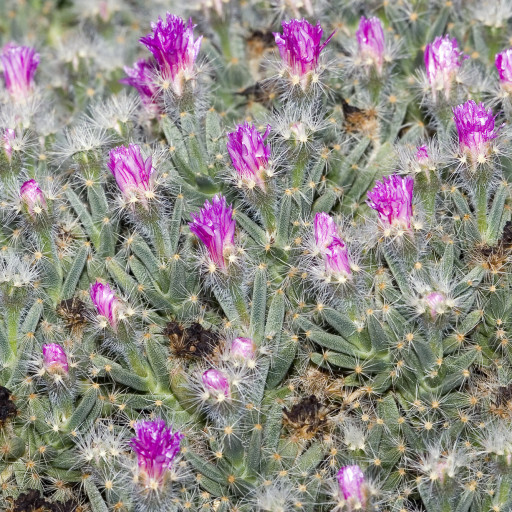
Plant Overview
Often called the Miniature Desert Rose or African Bonsai, this charming succulent from South Africa is a master of disguise. At first glance, you might mistake it for a tiny cactus due to the starry clusters of bristles on its leaf tips, but it is actually a member of the ice plant family. It is a favorite among enthusiasts because it naturally grows into a gnarled, ancient-looking "tree" shape with very little effort.
🔍 How to Identify
- 🌵 The Diadems: The most striking feature is the "crown" of white, radiating bristles at the tip of each fleshy leaf, resembling a tiny star or a sea anemone.
- 🌸 Vivid Blooms: During the sunnier months, the plant erupts in brilliant, daisy-like flowers in shades of deep magenta or purple that often completely hide the foliage.
- 🪵 The Caudex: It develops a thick, fleshy root system known as a caudex. Many growers lift this root slightly above the soil line to create a dramatic, weathered trunk appearance.
🏡 In Your Garden
- ☀️ Light Seeker: This plant craves bright, direct sunlight. If kept in the shade, it will "stretch" (etiolate), losing its compact bonsai look and failing to produce those iconic flowers.
- 💧 Breathable Roots: Because it stores so much water in its thickened roots, it is highly sensitive to rot. It requires a very gritty, fast-draining mineral soil—think more sand and pebbles than potting gold.
- ✂️ Natural Miniature: Unlike actual bonsai trees that require wire and constant pruning, Trichodiadema densum naturally stays small and mounded, making it perfect for small apartments or sunny windowsills.
⚠️ Safety & Toxicity
- 🐾 Pet Friendly: This succulent is generally considered non-toxic to cats, dogs, and horses, making it a "worry-free" addition to a household with curious pets.
- 🧤 Soft Touch: While the bristles on the leaf tips look like cactus spines, they are relatively soft. However, they can still be slightly irritating to very sensitive skin or get caught in fine pet fur.
✨ Fun Fact
The name Trichodiadema comes from the Greek words for "hair" and "crown." These "hair crowns" aren't just for show; in the wild, they help the plant trap morning dew and mist, channeling precious moisture down to the leaves in the parched South African landscape.

Detailed Care Instructions
To grow Trichodiadema densum, follow these steps:
- Purchase seeds or young plants from a reputable nursery or online store.
- Select a well-draining pot or container with drainage holes.
- Fill the pot with a well-draining mix, such as cactus or succulent soil.
- Place the seeds or young plants on the soil surface, or if planting seeds, lightly press them into the soil.
- Water the soil lightly, ensuring that it is evenly moist but not waterlogged. Avoid overwatering, as this can cause root rot.
- Place the pot in a sunny location, preferably with at least 6-8 hours of direct sunlight per day.
- Maintain a warm temperature between 70-90°F (21-32°C) throughout the growing season.
- Water the plant sparingly, allowing the soil to dry out slightly between waterings. Trichodiadema densum is a drought-tolerant plant that prefers dry conditions.
- Fertilize the plant sparingly, using a diluted succulent fertilizer once or twice during the growing season. Follow the instructions on the fertilizer package.
- If growing Trichodiadema densum outdoors, protect it from frost or extreme temperatures by moving it indoors or providing a frost cloth during winter.
- Trim or prune the plant to maintain its shape and encourage branching if desired.
With proper care and maintenance, Trichodiadema densum should grow and thrive. Remember to research and follow any specific care instructions or tips provided by the nursery or seed supplier for the best results.

Place in a window with dappled sun or a spot in the middle of a room. Or directly in a window facing west or east.

Trichodiadema Densum is a succulent plant that requires minimal watering. It is important to allow the soil to completely dry out before watering the plant again.
The best way to water Trichodiadema Densum is by using the "soak and dry" method. This involves thoroughly watering the plant until water runs out of the pot's drainage holes. Allow the plant to sit in the excess water for a few minutes before draining the water from the saucer.
After watering, allow the plant to completely dry out before watering again. This may take several weeks, depending on the environment and season. It is important to avoid overwatering, as this can lead to root rot and other issues.
It is also recommended to water Trichodiadema Densum from the bottom to avoid getting water on the leaves and causing damage. Simply place the pot in a tray of water and wait until the soil has absorbed the necessary amount of water.
Overall, Trichodiadema Densum is a low-maintenance plant that requires infrequent watering. It is important to monitor the soil's moisture level and avoid overwatering to ensure a healthy plant.
To fertilize this particular plant, use a balanced fertilizer with an N-P-K ratio of 10-10-10. Apply the fertilizer at half-strength every two weeks during the growing season, which is typically spring and summer. During the dormant season, which is fall and winter, do not fertilize the plant. Be careful not to over-fertilize as this can cause damage to the plant.
Trichodiadema densum is a succulent plant that requires well-draining soil with good aeration. The soil should ideally be a mix of sand, perlite, and peat moss to provide the necessary drainage while also holding some moisture. The pH of the soil should be slightly acidic, around 6-7. The soil should be free of any large chunks or debris that could hinder root growth. It's important to water sparingly and allow the soil to dry out between waterings to prevent overwatering and root rot. Adding a slow-release, low-nitrogen fertilizer can provide the necessary nutrients for growth. Overall, the ideal soil for Trichodiadema densum should be well-draining, slightly acidic, and provide good aeration.
Trichodiadema Densum plant can be propagated through stem cuttings or leaf cuttings. For stem cuttings, select a healthy stem and cut it at a length of about 4-6 inches. Remove any leaves from the bottom of the stem cutting and allow the cut end to dry for a few days to prevent rotting. Then, dip the cut end into rooting hormone powder and plant the cutting into a well-draining potting mix. Water the cutting sparingly and keep it in a warm, bright location with indirect sunlight. The cutting should root within 4-6 weeks.
For leaf cuttings, select a healthy leaf and cut it off at its stem. Allow the cut end to dry for a few days and then place it onto a well-draining potting mix. Make sure the leaf is planted shallowly, with only a small part of the base touching the soil. Water the leaf sparingly and keep it in a warm, bright location with indirect sunlight. The leaf should root within a few weeks and new plantlets will begin to grow from the base of the leaf. Once these plantlets have grown a few inches tall, they can be replanted into individual pots.








