Plant Overview
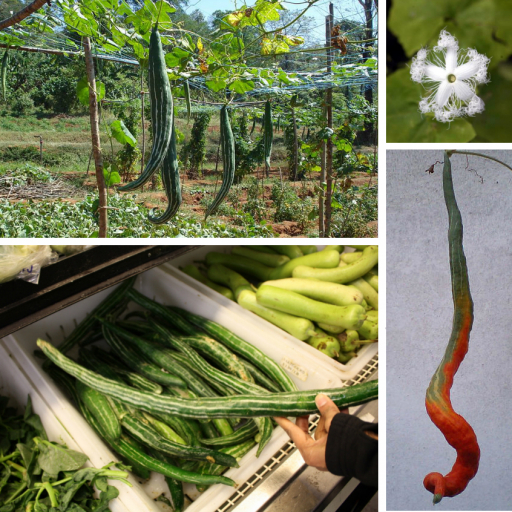
Often called the Snake Gourd or Padwal, Trichosanthes cucumerina is a dramatic climbing vine that looks like it belongs in a botanical fantasy novel. Native to the tropical regions of Asia and Australia, this plant is cherished both for its edible, serpentine fruit and its incredibly intricate, lace-like flowers. In many cultures, it is a garden staple, prized for its ability to transform a simple trellis into a hanging gallery of green "snakes."
🔍 How to Identify
- 🌸 The "Lace" Flower: The blossoms are nocturnal, pure white, and feature long, hair-like fringes on the petal edges, making them look like delicate, frozen snowflakes.
- 🐍 The Serpentine Fruit: The gourds are long and slender, often reaching up to 1.5 meters (5 feet). They are usually light green with white stripes, mimicking the pattern of a snake’s skin.
- 🍃 Lobed Foliage: The leaves are large, heart-shaped, and deeply lobed with a slightly fuzzy texture that helps the plant conserve moisture in humid environments.
🏡 In Your Garden
- 🏗️ Vertical Support: Because the fruit grows so long, this plant must be grown on a high trellis or pergola. If left on the ground, the gourds will curl into tight knots and are more susceptible to pests.
- 💧 Thirsty Climber: As a tropical native, it has a high water demand and a very shallow root system. It hates transplanting due to its sensitive roots, so it is best to sow seeds directly where they will grow.
- ⚖️ The "Straightening" Trick: Traditional gardeners often tie a small pebble to the end of the developing gourd. The weight gently pulls the fruit downward, ensuring it grows straight and long rather than curling.
⚠️ Safety & Toxicity
- ✅ Safe & Edible: The cultivated variety is a popular, mild-tasting vegetable. It is best harvested when young (around 30-40 cm) before the skin hardens and the seeds become bitter.
- 🐾 Pet & Child Safety: While the young fruit is safe, the mature, bright orange seeds and pulp can have a strong laxative effect if ingested. Keep curious pets away from overripe, rotting fruit.
- 🚫 Wild Varieties: Caution is needed with wild subspecies, which are often extremely bitter and contain high levels of cucurbitacins, which can cause vomiting or stomach cramps.
✨ Fun Fact
Those strange, fringed edges on the flowers aren't just for show—they are designed to increase the flower's surface area and scent trail at night, acting as a "landing strip" for the specialized nocturnal hawkmoths that pollinate them!

Detailed Care Instructions
To grow Trichosanthes Cucumerina, also known as snake gourd or snake tomato, you can follow these steps:
- Soil and Sunlight:
- Choose a location with full sunlight exposure.
- Ensure the soil is well-draining, fertile, and rich in organic matter.
- Choose a location with full sunlight exposure.
- Seed Selection and Planting:
- Obtain Trichosanthes Cucumerina seeds from a reliable source.
- Start by soaking the seeds in water for 24 hours, which helps with germination.
- Prepare small pots with seed-starting mix or sow directly in the ground if the climate supports it.
- Plant the seeds 1-2 inches deep with proper spacing, typically 3 feet apart.
- Obtain Trichosanthes Cucumerina seeds from a reliable source.
- Watering and Care:
- Water the plants consistently, keeping the soil evenly moist but not soggy.
- Avoid overwatering, as it may lead to root rot.
- Mulching can help retain moisture and suppress weed growth.
- Water the plants consistently, keeping the soil evenly moist but not soggy.
- Supporting Structures:
- Install a trellis or support structure, as Trichosanthes Cucumerina is a climbing vine. This will provide support for the developing plant.
- Install a trellis or support structure, as Trichosanthes Cucumerina is a climbing vine. This will provide support for the developing plant.
- Fertilization:
- Apply a balanced, slow-release fertilizer or organic compost during planting.
- Provide additional fertilization once monthly during the growing season to promote healthy growth.
- Apply a balanced, slow-release fertilizer or organic compost during planting.
- Pruning and Training:
- Monitor the growth of the vine and redirect it as needed to prevent it from overcrowding other plants or interfering with its own growth.
- Prune away any dead or damaged leaves and vines to promote better air circulation and reduce the risk of diseases.
- Monitor the growth of the vine and redirect it as needed to prevent it from overcrowding other plants or interfering with its own growth.
- Pest and Disease Control:
- Regularly inspect the plant for pests like aphids, cucumber beetles, or leafhoppers. Apply organic insecticides or natural pest control methods if necessary.
- Monitor for common diseases like powdery mildew or fusarium wilt and take appropriate action.
- Regularly inspect the plant for pests like aphids, cucumber beetles, or leafhoppers. Apply organic insecticides or natural pest control methods if necessary.
- Harvesting:
- Once the fruits of Trichosanthes Cucumerina mature, usually around 60-80 days after planting, harvest them by cutting the stems. The fruits are typically green when immature and turn orange or red as they ripen.
Remember to adhere to the specific climatic conditions and growing requirements of your region to ensure optimal growth and yield for your Trichosanthes Cucumerina plant.
- Once the fruits of Trichosanthes Cucumerina mature, usually around 60-80 days after planting, harvest them by cutting the stems. The fruits are typically green when immature and turn orange or red as they ripen.

Place in a bright room that is sun drenched almost all day. Or directly in a south-facing window.

When watering this plant, it is important to thoroughly saturate the soil while being cautious not to overwater. It is recommended to water the plant once a week, or more frequently if the weather is particularly hot or dry. It is also important to ensure that the water reaches the roots of the plant, as water on the leaves can lead to disease. Additionally, it is important to avoid getting water on the leaves during the hottest part of the day to prevent scorching.
- Choose a well-draining pot or garden bed for your Trichosanthes Cucumerina plant.
- Prior to planting, prepare the soil by loosening it and removing any weeds or debris.
- Mix an organic fertilizer into the soil following the manufacturer's instructions.
- After planting the Trichosanthes Cucumerina plant, water it thoroughly to settle the soil and encourage root development.
- Apply a balanced liquid or water-soluble fertilizer every two weeks during the growing season. Dilute the fertilizer according to the package instructions.
- Alternatively, you can use slow-release granular fertilizer, following the recommended application rate on the packaging.
- Be careful not to over-fertilize, as this can lead to nutrient burn or excessive foliage growth at the expense of fruiting.
- Monitor the plant's growth and adjust the fertilization frequency or amount as needed.
- Additionally, consider supplementing with organic matter, such as compost, once or twice a year to enhance soil fertility.
- Remember to follow any specific fertilizer recommendations given by a local horticulture expert or based on results from a soil test if available.
The ideal soil for Trichosanthes Cucumerina plant should be rich in organic matter with good drainage. It should have a pH level ranging from 5.5 to 6.5 and be able to retain moisture. The soil should not be heavy or compacted as it can impede root growth and lead to poor plant performance. A mix of peat moss, compost, and sand would be suitable for growing Trichosanthes Cucumerina plants. Additionally, adding some vermiculite or perlite to the soil mix can help to improve soil aeration and drainage.
To propagate Trichosanthes cucumerina plant, you can follow these steps:
- Select a healthy and mature mother plant: Choose a mature Trichosanthes cucumerina plant from which you will collect the seeds or cuttings. Ensure that the mother plant is disease-free and vigorous.
- Seed propagation: Collect the ripe fruits from the mother plant. Wash the fruits thoroughly to remove any dirt or debris. Extract the seeds by cutting the fruits open. Soak the seeds in warm water for a few hours to soften their coats. This will aid in germination. Sow the seeds in a well-draining potting mix or seed starting tray, covering them lightly with a thin layer of soil. Place the container in a warm and bright location, such as a greenhouse or a sunny window sill. Keep the soil moist but not overly wet. The seeds generally germinate within a couple of weeks.
- Cutting propagation: Take stem cuttings from the mother plant during the growing season. Select healthy stems that are about 4-6 inches long. Remove any flowers or buds from the cuttings. Dip the lower end of the cutting into a rooting hormone powder to enhance root development. Insert the cutting into a pot filled with a well-draining soil mix or a rooting medium. Place the pot in a bright location with indirect sunlight. Mist the cuttings regularly to maintain humidity levels and prevent dehydration. After a few weeks, the cuttings will develop roots, and you can transplant them into individual pots or directly into the garden.
- Transplanting and care: Once the seedlings or rooted cuttings have grown a few inches tall, they can be transplanted into individual containers or the garden. Choose a location with well-draining soil and full sun to partial shade. Dig a suitable hole for each plant, ensuring that the hole is slightly larger than the root ball. Gently place the seedlings or rooted cuttings into the holes and firm the soil around them. Water the newly transplanted plants thoroughly and keep the soil consistently moist but not waterlogged.
- Maintenance: Provide a trellis or support structure for the vines to climb on, as Trichosanthes cucumerina is a climbing plant. Regularly monitor the soil moisture and water the plants accordingly. Mulching around the base of the plants can help conserve moisture and suppress weed growth. Prune the plant as needed to manage its growth and improve air circulation. Fertilize the plants with a balanced, organic fertilizer every few months to promote healthy growth.
By following these steps, you can successfully propagate Trichosanthes cucumerina plant and enjoy its unique beauty in your garden or indoor space.








