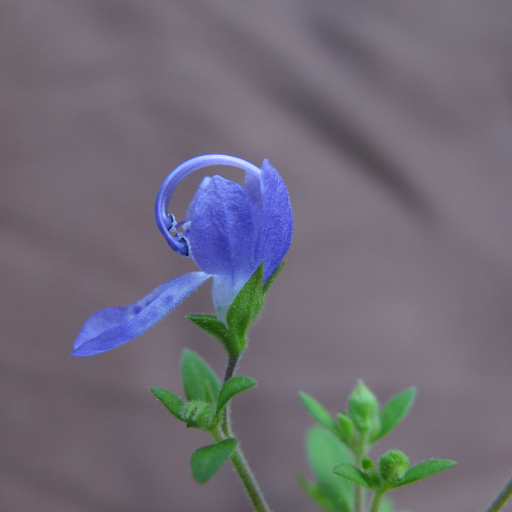
Plant Overview
Known affectionately as Bluecurls or "Bastard Pennyroyal," this delicate wildflower is a hidden gem of North American meadows and sandy pinelands. Its forking branches and intricate blue blooms give it a lace-like appearance that seems to dance in the late summer breeze. While it might look fragile, it is a hardy native survivor that provides a vital late-season feast for local pollinators.
🔍 How to Identify
- 🌸 The "Curls": The most striking feature is the four long, violet-blue stamens that arch gracefully far out of the flower, resembling tiny, elegant curls.
- 🌿 Forking Branches: True to its botanical name (dichotomum), the stems split repeatedly into two equal branches, creating a bushy, symmetrical, and airy silhouette.
- 📏 Sticky Texture: The entire plant is covered in tiny, glandular hairs that give the stems and leaves a slightly sticky feel and a mild, herbal, balsamic scent when crushed.
🏡 In Your Garden
- 🦋 Pollinator Magnet: These flowers are a favorite for long-tongued bees and butterflies. The plant has a clever design; when a bee lands, the long "curls" (stamens) tap the bee on the back, perfectly depositing pollen for transport to the next flower.
- 🏜️ Tough Soil Specialist: Unlike many garden divas, Bluecurls thrive in sandy, acidic, or poor-quality soil where other plants struggle. They are excellent for "wild" corners of the garden or xeriscaping, as they are naturally drought-tolerant once established.
⚠️ Safety & Toxicity
- ✅ Non-Toxic Status: Trichostema dichotomum is generally considered non-toxic to humans, dogs, and cats. It is a member of the mint family, though it is not used as a culinary herb.
- 🧴 Skin Sensitivity: Because of its glandular, sticky hairs, some sensitive individuals might experience mild skin irritation after heavy handling. It is always a good idea to wear gloves if you are clearing large patches of it.
✨ Fun Fact
The genus name Trichostema comes from the Greek words thrix (hair) and stema (stamen). This refers to the hair-thin, thread-like appearance of those iconic blue curls that give the plant its name!

Detailed Care Instructions
To grow Trichostema dichotomum, also known as blue curls, follow these steps:
- Climate: Blue curls thrive in warm, dry climates. They are native to regions with Mediterranean-like conditions, so make sure your climate is suitable for this plant.
- Sunlight: Find a sunny spot for your blue curls as they require full sun exposure. Choose a location that receives at least 6-8 hours of direct sunlight each day.
- Soil: Blue curls prefer well-draining soil. If your soil is heavy or clayey, amend it with organic matter like compost or well-rotted manure to improve drainage.
- Planting: The best time to plant blue curls is in spring after the last frost date in your area. Before planting, water the soil thoroughly. Dig a hole twice as wide and deep as the plant's root ball. Place the plant in the hole, ensuring the top of the root ball is level with the soil surface. Fill the hole with soil, firm it gently, and water again.
- Watering: Once established, blue curls are fairly drought-tolerant and do not require regular watering. Water deeply but infrequently to encourage deep root growth. Allow the soil to dry out between waterings.
- Mulching: Apply a layer of organic mulch, like wood chips or straw, around the base of the plant. This will help retain moisture and suppress weed growth.
- Pruning: Blue curls benefit from annual pruning to maintain their shape and promote bushier growth. Prune them in early spring, before new growth emerges. Remove any dead or damaged branches, and shape the plant as desired.
- Fertilizer: Blue curls generally do not require much fertilizer. However, if you want to give them a nutrient boost, apply a slow-release, balanced fertilizer in early spring.
- Pests and diseases: Blue curls are relatively resistant to pests and diseases. However, keep an eye out for aphids or spider mites. If any infestation occurs, treat the plant with an appropriate organic insecticide or insecticidal soap.
- Propagation: You can propagate blue curls through seeds or stem cuttings. Collect seeds when the plant produces dry seed heads, and sow them in well-draining soil in late autumn. For stem cuttings, take 4-6 inch long cuttings from healthy plants and place them in a pot filled with a well-draining medium. Keep the soil evenly moist until new growth appears.
By following these guidelines, you can successfully grow Trichostema dichotomum, and enjoy its beautiful blue flowers and aromatic foliage.

Place in a bright room that is sun drenched almost all day. Or directly in a south-facing window.

Trichostema Dichotomum is a plant that requires watering to thrive. When watering this plant, it is important to provide enough water to moisten the soil to a depth of at least 6 inches. However, it is equally important to avoid overwatering as this can cause root rot and ultimately kill the plant.
One way to determine when it is time to water Trichostema Dichotomum is by checking the soil moisture level. This can be done by inserting a finger into the soil up to the second knuckle. If the soil feels dry at this depth, it is time to water. If it feels moist, water can be withheld until the soil has dried out to this depth.
When watering Trichostema Dichotomum, it is important to give water slowly and avoid drenching the soil. This allows the water to penetrate deep into the soil where the roots can absorb it. Additionally, it is beneficial to water early in the morning or late in the day when temperatures are cooler and less water will evaporate.
Overall, the key to successfully watering Trichostema Dichotomum is to provide consistent moisture without overwatering. By following these guidelines, this plant can thrive and provide beauty and enjoyment for years to come.
To fertilize Trichostema dichotomum, apply a balanced, all-purpose fertilizer in the spring before new growth emerges. Follow the instructions on the fertilizer package for the correct amount to apply. Water the plant deeply after fertilizing. Do not over-fertilize, as this can cause damage to the plant.
Trichostema Dichotomum plant prefers well-drained and moderately fertile soil. The soil should have a pH level of 5.5 to 7.5. It can withstand slightly acidic or alkaline soil. The soil should have good water-retaining capacity as the plant requires moderate watering. A sandy-loamy soil mix enriched with organic matter is ideal for this plant. Ensure that the soil is not prone to waterlogging as it can lead to root rot. Overall, a fertile, well-drained soil with proper drainage and moderate moisture content is best suited for the growth and development of this plant.
Trichostema dichotomum can be propagated using stem cuttings. Choose a healthy stem that is not flowering and remove all the leaves from the bottom third of the stem. Dip the cut end of the stem in rooting hormone and place it in a pot with well-draining soil, making sure that at least one node is below the soil surface. Water the cutting lightly and cover the pot with a plastic bag to create a humid environment. Place the pot in a bright, but filtered light location and keep the soil moist. After a few months, check for roots by gently tugging on the cutting. Once roots are established, remove the plastic bag and gradually expose the plant to more light.








