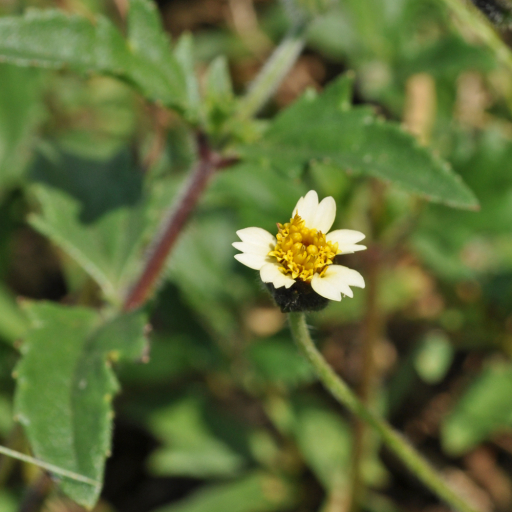
Plant Overview
Known affectionately as "Coatbuttons" or the "Mexican Daisy," Tridax procumbens is the ultimate botanical hitchhiker. Originally hailing from the tropical Americas, this resilient traveler has spread across the globe, turning cracks in the sidewalk into miniature wildflower meadows. While many gardeners dismiss it as a common weed, it is secretly a powerhouse of traditional medicine and a vital refueling station for wandering butterflies.
🔍 How to Identify
- 🌼 The "Button" Flower: Each flower head sits atop a long, wiry, and leafless stalk. The center is a cluster of bright yellow tubular florets, ringed by a few notched, cream-colored petals that look like tiny, frayed ribbons.
- 🍃 Arrowhead Leaves: The leaves grow in opposite pairs and are shaped like jagged arrowheads. They have deeply "toothed" edges and a rough, sandpaper-like texture when touched.
- 🌵 Bristly Stems: The plant is covered in coarse, stiff hairs. These hairs aren't just for show—they help the plant trap dew and survive in harsh, arid environments where other greens would scorched.
🏡 In Your Garden
- 🌱 A Tough Competitor: Tridax is famous for its "pioneer" spirit. It thrives in poor, rocky, or sandy soil where nutrients are scarce. Because it produces a deep taproot, it is incredibly difficult to pull out once it has established itself in a garden bed.
- 🦋 The Butterfly Cafeteria: If you spot this in your yard, you’ll notice it is rarely alone. It is a primary nectar source for many small butterfly species, such as the "Grass Blue" or "Plain Tiger," making it a great, low-maintenance addition to a wild pollinator garden.
⚠️ Safety & Toxicity
- ✅ Non-Toxic Status: This plant is generally considered safe and non-toxic to humans, dogs, and cats. It is not known to cause irritation upon skin contact for most people.
- 💊 Medicinal History: In many tropical regions, the juice of the leaves is a famous "folk-bandage" used to stop bleeding and speed up wound healing. However, you should never apply wild plants to open wounds without proper knowledge, as environmental contaminants on the leaves could cause infection.
✨ Fun Fact
🎈 Botanical Parachutes: Once the flowers fade, they turn into white, fuzzy "clocks" similar to Dandelions. Each seed is equipped with a feathery parachute (called a pappus) that allows it to ride the wind for miles to find a new home!

Detailed Care Instructions
To grow Tridax procumbens (commonly known as Coat Button or Mexican Daisy), follow these steps:
- Soil preparation: Tridax procumbens prefers well-draining soil with a neutral pH. Prepare a pot or planting area with a mix of equal parts garden soil, compost, and sand for better drainage.
- Propagation: You can propagate Tridax procumbens from seeds or stem cuttings. If using seeds, sow them directly into the prepared soil or pot, and cover them with a thin layer of soil. If using stem cuttings, take 4-6 inch cuttings from the parent plant and plant them in the soil, ensuring at least two nodes are underground.
- Light and temperature: Tridax procumbens prefers full sunlight. Place the pot or planting area in a location where the plant will receive at least 6-8 hours of direct sunlight per day. It thrives in warm temperatures between 70-85°F (21-30°C).
- Watering: Keep the soil consistently moist but not waterlogged. Water the plant when the top inch of soil feels dry. During hot weather, the plant may require more frequent watering, so adjust accordingly.
- Fertilization: Feed the plant with a balanced liquid fertilizer once every 2-3 weeks during the growing season (spring and summer). Follow the instructions on the fertilizer packaging for the correct dilution ratio.
- Pruning: Trim the plant regularly to maintain a bushy shape and encourage more branching. Pinch off the growing tips to promote lateral growth.
- Pests and diseases: Tridax procumbens is generally resistant to pests and diseases. However, keep an eye out for common garden pests like aphids or mites. Treat any infestations promptly using appropriate insecticidal soap or natural remedies.
- Harvesting and propagation: Tridax procumbens produces flowers throughout the growing season. You can harvest the flowers for decorative purposes. Additionally, collect the seed pods once they turn brown and dry to propagate new plants.
With proper care and attention to its needs, Tridax procumbens should thrive and grow beautifully in your garden or indoor setting.

Place in a bright room that is sun drenched almost all day. Or directly in a south-facing window.

To water the plant, assess the soil moisture level by inserting your finger about two inches deep into the soil. If the soil is dry, water the plant thoroughly until water drains through the drainage holes at the bottom of the container. Avoid overwatering, as this can lead to root rot. Water the plant once a week or when the soil feels dry.
Fertilize the plant with a balanced, water-soluble fertilizer every two weeks during the growing season. Mix the fertilizer according to the instructions on the package and apply it to the soil around the plant. Be sure to water the plant well after fertilizing to avoid burning the roots. Avoid fertilizing the plant during the dormant season.
Tridax Procumbens plant thrives in well-drained soil that is not too rich or fertile. It prefers sandy or loamy soil that has a slightly acidic to neutral pH. The soil should be well-aerated and have good drainage, with a low-to-moderate amount of nutrients. It is also important that the soil is not too compacted, ensuring that the roots have room to grow and breathe. The plant tolerates mild drought conditions, but it should be watered regularly to keep the soil moist. Overall, the ideal soil for Tridax Procumbens plant should be loose, well-draining, and relatively low in nutrient content.
Tridax Procumbens plant can be propagated through two methods - vegetative and sexual propagation.
Vegetative propagation:
- Choose a healthy and mature plant from which you want to propagate.
- Cut off a stem from the plant that is about 5-8 inches in length.
- Remove all the leaves except for the top two.
- Dip the bottom of the stem into rooting hormone powder.
- Plant the stem in a pot filled with fertile soil, and make sure to water it sufficiently.
- Place the pot in a well-lit area with indirect sunlight.
- After a few weeks, the stem will develop roots, and you can transplant it to a bigger pot.
Sexual propagation: - Collect seeds from a mature and healthy Tridax Procumbens plant.
- Dry the seeds in a shaded area until they are completely dry.
- Sow the seeds in fertile soil, covering them with a thin layer of soil.
- Water the soil the seeds are planted in moderately and keep the soil constantly moist.
- Place the pot in a well-lit area with indirect sunlight.
- After a few weeks, the seeds will germinate, and you can transplant the seedlings to a bigger pot.








