Plant Overview
Commonly known as Rose Clover, Trifolium hirtum is a hardy, Mediterranean traveler that has become a favorite for land restoration and honeybees. Its name "hirtum" comes from the Latin word for "shaggy" or "hairy," perfectly describing its fuzzy stems and silver-green leaves. Often seen carpeting hillsides in soft pinks, it’s a rugged beauty that thrives in tough conditions where other plants might wither.
🔍 How to Identify
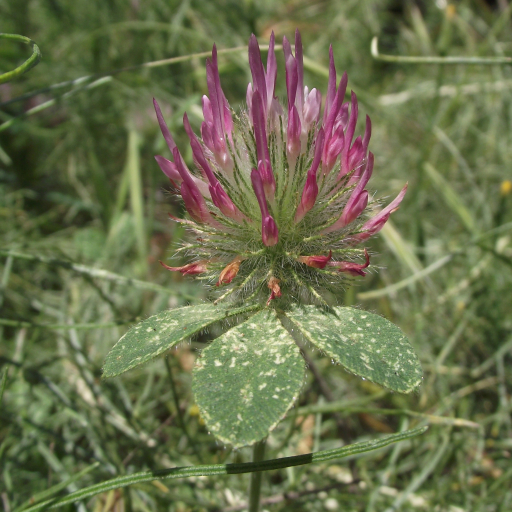
- 🌸 The Flower Head: Look for globe-shaped clusters of tiny pink to rose-colored petals. These flower heads are unique because they sit nestled within a "cup" of upper leaves (an involucre) rather than on long, bare stalks.
- 🌿 Shaggy Texture: The entire plant—stems and leaves alike—is covered in dense, soft, white bristly hairs. This "fuzz" helps the plant trap moisture and survive in hot, dry climates.
- 🍃 Trifoliate Leaves: Like all clovers, it features leaves divided into three leaflets. On Rose Clover, these leaflets are wedge-shaped and often feature a faint, pale "watermark" or crescent shape on the surface.
🏡 In Your Garden
- ⛏️ Soil Architect: Rose Clover is a champion of "green manure." It has a deep taproot that breaks up compacted earth and possesses the magical ability to fix nitrogen, naturally fertilizing the soil for future plantings.
- ☀️ Drought Warrior: This plant is exceptionally drought-tolerant once established. It is often used in "xeriscaping" or for erosion control on dry, sunny slopes where water is scarce.
- 🐝 Pollinator Magnet: If you want a buzzing garden, this is a top-tier choice. It provides high-quality nectar that is particularly attractive to honeybees and native bumblebees during the late spring.
⚠️ Safety & Toxicity
- ✅ Safe Status: Rose Clover is considered non-toxic to humans and is a highly valued, high-protein forage crop for livestock like sheep and cattle.
- 🐾 Pet Friendly: It is generally safe for cats and dogs. However, as with any forage plant, keep an eye on curious pets, as consuming large quantities of fibrous clover can occasionally lead to mild bloating or tummy aches.
- 🌾 Skin Sensitivity: While not poisonous, the stiff hairs on the stems can be slightly abrasive. If you have very sensitive skin, you might feel a mild "itch" after handling the plant extensively without gloves.
✨ Fun Fact
Rose Clover seeds are "time travelers." They are known as "hard seeds," meaning they have a thick coating that allows them to stay dormant in the soil for several years, waiting for the perfect weather conditions to finally sprout and reclaim the landscape!

Detailed Care Instructions
To grow Trifolium Hirtum (also known as Hairy Clover), follow these steps:
- Planting: Choose a well-draining location with full or partial sunlight. Prepare the soil by removing any weeds or debris and loosen it with a garden fork or tiller.
- Sowing seeds: Trifolium Hirtum can be grown from seeds. Sow the seeds directly into the prepared soil, scattering them evenly. Lightly press the seeds into the soil, ensuring good seed-to-soil contact.
- Watering: Keep the soil evenly moist, but not waterlogged. Water the soil gently to avoid washing away the seeds. In dry conditions, water regularly, especially during germination and early growth stages.
- Germination: Trifolium Hirtum seeds usually germinate within 7-14 days. During this time, provide consistent moisture to the soil and protect the area from heavy rainfall or extreme temperatures.
- Thinning: Once the seedlings have grown a few inches tall, thin them out to allow proper spacing. Space the plants about 6-12 inches apart to ensure good air circulation.
- Fertilization: Trifolium Hirtum is a nitrogen-fixing plant, meaning it can obtain nutrients from the air. However, if the soil is poor, you can apply a balanced organic fertilizer once or twice during the growing season.
- Maintenance: Remove any weeds or competing plants that are growing around Trifolium Hirtum. Regularly check for pests or diseases and address them promptly. Trim back any overgrown or wilted foliage to promote healthier growth.
- Harvesting: Trifolium Hirtum can be harvested for its leaves and flowers. Harvest the tops of the plants just before they fully flower to promote continued growth. Dry the harvested parts in a cool, well-ventilated area for future use in teas or herbal preparations.
By following these tips, you can successfully grow Trifolium Hirtum in your garden or outdoor space.

Place in a bright room that is sun drenched almost all day. Or directly in a south-facing window.

To water this plant, fill a watering can with clean water and gently pour the water at the base of the plant, taking care to avoid wetting the leaves or flowers. Water the plant thoroughly and deeply, making sure that the soil is moist but not waterlogged. Allow the top layer of soil to dry out slightly between waterings, as this plant prefers soil that is slightly dry. It is important not to overwater this plant, as it can be susceptible to root rot if the soil is too wet. Watering frequency may vary depending on factors such as temperature, humidity, and soil type, so it is important to monitor the soil moisture level regularly.
To fertilize this plant, it is recommended to use a balanced fertilizer with equal parts of nitrogen, phosphorus, and potassium. Apply the fertilizer during the growing season, which is typically in the spring and summer months. Follow the instructions on the fertilizer package for the appropriate amount of fertilizer to use and how often to apply it. Be careful not to over-fertilize, as this can damage the plant. Water the plant thoroughly after fertilizing to help distribute the nutrients effectively.
The ideal soil for Trifolium Hirtum should have a balanced pH between 6.0 and 7.5, and be composed of well-draining, light-textured soil. The plant thrives in soils that are rich in organic matter, as it prefers soils with high fertility. It is recommended to mix compost or other organic materials into the soil to improve its fertility. Additionally, the plant prefers soils with good water holding capacity, so it is important to ensure the soil never becomes too dry. When planting Trifolium Hirtum, it is necessary to select a location that provides ample sunlight and good air circulation. The plant can tolerate some shade, but prefers full sun. With the right soil conditions, Trifolium Hirtum can produce lush, green growth and flowering for years to come.
Trifolium hirtum can be propagated by seed or vegetative means such as stem cuttings. To propagate through stem cuttings, select a healthy stem with several leaves and cut it just below a node or joint. Remove the leaves from the bottom half of the stem and dip the cut end in rooting hormone. Plant the stem in a pot filled with moist potting soil and place it in a warm, bright location. Keep the soil moist but not waterlogged and mist the cutting regularly. Within a few weeks, roots should begin to form and the new plant can be transplanted to a larger container or outside into the garden if weather permits. To propagate by seed, sow the seeds in soil that has been loosened and moistened. Keep the soil moist and watch for germination in a week or two. Thin the seedlings out to ensure proper spacing and adequate resources for the growing plants.








