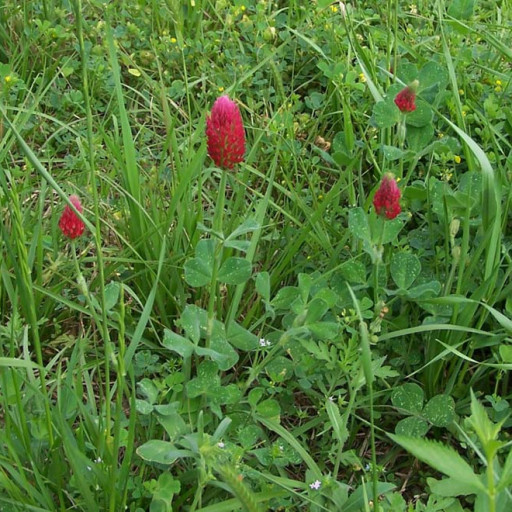
Plant Overview
Often called the Crimson Clover, this Mediterranean native paints fields in a dramatic, ruby-red hue every spring. Unlike its common white or pink cousins, this plant grows tall and proud with a sophisticated, velvety texture. It is a favorite among organic gardeners who treat it as a "living fertilizer" to naturally heal tired soil.
🔍 How to Identify
- 🔴 The Flower: Elongated, conical flower spikes that are a deep, "incarnatum" (blood-red) color, appearing like fuzzy torches atop the stems.
- ☘️ The Foliage: Classic clover "trifoliate" leaves (groups of three leaflets) that are broad, heart-shaped, and significantly larger than common lawn clover.
- ☁️ The Texture: Every part of the plant—from the stems to the leaf margins—is covered in fine, soft hairs, giving it a distinct silvery-green shimmer in the sunlight.
🏡 In Your Garden
- 🌱 The Soil Architect: This plant is a legendary "nitrogen fixer." It hosts special bacteria on its roots that pull nitrogen from the air and store it in the ground, making the soil richer for whatever you plant next.
- 🐝 Pollinator Magnet: It is an absolute favorite for honeybees and bumblebees. If you want a buzzing, healthy ecosystem, planting a patch of Crimson Clover is like putting out a neon "Open" sign for beneficial insects.
- ⏳ Cool Season Specialist: It thrives in the crisp air of spring and autumn. Because it prefers moderate temperatures, it often acts as a beautiful "cover crop" to protect your garden beds during the winter months.
⚠️ Safety & Toxicity
- ✅ Safe Status: Trifolium incarnatum is generally considered non-toxic to humans, cats, and dogs.
- 🌾 Livestock Note: While safe for household pets, it can cause "bloat" in cattle or horses if they gorge on it exclusively. For the home gardener, it is perfectly safe to handle and grow around curious toddlers or pets.
✨ Fun Fact
✨ The "Green Manure": Farmers have used this clover since the Roman era as "green manure." They grow it specifically to till it back into the earth before it dries out, essentially "feeding" the soil with the plant's own body to prepare for a heavy crop like corn or tomatoes.

Detailed Care Instructions
| Humidity | High |
| Lighting | Part Sun |
| Difficulty | Medium |
| Hibernation | Cold Period |
| Temperature | 11°C - 21°C |
To grow Trifolium incarnatum, also known as crimson clover, you can follow these steps:
- Select an appropriate planting location: Crimson clover thrives in full sun to partial shade and prefers well-drained soil. It can tolerate a wide range of soil types, but it prefers a pH level between 6.0 and 7.5.
- Prepare the soil: Before planting, remove any weeds or grass from the area and loosen the soil using a garden fork or tiller. This helps promote better root growth and nutrient absorption.
- Seed preparation: Crimson clover seeds have a hard outer shell, so it is beneficial to scarify the seeds before planting. This can be done by soaking the seeds in warm water for 12-24 hours or by mechanically scratching the seeds lightly with sandpaper.
- Plant the seeds: Sow the scarified seeds directly into the prepared soil, scattering them evenly across the area. Gently rake the soil to cover the seeds with a thin layer, about 1/4 to 1/2 inch deep.
- Watering: After planting, water the area thoroughly to ensure the seeds are moistened. Keep the soil consistently moist but not waterlogged during the germination period, which typically takes about 7-14 days.
- Maintenance: Once the seeds germinate and the plants start to grow, make sure to provide adequate water when rainfall is insufficient. However, be cautious not to overwater. Crimson clover has good tolerance to dry conditions but requires moisture during critical periods.
- Fertilizing: Crimson clover generally doesn't require additional fertilizer. However, if the soil is lacking in nutrients, applying a balanced slow-release fertilizer during planting or early growth can help the plants thrive.
- Weed control: Regularly monitor the area for weeds and remove them promptly to reduce competition for nutrients and space.
- Harvesting: If you plan to use crimson clover as forage or green manure, allow the plants to grow until they reach maturity. Typically, crimson clover blooms in spring and can be harvested before the seed heads harden. Cut the plants about 3-4 inches above the ground, and allow them to dry in a well-ventilated area before use.
- Post-harvest care: After harvesting, you can leave the plant residue on the ground as a natural mulch, tilling it back into the soil to improve its organic matter content.
Remember to follow any local planting guidelines or ask experts for suitable planting times specific to your region.

Place in a bright room that is sun drenched almost all day. Or directly in a south-facing window.

To properly water this plant, it is important to first assess the moisture level of the soil. This can be done by sticking a finger about two inches deep into the soil and checking for dryness or moisture. If the soil feels dry, water the plant deeply and thoroughly, allowing the water to soak through the soil and reach the roots. It is important not to over-water the plant, as this can lead to root rot and other damage. If the soil feels moist, it is best to wait a few days before watering again. Additionally, it is important to ensure proper drainage for this plant to prevent water from pooling and causing damage.
For best results when fertilizing this plant, it is recommended to apply a balanced fertilizer in the spring when new growth appears. The fertilizer should contain a mix of nitrogen, phosphorus, and potassium. It is also important to follow the manufacturer's instructions for application and to not over-fertilize, as this can lead to environmental issues. Avoid fertilizing during periods of drought or extreme heat, as this can cause damage to the roots.
Trifolium incarnatum is a kind of plant that originates in the Mediterranean region and belongs to the legume family. When cultivating this plant, it is important to use soil that is well-draining and rich in nutrients. The soil pH should be between 6.0 to 7.5. It prefers sandy loam or loam texture soils. The soil must be fertile enough to promote the growth of the plant, but not too nutrient-dense as this can lead to excessive foliage growth with limited blooming. Additionally, the soil should be moist and not waterlogged to prevent root rot. Using a layer of organic mulch over the soil surface can help conserve moisture and maintain soil nutrients. Overall, it is crucial to provide the right soil conditions that promote healthy growth and flowering of the Trifolium incarnatum plant.
There are several ways to propagate this plant, but the most common method is through seeds. Collect the seeds from the mature plant and store them in a cool, dry place until the next planting season. In the spring, sow the seeds in well-draining soil and lightly cover them with a thin layer of soil. Water regularly and keep the soil moist. The seeds should germinate within a few weeks.
Another way to propagate this plant is through stem cuttings. Take a cutting from a healthy, mature plant and remove the lower leaves. Dip the cut end in rooting hormone and plant it in moist soil. Keep the soil moist and provide the cutting with bright, indirect light. The cutting should form roots within a few weeks.
You can also propagate Trifolium Incarnatum by dividing the plant. In the spring or fall, dig up the mature plant and separate the clumps into smaller sections. Replant the sections in well-draining soil and water regularly. The divided sections should establish themselves quickly and begin to grow new shoots within a few weeks.
Common pests of the crimson clover include Snails. Make a habit of checking your crimson clover frequently for pests so that any infestations can be caught and managed early.








