Plant Overview
Often called the Mountain Clover, this resilient perennial is the rugged cousin of your common lawn clover. While most clovers love a lush, damp meadow, Trifolium montanum is a true highlander, thriving on the sun-drenched, rocky slopes of Europe and Western Asia. In folklore, finding this specific white clover in the high altitudes was often seen as a sign of good luck for weary mountain travelers.
🔍 How to Identify
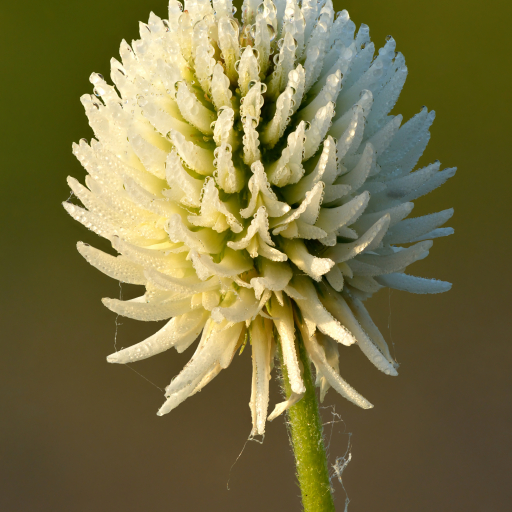
- ☁️ The Bloom: Features a dense, egg-shaped flower head packed with creamy-white florets. Unlike the round "pom-poms" of white clover, these are slightly more elongated and turn a papery brown as they age.
- 🍃 The Foliage: Look for the classic "three-leaf" clover pattern, but with a twist. The leaflets are longer and narrower than common varieties, with finely toothed edges and distinct, pale veins.
- ☁️ The Texture: The stems and the undersides of the leaves are covered in fine, silky white hairs, giving the plant a slightly silver or "frosted" appearance in the sunlight.
🏡 In Your Garden
- ⛰️ Highland Habits: This plant is perfect for rock gardens or wildflower meadows with poor soil. It actually prefers "tough" conditions and will struggle if the soil is too rich or waterlogged.
- 🌱 The Taproot: It develops a very deep, sturdy taproot to survive droughts. Because of this, it hates being moved once it has settled in—choose its forever home carefully!
- 🐝 Pollinator Magnet: It is a vital source of nectar for specialized mountain bees and butterflies, making it a "must-have" for high-altitude biodiversity gardens.
⚠️ Safety & Toxicity
- ✅ Status: Non-toxic and generally safe.
- 🐾 Details: Mountain Clover is considered safe for pets, children, and livestock. In fact, it is often used as high-quality forage in mountain pastures, though it contains small amounts of coumarin, which is only a concern if the plant becomes moldy during hay production.
✨ Fun Fact
- 🧬 The Nitrogen Fixer: Like a tiny underground chemist, Mountain Clover has a symbiotic relationship with bacteria in its roots. It pulls nitrogen from the air and "pumps" it into the soil, acting as a natural, living fertilizer for all the plants growing around it!

Detailed Care Instructions
To grow Trifolium Montanum, commonly known as Mountain Clover, you can follow these steps:
- Choose the right location: Mountain Clover prefers full sun to partial shade. Make sure to select a location with well-draining soil.
- Prepare the soil: Before planting, prepare the soil by removing any weeds or grass. Loosen the soil gently with a garden fork or tiller, ensuring a good growing environment.
- Plant the seeds: Mountain Clover can be grown from seeds. Sow the seeds directly in the prepared soil, scattering them evenly. Lightly rake the soil afterwards to cover the seeds with a thin layer of soil.
- Water regularly: Keep the soil moist but not waterlogged. Water the seeds and young plants regularly until they establish and start growing. Once established, Mountain Clover is typically drought-tolerant and does not require much watering.
- Provide occasional fertilization: Mountain Clover generally grows well without fertilizer, but you can provide a light application of a balanced organic fertilizer during the growing season to enhance its growth.
- Weed control: Ensure that the planting area is weed-free, as mountain clover can face competition from weeds. Regularly remove any weeds that may appear around the plants.
- Pruning: Mountain Clover usually does not require pruning. However, you can trim back any dead or damaged stems to maintain a tidy appearance.
- Protect from pests: Monitor for any pests that may attack the plants, such as aphids or slugs. If necessary, take appropriate measures to control them, such as using organic pest control methods.
- Mulching: Applying a layer of mulch around the plants can help retain moisture, suppress weed growth, and protect the roots during extreme weather conditions.
With proper care and maintenance, your Trifolium Montanum plant should thrive and provide beautiful clover blooms.

Place in a bright room that is sun drenched almost all day. Or directly in a south-facing window.

To water this particular plant, it is important to consider the needs of its environment and size. The soil should be moist but not wet, so watering frequency will vary depending on the specific conditions of the plant's location. It is important to avoid overwatering as this can lead to root rot, which can be fatal to the plant. It is recommended to use a watering can to water the plant directly at the base, avoiding wetting the leaves. Checking the soil moisture regularly and adjusting watering as necessary is key to keeping the plant healthy.
To fertilize the plant, it is recommended to use a balanced fertilizer with equal amounts of nitrogen, phosphorus, and potassium. Apply the fertilizer once every two weeks during the growing season, which is usually spring through early fall. Be careful not to apply too much fertilizer, as this can damage the plant. It is important to water the plant thoroughly after fertilizing to help distribute the nutrients evenly throughout the soil.
Trifolium montanum requires soil that is well-draining and rich in nutrients. The soil should be slightly acidic to neutral with a pH range of 6.0 to 7.0. It is recommended to mix in compost or other organic matter to improve soil fertility and structure. The plant prefers soil that is moist but not waterlogged, so it is important to ensure proper drainage. Additionally, the soil should be loose and aerated to allow for healthy root growth.
To propagate this plant, you can collect the seeds from mature plants and sow them in well-drained soil. You can also take stem cuttings and root them in water or soil. Make sure to keep the cuttings moist and provide them with indirect sunlight until they have established roots and begin to grow.








