Plant Overview
Known as the Sea Clover, Trifolium squamosum is a rugged coastal specialist that thrives where other plants might wither. Unlike the common white clover in your lawn, this species has a "scaly" charm that hints at its ability to handle salty sea breezes and heavy, waterlogged clay soils. It is a quiet survivor of the Mediterranean and European coastlines, often found tucked away in salt marshes and grassy sea walls.
🔍 How to Identify
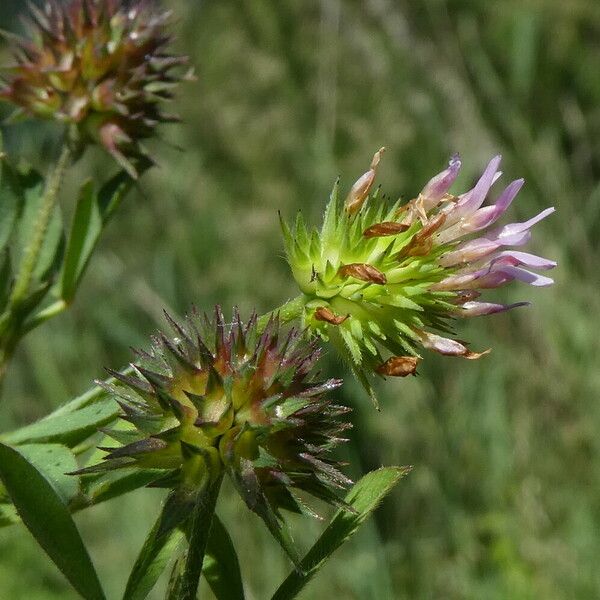
- 🌸 Pale Petals: It features small, ovoid flower heads that range from a delicate whitish-pink to a soft lavender.
- 🌿 Hairy Foliage: The stems and leaves are covered in fine, soft hairs, which help the plant retain moisture in windy coastal environments.
- 🛡️ Scaly Calyx: After the flowers fade, the base of the flower (the calyx) becomes rigid, ribbed, and tooth-like. This "scaly" appearance is its most distinctive feature and gives the plant its name.
🏡 In Your Garden
- 🌊 Salt Tolerance: This plant is an excellent choice for "extreme" coastal gardening. If you live near the ocean and struggle with salt spray killing your groundcover, Sea Clover is naturally adapted to these conditions.
- 🧱 Clay Specialist: While many clovers prefer well-draining soil, Trifolium squamosum is famous for its ability to grow in heavy, compacted clay and damp grasslands that would suffocate the roots of more delicate species.
⚠️ Safety & Toxicity
- ✅ Generally Safe: Like most clovers, it is considered non-toxic to humans and common household pets.
- 🐾 Grazing Note: While safe in small amounts, clovers contain coumarin, which can occasionally cause issues for livestock if consumed in massive quantities or if the plant becomes moldy. For typical garden use or accidental pet nibbles, it is not a cause for concern.
✨ Fun Fact
The specific epithet squamosum comes from the Latin word for "covered in scales." This refers to the protective, armor-like structure that develops around the seeds, ensuring they survive the harsh, salty environment of the shoreline until they are ready to sprout.

Detailed Care Instructions
To grow Trifolium squamosum plant, also known as scale-leaved clover, follow these steps:
- Obtain seeds: Purchase Trifolium squamosum seeds from a reputable nursery or online store. Make sure the seeds are fresh and viable.
- Choose the planting location: Trifolium squamosum plants prefer full sun or partial shade. Select a location in your garden that receives at least 6 hours of sunlight per day.
- Soil preparation: Prepare the soil by removing any weeds or debris. Trifolium squamosum plants prefer well-draining soil with a pH between 6.0 and 7.0. If your soil is heavy or clay-like, consider adding organic matter like compost or well-rotted manure to improve drainage.
- Sow the seeds: Choose a time to sow the seeds when the soil temperature is around 50-60°F (10-15°C). In colder regions, early spring or fall is usually a good time. Sow the seeds directly onto the prepared soil, and lightly press them into the ground.
- Watering: After sowing the seeds, water the area gently to ensure good moisture penetration. Keep the soil consistently moist, but avoid overwatering, as it can lead to rotting.
- Germination: Trifolium squamosum seeds typically germinate in 10-14 days. During this time, keep the soil moderately moist and provide consistent sunlight.
- Thinning: Once the seedlings have grown to a few inches tall and have a developed set of true leaves, thin them out to provide enough space between the plants. Maintain a spacing of about 6-8 inches (15-20 cm) between each plant.
- Maintenance: Regularly water the plants, especially during dry periods, to ensure they remain hydrated. Mulching around the plants can help retain soil moisture.
- Fertilization: Trifolium squamosum plants typically don't require heavy fertilization. However, you can apply a balanced, slow-release organic fertilizer once or twice during the growing season to provide additional nutrients.
- Pest and disease control: Scale-leaved clover is generally resistant to many pests and diseases. However, keep an eye out for common garden pests like aphids or caterpillars. Address any pest infestations promptly using appropriate treatments.
- Harvesting: Trifolium squamosum produces small, globular flowerheads that can be harvested and dried for culinary or medicinal purposes. Once the flowers have matured, gently cut them off with clean, sharp scissors.
By following these steps, you should be able to successfully grow Trifolium squamosum in your garden. Remember to adjust the care and maintenance based on your specific growing conditions and climate.

Place in a bright room that is sun drenched almost all day. Or directly in a south-facing window.

To water Trifolium Squamosum plant effectively, you should consider the following steps:
1. Assess water requirements: Trifolium Squamosum plant requires regular watering, primarily during dry periods or when the topsoil becomes dry to the touch. Observe the plant's overall health and soil moisture levels to determine watering needs.
2. Choose the right time: Water Trifolium Squamosum in the early morning or late afternoon when temperatures are cooler. Avoid watering during the hottest parts of the day to prevent rapid evaporation.
3. Water in moderation: Provide a sufficient amount of water to thoroughly moisten the soil. Avoid overwatering as it can lead to root rot and other moisture-related issues. Aim for deep watering rather than frequent shallow watering to encourage stronger root development.
4. Water at the base: Direct the water towards the base of the Trifolium Squamosum plant, ensuring the roots receive adequate moisture. This method allows the plant to absorb water efficiently and reduces the risk of fungal diseases that can occur from wet foliage.
5. Use appropriate watering techniques: Consider using a watering can or a gentle sprinkler system to apply water evenly across the soil surface. Slowly apply water to avoid soil erosion or puddling that may lead to water runoff.
6. Observe drainage: Ensure the planting area or pot has proper drainage to prevent waterlogging. Trifolium Squamosum requires a well-draining soil mix to avoid water accumulation around the roots, which can cause root damage or diseases.
7. Monitor plant response: Keep an eye on the plant's response to watering. If the leaves appear droopy or discolored, it may indicate either underwatering or overwatering. Adjust your watering routine accordingly to maintain optimal soil moisture levels.
Remember that these guidelines provide general watering practices for Trifolium Squamosum plants, and specific conditions may vary. It's always best to consider your specific plant's needs and the local climate when determining the ideal watering regimen.
To properly fertilize Trifolium squamosum plants, follow these instructions:
- Begin fertilization in the early spring, just as new growth begins to appear.
- Choose a balanced, slow-release organic fertilizer with equal parts nitrogen (N), phosphorus (P), and potassium (K).
- Apply the fertilizer evenly around the base of the plant, avoiding direct contact with the stems or foliage.
- Use a garden fork or hoe to gently work the fertilizer into the top layer of soil, ensuring proper absorption.
- Water the plant thoroughly after fertilizing to help activate the nutrients.
- Repeat the fertilization process once every four to six weeks throughout the growing season.
- Monitor the plant's response to the fertilizer and adjust the frequency or amount as needed.
- In late summer or early fall, reduce fertilization to prevent excessive growth going into the dormant season.
- Always follow the specific instructions provided by the fertilizer manufacturer, as different brands may have varying application rates.
Trifolium squamosum is a flowering plant that belongs to the Trifolium genus. When selecting soil for this particular plant, it is essential to consider its natural habitat, growth requirements, and preferred soil characteristics.
Trifolium squamosum is commonly found in sandy or rocky areas with well-draining soil. Therefore, it is important to provide it with a soil mix that replicates these conditions. A suitable soil for this plant should have a mixture of sand, small rocks, and organic matter to ensure proper drainage and aeration.
The ideal pH level for Trifolium squamosum falls within the slightly acidic to neutral range, typically between 5.5 and 7.0. Therefore, it is recommended to use a soil with a pH within this range to ensure optimum growth and nutrient uptake.
Since Trifolium squamosum is a legume, it has the ability to fix nitrogen from the air through specialized bacteria that live within its roots. However, providing a soil with adequate nutrients is still necessary for healthy growth. It is recommended to enrich the soil with organic matter, such as well-rotted compost or aged manure, before planting. This will help improve the soil structure, add essential nutrients, and enhance water-holding capacity.
Furthermore, Trifolium squamosum prefers a soil that is slightly sandy or loamy, as this allows for good drainage while still retaining some moisture for the plant's roots. It is essential to avoid heavy clay soils, as they tend to compact easily and hinder proper root growth.
Overall, the best soil for Trifolium squamosum should have a well-balanced mixture of sand, small rocks, and organic matter, with a pH range between 5.5 and 7.0. Providing these soil conditions will support healthy growth and ensure the plant's overall well-being.
To propagate Trifolium Squamosum plant, follow these steps:
- Select a healthy and mature parent plant to obtain cuttings. Look for a plant that has a good growth pattern, strong stems, and vibrant foliage.
- Prepare a clean and sharp pair of bypass pruners or gardening shears. Make sure they are sanitized to prevent the spread of diseases.
- Choose a stem that is approximately 4-6 inches long and has several sets of leaves. The stem should be firm and have no signs of disease or damage.
- Position the pruners at a 45-degree angle, about 1/4 inch above a leaf node. A leaf node is where the leaf grows from the stem. Make a clean and swift cut to remove the stem from the parent plant.
- Remove the lower leaves from the stem, leaving a few at the tip for photosynthesis. This helps reduce water loss from the cuttings.
- Prepare a small container with a well-draining soil mix. You can use a mix of peat moss, perlite, and coarse sand to ensure good drainage. Moisten the soil slightly before planting.
- Create a small hole in the prepared soil using your finger or a dibber. Gently place the stem into the hole, making sure the bottom 1-2 sets of leaves are above the soil line. Press the soil gently around the stem to firm it in place.
- Mist the cutting lightly with water to increase humidity and reduce moisture loss. You can also cover the container with a clear plastic bag or use a propagator to create a mini greenhouse effect.
- Place the container in a warm and well-lit area with indirect sunlight. Extreme temperatures and direct sunlight can harm the cuttings.
- Check the soil moisture regularly and water gently whenever it feels slightly dry. Avoid overwatering as it can cause root rot.
- After a few weeks, check for signs of root development. Gently tug on the cutting to feel resistance, indicating that roots have formed. If there is no resistance, continue to mist and monitor the cutting.
- Once the roots have developed, usually within 4-6 weeks, you can transplant the cutting into a larger pot or directly into the garden. Be gentle while handling the young plant and ensure it receives proper care to promote healthy growth.
By following these steps, you can successfully propagate Trifolium Squamosum plant.








