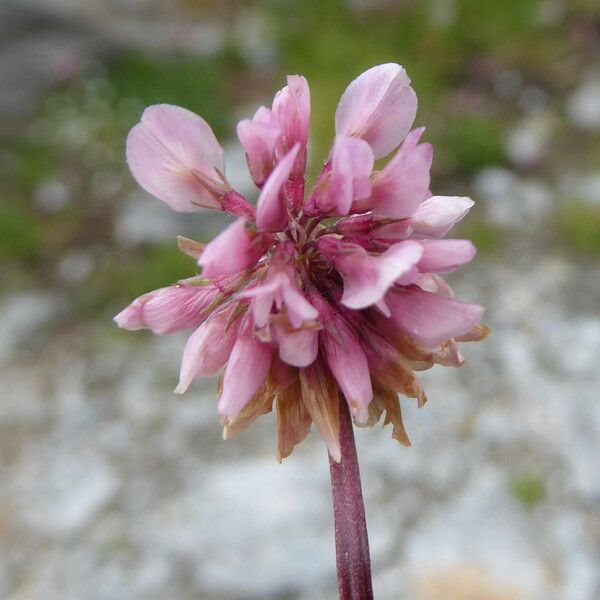
Plant Overview
Meet Trifolium thalii, commonly known as Thal’s Clover. This isn't your average lawn-dweller; it is a refined "mountaineer" at heart, originally discovered in the high-altitude meadows of the Alps and Pyrenees. Named after the 16th-century botanist Johannes Thal, this resilient perennial is a master of survival in rocky, limestone-rich terrains.
🔍 How to Identify
- 🍀 The Leaflets: Features the classic trifoliate (three-part) leaf shape typical of clovers, but the leaflets are notably hairless and often have a subtle, pale "V" mark on the surface.
- 🌸 The Bloom: Produces spherical flower heads that transition from a creamy, snowy white to a delicate pale pink as they age.
- 🌱 Growth Habit: It is a low-growing, mat-forming plant. Unlike taller clovers, it hugs the ground closely to protect itself from harsh mountain winds and heavy snow.
🏡 In Your Garden
- 🏔️ The Alpine Specialist: Because it originates from high elevations, it demands "cool feet" and "bright heads." It thrives in rock gardens where its roots can stay cool under stones while its leaves soak up the sun.
- 💎 Soil Preference: It is a "calciphile," meaning it absolutely loves lime-rich or alkaline soils. If your garden soil is too acidic, this clover may struggle to establish its nitrogen-fixing roots.
⚠️ Safety & Toxicity
- ✅ Generally Safe: Thal’s Clover is considered non-toxic to humans, dogs, and cats. In its native habitat, it is a high-protein snack for mountain goats and marmots.
- 🐝 Pollinator Magnet: While safe for humans, it is highly "attractive" to bees. If you have a severe bee allergy, be mindful when walking near a blooming patch, as the nectar-rich flowers are a favorite stop for alpine bumblebees.
✨ Fun Fact
The man this plant is named after, Johannes Thal, wrote the very first regional "Flora" book in 1588. He is often called the "Father of Floristics" because he was the first to document plants specifically based on the locations where they naturally grew!

Detailed Care Instructions
To grow Trifolium Thalii (also known as Lesser Trefoil), follow these steps:
- Choose a suitable location: Lesser Trefoil prefers full sun to partial shade. Select an area in your garden that receives at least 4-6 hours of direct sunlight per day.
- Prepare the soil: The plant thrives in well-drained soil with a pH range of 6 to 7. If the soil in your garden is heavy or clayey, amend it with organic matter like compost or well-rotted manure to improve drainage and fertility.
- Sow the seeds: Purchase seeds from a reputable nursery or seed supplier. Sow the seeds directly into the prepared soil after the danger of frost has passed, usually in spring or early summer. Scatter the seeds evenly and lightly press them into the soil surface.
- Watering: Keep the soil consistently moist during germination and early growth. Water the area regularly, but be careful not to overwater, as this can lead to root rot. Once the plants are established, they are drought-tolerant and don't require excessive watering.
- Weed control: Remove any weeds or unwanted grasses around the seedlings to prevent competition for nutrients and space.
- Fertilization: Trifolium Thalii generally doesn't require heavy fertilization. However, you can apply a balanced, slow-release fertilizer once or twice a year to promote healthy growth. Follow the manufacturer's instructions for the proper application.
- Maintenance: Trim or mow the plants occasionally to prevent them from becoming overgrown or straggly. This will also encourage bushier growth and more blooms.
- Pests and diseases: Lesser Trefoil is generally resistant to common pests and diseases. However, keep an eye out for any signs of infestation or infection. If necessary, treat with appropriate organic or chemical controls.
- Propagation: Trifolium Thalii can also be propagated by dividing mature clumps or through stem cuttings. Divide the plants in spring or early fall, ensuring each divided section has enough roots and shoots. Plant the divisions in well-prepared soil and water thoroughly.
- Enjoy the bloom: Trifolium Thalii typically produces small, pink or white flowers from late spring to late summer. Sit back and enjoy the beautiful blooms, while providing the necessary care and maintenance as needed.
Remember that Lesser Trefoil is a perennial plant, so it will continue to grow and bloom year after year with proper care and maintenance.
- Determine when the plant needs watering based on the moisture level of the soil.
- Check the soil for dampness by sticking your finger about an inch into the soil. If it feels dry, it's time to water the plant.
- Water enough to moisten the soil about an inch deep, but avoid oversaturating the soil.
- Water the plant in the morning or late afternoon, to avoid evaporation or heat stress.
- Use a watering can or hose with a gentle spray nozzle to water the plant.
- Allow any excess water to drain away and ensure that the soil doesn't become waterlogged.
- Monitor the plant regularly, and adjust the watering schedule according to its needs, particularly during periods of drought or heat.
For best results, use a balanced fertilizer with equal amounts of nitrogen, phosphorus, and potassium. Apply the fertilizer to the soil around the base of the plant, making sure not to get any on the leaves. Water the plant well after fertilizing. Repeat this process every 4-6 weeks during the growing season, being careful not to over-fertilize as this can damage the plant. In addition to fertilizer, regular watering and proper sunlight exposure are important for the health of this plant.
Trifolium Thalii prefers well-drained loamy soil with a pH between 6.0 and 7.0. The soil should be nutrient-rich and well-aerated to promote healthy root growth. The addition of organic matter such as compost or aged manure can enhance soil fertility and structure. It is important to avoid soils that are heavy in clay or poorly-draining, as this can lead to root rot and other issues. Adequate moisture levels should also be maintained to support plant growth and development. Soil should be kept consistently moist but not waterlogged. Additionally, fertilization with a balanced nutrient mix can help support plant growth and promote optimal yields.
To propagate the plant, take a stem cutting that is around 4 inches in length, making sure it has at least 2 to 3 leaves on it. Remove the lower set of leaves, and dip the cut end of the stem into rooting hormone. Place the stem cutting into a pot filled with moist potting soil and cover with a plastic bag to retain humidity. Keep the pot in a warm, bright location with indirect sunlight. Keep the soil consistently moist and in a few weeks, the cutting should begin to grow roots. Once the roots are well established, the plant can be transplanted into its desired location.








