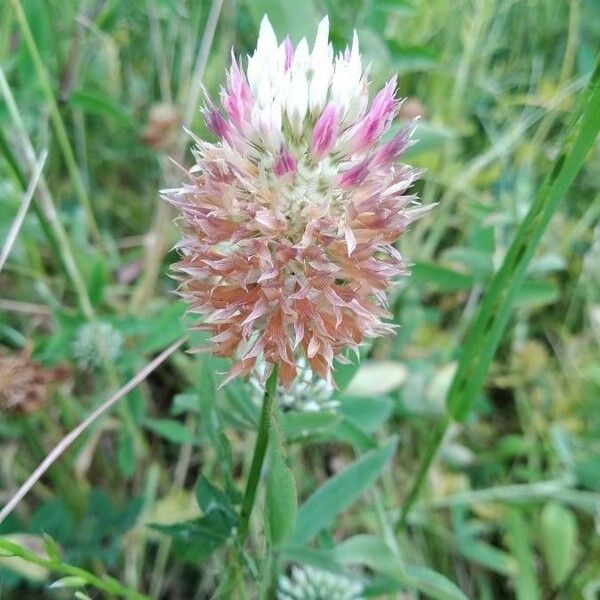
Plant Overview
Known as the Arrowleaf Clover, this Mediterranean native is the "towering giant" of the clover world. Unlike the low-creeping white clover you find in your lawn, Trifolium vesiculosum stands tall and proud, often reaching waist-height in the right conditions. It is widely celebrated by enthusiasts for its striking foliage patterns and its ability to breathe life back into tired soil by "fixing" nitrogen.
🔍 How to Identify
- 🏹 Pointed Foliage: True to its name, the leaflets are distinctively arrow-shaped or elongated ovals, rather than the perfectly round leaves seen on other clovers.
- 🤍 The Silver V: Each leaf usually features a bold, silvery-white "V" or crescent-shaped watermark that pops against the deep green background.
- 🌸 Cylindrical Blooms: The flower heads are large and shaped like rounded cylinders. They start out a creamy white and gradually blush into a deep pink or purple as they mature from the bottom up.
🏡 In Your Garden
- 🌱 Deep Roots, High Resilience: Because it develops a robust taproot, Arrowleaf Clover is much more drought-tolerant than its cousins. It prefers well-drained soil and hates "wet feet," so avoid planting it in swampy patches.
- 🐝 Pollinator Magnet: This plant is a powerhouse for honeybees and butterflies. If you are looking to create a "pollinator highway" in your backyard, this clover provides a high-protein nectar source that keeps local hives thriving.
- ✂️ Late Season Interest: It stays green much longer into the summer than other annual clovers, providing a lush look even when the heat begins to rise.
⚠️ Safety & Toxicity
- ✅ Generally Safe: Arrowleaf Clover is considered non-toxic to humans, dogs, and cats. It is a common forage crop for wildlife like deer and rabbits.
- 🐄 Livestock Note: While safe for garden pets, it is very high in protein. In large-scale agricultural settings, it can occasionally cause "bloat" in cattle if they graze on it exclusively, but this is rarely a concern for home gardeners.
✨ Fun Fact
Arrowleaf Clover is a master of disguise during its life cycle. A single flower head can contain up to 170 individual tiny florets, and as they are pollinated, they turn brown and reflex downward, making the flower head look like a fuzzy, changing sculpture over several weeks!

Detailed Care Instructions
To grow Trifolium vesiculosum, also known as bulbous clover or vesicular clover, you can follow these steps:
- Climate and Soil: Determine if your climate is suitable for this plant. Trifolium vesiculosum is typically found in Mediterranean climates. The plant prefers well-draining soil with a pH range of 6 to 7.
- Seeds: Obtain Trifolium vesiculosum seeds from a reputable nursery or online seed supplier.
- Germination: Start the seeds indoors by placing them in a seed tray or small pots filled with seed-starting mix. Moisten the soil evenly. Keep the trays or pots in a warm area (around 68-77°F or 20-25°C) with plenty of sunlight or under grow lights.
- Transplantation: Once the seedlings have developed a few true leaves, they can be transplanted into individual pots or directly into the garden. Ensure the location has full sun or partial shade.
- Planting: For garden planting, prepare the soil by removing weeds, adding compost or organic matter, and ensuring good drainage. Dig small holes for each seedling, making sure to space them 8-10 inches apart. Gently place the seedlings in the holes and cover them with soil, pressing it down lightly. Water the planted seedlings thoroughly.
- Care: Water the plants regularly, keeping the soil moist but not overly soaked. If rainfall is insufficient, supplement with additional watering. Apply a balanced, slow-release fertilizer according to the package instructions. Avoid over-fertilizing as it can lead to excessive leaf growth instead of flower formation.
- Maintenance: Remove weeds as they appear to prevent competition for nutrients and water. Trifolium vesiculosum does not generally require pruning or deadheading. Mulching around the plants can help retain moisture and suppress weed growth.
- Propagation: Trifolium vesiculosum can also be propagated by division. In early spring, carefully dig up the plant clumps and separate the root sections. Replant the divisions in desired locations, ensuring they are kept well-watered until established.
- Pests and Diseases: Trifolium vesiculosum is relatively resistant to pests and diseases. However, regular inspection for common issues like aphids or powdery mildew is advisable. If necessary, treat with organic insecticides or fungicides.
By following these steps, you should be able to successfully grow Trifolium vesiculosum. Remember to adjust your care routine according to local climate conditions and specific needs of the plant.

Place in a bright room that is sun drenched almost all day. Or directly in a south-facing window.

To water this plant, we need to follow a few steps.
Firstly, we need to check the soil regularly to see if it’s dry to the touch. If the top inch of soil is dry, it’s time to water the plant.
Secondly, we need to water the plant sparingly. Overwatering can cause the roots to rot and kill the plant. We should only water the plant enough to thoroughly moisten the soil around the roots.
Thirdly, we need to water the plant at the base of the stem rather than on the leaves. This will prevent fungal diseases from forming on the leaves.
Lastly, we need to make sure the soil has good drainage. If the soil is too compacted, water may not drain properly and the plant can become waterlogged. To ensure good drainage, we can add perlite or sand to the soil to help water flow freely.
To fertilize this plant, begin by choosing a balanced fertilizer with equal amounts of nitrogen, phosphorus, and potassium. When fertilizing, follow the manufacturer's instructions for application rates and timing. It is best to avoid fertilizing during the plant's dormant season. Apply the fertilizer evenly around the plant, taking care to avoid getting it on the leaves or stem. Water the plant after fertilizing to help the nutrients absorb into the soil. Repeat this process once or twice throughout the growing season to promote healthy growth.
Trifolium Vesiculosum plant requires a well-draining soil mix with a neutral to slightly acidic pH level between 6.0 to 7.0. The soil should be rich in organic matter and nutrients, and moist, but not waterlogged. It is generally recommended to use a 2:1:1 ratio of peat moss, perlite, and vermiculite or a high-quality potting mix for container gardening. In-ground planting requires loosening the soil and adding compost or aged manure to enhance nutrient content and drainage. Soil drainage is crucial as the plant can suffer from root rot in poorly drained soil. Adding a small amount of sand or grit to the soil mix can also aid in drainage. The soil should be kept moist but not waterlogged, as excessive watering can lead to root rot.
Trifolium Vesiculosum is a plant that can be propagated through two main methods, namely vegetative propagation and seed propagation.
Vegetative propagation involves taking cuttings from the parent plant and rooting them to develop new plants. The cuttings should be taken from healthy stems and leaves, preferably in the spring. The stems should be cut at a length of 6-8 inches and the leaves should be removed from the bottom half of the stem. The cutting should then be placed in a container filled with soil and kept in a moist and shaded area until roots develop. Once the roots have developed, the new plant can be transplanted to a new pot or outdoor location.
Seed propagation involves starting Trifolium Vesiculosum plants from seeds. The seeds should be planted in a location with moist, well-draining soil and full sun exposure. The seeds should be covered with a thin layer of soil and kept moist. Germination should occur within 1-3 weeks, and the seedlings can be transplanted once they have developed a few true leaves.
Both methods of propagation can be effective for Trifolium Vesiculosum plants, depending on the desired outcome and available resources.








