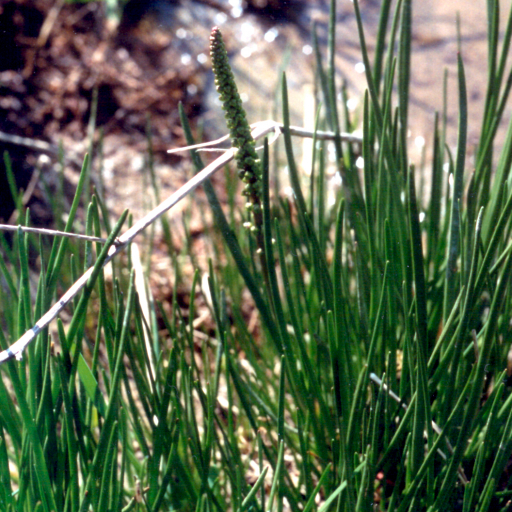
Plant Overview
Known as the Seaside Arrowgrass, this resilient perennial is a master of the marsh. Despite its name, it isn’t a true grass but a unique succulent-like herb that thrives where most plants perish—in salt-soaked coastal mudflats and inland alkaline wetlands. It has a storied history in foraging circles, though it hides a chemical defense that requires extreme caution.
🔍 How to Identify
- 🌿 Fleshy Foliage: The leaves are thick, semi-cylindrical, and fleshy rather than flat, resembling a cross between a chive and a succulent.
- 🌾 Tall Flower Spikes: It sends up a stiff, leafless stalk topped with a dense cluster of tiny, inconspicuous greenish-yellow flowers that eventually turn into small, egg-shaped fruits.
- 🌱 Base Structure: The plant grows in clumps (tussocks) and has a fibrous, somewhat bulbous base that helps it stay anchored in shifting marsh soils.
🏡 Habitat & Ecology
- 🌊 Salt Specialist: This plant loves "salt on its skin." It is specifically adapted to handle high salinity and waterlogged soil, making it a vital stabilizer for shorelines and a protector against coastal erosion.
- 🦆 Marsh Life Support: In its natural habitat, it provides essential cover for nesting marsh birds and serves as a food source for specific specialized insects, though most large mammals have learned to stay away.
⚠️ Safety & Toxicity
- 🚫 Status: TOXIC (Contains Cyanide). Seaside Arrowgrass contains cyanogenic glycosides, which release hydrogen cyanide when the plant is crushed, wilted, or chewed.
- 🐕 Details: It is notoriously dangerous to livestock (especially cattle and sheep) and should be kept away from curious pets. While some foragers use it as a "salty garnish" after specific preparation, it is not recommended for hobbyists due to the high risk of respiratory failure if ingested raw or improperly handled.
✨ Fun Fact
If you crush a fresh leaf of Seaside Arrowgrass between your fingers, it releases a surprisingly pleasant aroma that many describe as smelling exactly like fresh cilantro or coriander! This deceptive scent is often what lures unsuspecting foragers to it.

Detailed Care Instructions
To grow Triglochin Maritima, also known as sea arrowgrass, follow the steps below:
- Choose the right environment: Triglochin Maritima is a coastal plant that thrives in marshy or boggy areas near the sea. Ensure that the location you select has well-draining soil and receives plenty of sunlight.
- Obtain the seeds or young plants: Triglochin Maritima can be grown from seeds or purchased as young plants from nurseries specializing in native or coastal plants. Collecting seeds directly from the wild is usually not recommended as it may harm natural populations.
- Prepare the soil: In a small garden bed or container, prepare a mixture of loamy soil and organic matter such as compost. This will help retain moisture and provide necessary nutrients. Avoid using heavy clay soils as they can become waterlogged.
- Sow the seeds or plant the seedlings: If using seeds, lightly scatter them over the prepared soil, or plant the seedlings at the recommended spacing according to the instructions provided. Cover the seeds lightly with soil, ensuring they are still exposed to some sunlight.
- Watering: Keep the soil consistently damp but not waterlogged, as Triglochin Maritima prefers moist conditions. Water the plants regularly, especially during dry spells.
- Maintenance: Remove any weeds or unwanted vegetation that may compete with the Triglochin Maritima plants for nutrients. Mulching around the plants can help suppress weeds and conserve moisture.
- Pruning: Triglochin Maritima does not require pruning, but it can be cut back after flowering to maintain tidiness and promote new growth.
- Propagation: Triglochin Maritima can be propagated by collecting and planting seeds from mature plants. Additionally, it can spread naturally through rhizomes or underground stems.
- Protect from pests and diseases: Triglochin Maritima is generally resistant to many pests and diseases. However, occasional aphids or slugs may be encountered. Apply appropriate pest control methods if necessary.
Remember, Triglochin Maritima is a protected species in some areas, so it is essential to check local regulations before collecting or cultivating it.

Place in a bright room that is sun drenched almost all day. Or directly in a south-facing window.

Triglochin Maritima is a species of plant that grows in areas with high moisture levels, such as wetlands and marshes. When watering this plant, it is important to keep in mind that it requires consistent moisture and should never be allowed to dry out.
To water Triglochin Maritima, one should begin by ensuring that the soil is already moist but not waterlogged. This can be achieved by watering the plant lightly and then allowing the soil to absorb the moisture for a few minutes before repeating the process.
It is important not to overwater the plant, as this can lead to waterlogging and root rot. Instead, the soil should be kept consistently damp, with watering taking place every few days or as needed depending on the weather and soil moisture levels.
Additionally, Triglochin Maritima is adapted to salty soil, so it should be watered with saline water or a seawater solution occasionally to maintain its health.
- Choose a fertilizer that is well-balanced and intended for aquatic plants.
- Apply the fertilizer according to the instructions on the packaging.
- Be sure to apply the fertilizer in the early spring when new growth is just starting.
- Use a slow-release fertilizer to avoid over-fertilizing the plant.
- Water the plant immediately after fertilizing to ensure that the nutrients are distributed evenly throughout the soil.
- Do not fertilize the plant during its dormant period, which is typically in the winter months.
- Monitor the plant's growth and adjust the fertilization schedule accordingly. Too much fertilizer can harm the plant, while too little can stunt its growth.
Triglochin Maritima is a type of plant that requires soil with the right characteristics to grow and thrive. The ideal soil type for this plant is one that is well-draining, with good moisture retention capacity. It is also important that the soil has a neutral pH level, between 6.5 and 7.5, as this will provide an optimal growing environment. A sandy loam soil with an addition of organic matter, such as compost or peat moss, may also be beneficial for improving soil structure, nutrient retention, and water-holding capacity. Avoid using soil that is too heavy or waterlogged, as this can negatively affect the plant's growth and overall health. Proper soil management, including regular fertilization, watering, and pruning, can help ensure that the Triglochin Maritima plant thrives in its environment.
Triglochin maritima plants can be propagated by collecting their seeds. In order to collect seeds, search for mature, dried seed pods on the plant and carefully remove them. Keep the seeds in a cool, dry place until you are ready to plant them.
To prepare soil for planting, mix equal parts of sand and potting soil to create a well-draining soil. Sow the seeds on the surface of the soil and lightly press them down, but do not cover them with soil, as they require light to germinate. Keep the soil evenly moist, but be careful not to overwater.
The seeds should germinate within 2-4 weeks. Once the seedlings have grown to be about 2 inches tall, you can transplant them to their final location. Choose a site with full sun and consistent moisture.
Triglochin maritima plants can also be propagated by division. To do this, dig up an established clump of plants and gently separate the roots into smaller sections. Replant the smaller sections in a new location and keep the soil evenly moist until they establish themselves.








