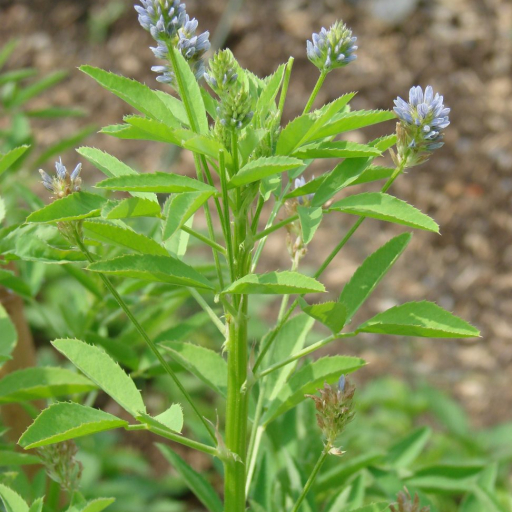
Plant Overview
Often called "Blue Melilot" or "Curd Herb," this aromatic annual is the secret soul of Georgian cuisine. While its more famous relative, common fenugreek, is known for its yellow flowers and bitter seeds, Trigonella caerulea offers a much milder, nutty fragrance that defines the famous Khmeli Suneli spice blend. It has been cultivated for centuries across the Alps and the Caucasus, valued both as a flavor enhancer and a beautiful, pollinator-friendly garden guest.
🔍 How to Identify
- 🪻 The Blooms: Features small, pale blue to violet pea-like flowers that grow in dense, globe-shaped clusters at the ends of the stems.
- ☘️ The Foliage: Displays "trifoliate" leaves (groups of three) similar to clover, but with distinct, finely serrated (toothed) edges.
- 👃 The Scent: While the fresh plant has a mild scent, the dried leaves and seeds emit a powerful, sweet aroma reminiscent of spicy hay or maple syrup.
🏡 In Your Garden
- 🌱 Soil Enrichment: As a member of the legume family, this plant is a "nitrogen fixer." It hosts friendly bacteria on its roots that pull nitrogen from the air and put it back into the soil, acting as a natural fertilizer for your next crop.
- ☀️ Sun & Growth: It thrives in full sun and well-draining soil. Because it is a fast-growing annual, it’s a great choice for filling gaps in a herb garden or for hobbyists looking for a quick, rewarding harvest.
⚠️ Safety & Toxicity
- ✅ Status: Generally recognized as safe (GRAS) for human consumption as a culinary herb or spice.
- 🤰 Details: Like common fenugreek, it contains compounds that can act as uterine stimulants. While safe in small pinches for seasoning, pregnant individuals should avoid consuming large medicinal quantities. It is non-toxic to cats and dogs, though heavy grazing might cause minor digestive upset.
✨ Fun Fact
In Switzerland, this plant is the essential ingredient in Schabziger (Sapsago) cheese. The dried herb gives the cheese its unique lime-green color and pungent aroma—a traditional recipe that has been legally protected in the Canton of Glarus since the year 1463!

Detailed Care Instructions
To grow Trigonella caerulea, also known as blue fenugreek, follow these steps:
- Start with selecting the right seeds: Obtain good quality Trigonella caerulea seeds from a reputable source. You can either purchase them online or from a local nursery.
- Choose the right location: Trigonella caerulea requires a sunny location to thrive. Select an area in your garden that receives full sunlight for at least 6-8 hours a day.
- Prepare the soil: Ensure that your soil is well-draining and loose. Trigonella caerulea prefers a slightly alkaline to neutral pH level. You can amend the soil with organic matter like compost to improve its fertility.
- Sow the seeds: In early spring, once the threat of frost has passed, sow the seeds directly into the prepared soil. Ensure the soil is moist but not waterlogged. Plant the seeds about 1/4 to 1/2 inch deep, spacing them 3-4 inches apart. Cover the seeds lightly with soil and gently firm it down.
- Watering and care: After sowing, water the seeds gently to keep the soil evenly moist. Avoid overwatering, as excessive moisture can lead to root rot. Once the seedlings emerge, water them regularly, ensuring the soil remains evenly moist. Avoid watering the foliage to prevent fungal diseases.
- Fertilization: Trigonella caerulea usually doesn't require heavy fertilization. However, you can apply a balanced, slow-release fertilizer or organic compost once or twice during the growing season to provide some nutrients.
- Weed control: Keep the area around the plants weed-free to prevent competition for nutrients and water. Regularly remove any weeds that appear.
- Harvesting: Trigonella caerulea leaves can be harvested for culinary use once the plant reaches a suitable size, typically when it is about 8-10 inches tall. You can either pick individual leaves or trim the whole plant about an inch from the ground. The leaves can be used fresh or dried for later use.
Be patient, as Trigonella caerulea can take several weeks to establish and begin to thrive. With proper care, you should be able to grow a healthy and productive plant.

Place in a bright room that is sun drenched almost all day. Or directly in a south-facing window.

Trigonella Caerulea plant should be watered regularly but not excessively. It is important to avoid waterlogging the soil, which can lead to root rot. The best way to water this plant is to allow the soil to dry out slightly between waterings. This can be determined by inserting your finger into the soil up to the second knuckle. If the soil feels dry, it is time to water.
When watering, use room temperature water and pour it slowly and evenly over the soil, avoiding the leaves. Be sure to water the entire root zone of the plant. Allow any excess water to drain away and discard it.
In general, Trigonella Caerulea plant prefers moist but well-draining soil. Therefore, it is essential to choose a high-quality soil that can hold water well without becoming waterlogged.
During the growing season, Trigonella Caerulea plant may need more water due to higher evaporation rates. In contrast, during the dormant season, the plant will require less water.
Lastly, it is important to keep the plant away from areas with high humidity and to avoid over-watering, as these conditions can lead to fungal diseases.
To fertilize this plant, use a balanced fertilizer with equal amounts of nitrogen, phosphorus and potassium. Apply the fertilizer every 4-6 weeks during the growing season, avoiding direct contact with the stem and leaves. Water the plant well before and after fertilization to ensure proper absorption of nutrients. Follow the instructions on the fertilizer package for proper dosage and application.
The ideal soil for the plant in question is well-draining and fertile, with a pH level ranging from neutral to slightly alkaline. The soil should also contain adequate amounts of nutrients and organic matter to support healthy growth and development. Additionally, the plant prefers a sandy loam texture, which helps to retain moisture while allowing for adequate aeration and drainage. It is important to avoid soils that are too heavy or clay-like, as these can lead to poor drainage and waterlogging. Soil composition may be adjusted as necessary based on the specific needs of the plant, such as by adding compost or other organic amendments to improve soil structure and fertility.
To propagate this plant, you can take cuttings from healthy, mature stems. Make sure to use clean, sharp shears to avoid damaging the plant. Cut stems that are about 6 inches long and remove the leaves from the lower half of the stem.
Then, dip the cut end of the stem in rooting hormone to encourage root growth. Plant the stem in a pot filled with a well-draining soil mixture. Water the soil thoroughly and cover the pot with a plastic bag to create a humid environment.
Place the pot in a warm, bright location where it will receive indirect sunlight. Keep the soil moist but not waterlogged, and mist the cutting daily to keep it humid. In a few weeks, you should see new growth indicating that the cutting has taken root.
Once the plant has grown strong enough, you can transplant it into a larger pot or into the garden, if the weather is suitable.








