Plant Overview
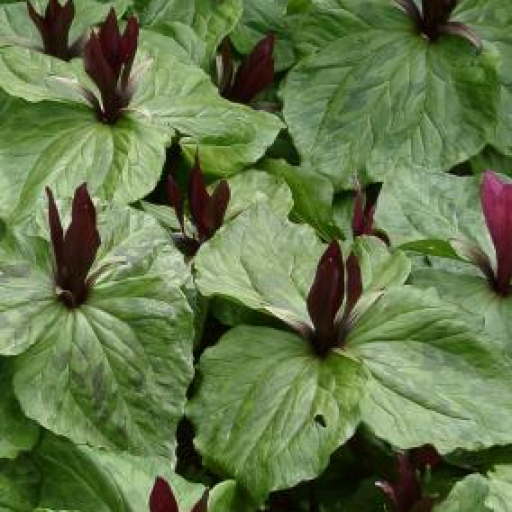
Often called the Giant Wakerobin, Trillium chloropetalum is a spring-blooming masterpiece native to the damp woodlands of the American West. Unlike many dainty wildflowers, this trillium demands attention with its bold, mottled foliage and upright, jewel-toned flowers. It is a slow-growing symbol of ancient forests, often taking several years of "settling in" before it showcases its first dramatic bloom.
🔍 How to Identify
- 🍃 Mottled Foliage: It features three large, oval leaves arranged in a perfect whorl. These leaves are often splashed with dramatic dark purple or maroon blotches, looking almost like camouflage.
- 🍷 Sessile Flowers: Unlike other flowers that sit on a stem, these three-petaled blooms sit directly on the leaves. They range in color from a deep, velvety burgundy to a ghostly greenish-white.
- 📏 Stately Stature: Living up to its "Giant" name, this species can reach nearly 2 feet in height, making it significantly more robust and upright than most other Trillium varieties.
🏡 In Your Garden
- 🌳 Woodland Mimicry: This plant thrives in deep to partial shade. To keep it happy, you should mimic the forest floor by providing a thick layer of leaf mold or organic mulch, which keeps the soil cool and rich.
- ⏳ The Long Game: Trilliums are famous for their "slow and steady" lifestyle. They resent being moved due to their sensitive underground rhizomes; if you transplant one, expect it to "sulk" and potentially skip a flowering season while it recovers.
- 💤 Summer Dormancy: Don't panic when the plant disappears! By mid-to-late summer, the foliage naturally dies back as the plant goes dormant. Mark the spot with a stone so you don't accidentally dig up the sleeping rhizome.
⚠️ Safety & Toxicity
- 🐾 Mildly Toxic: While not usually life-threatening, the rhizomes (roots) and berries contain saponins that can cause significant digestive upset, vomiting, or lethargy if eaten by dogs, cats, or humans.
- 🦌 Deer Danger: While not toxic to deer, the animals find the leaves delicious. Because the plant only produces one set of leaves per year, if a deer eats them, the plant cannot photosynthesize and may die or fail to return the next spring.
✨ Fun Fact
- 🐜 Ant Labor: This plant uses a clever trick called myrmecochory to spread its seeds. The seeds have a fleshy, fatty attachment called an elaiosome that ants find irresistible. Ants carry the seeds back to their underground nests, eat the fatty snack, and leave the seed in their "trash pile," which acts as a perfect, nutrient-rich nursery for the new plant!

Detailed Care Instructions
| Humidity | Normal |
| Difficulty | Medium |
| Hibernation | Cold Period |
| Hardiness Zones | 6 - 9 |
Growing Trillium Chloropetalum, also known as Giant Wakerobin or Giant Western Trillium, requires specific conditions and care. Here are some steps to grow this plant successfully:
- Climate and soil: Trillium Chloropetalum typically thrives in shade or dappled sunlight in cool, moist regions. Select a location in your garden that receives filtered or partial shade throughout the day. The soil should be rich in organic matter, well-draining, and slightly acidic.
- Planting: Trillium Chloropetalum is typically propagated through rhizomes or seeds. If starting from rhizomes, plant them in early autumn, about 1-2 inches (2.5-5 cm) deep, with the growing tips facing upwards. Space the rhizomes about 12 inches (30 cm) apart to allow for future growth. If planting from seeds, sow them in the autumn as well, but be aware that germination can take up to two years.
- Watering: Trillium Chloropetalum prefers consistently moist soil, but not waterlogged. Water regularly, especially during dry spells, ensuring the soil remains evenly moist. Avoid overwatering or allowing the soil to dry out completely.
- Mulching: Apply a layer of organic mulch, such as compost or leaf litter, around the base of the plant. This helps retain moisture and provides insulation to regulate soil temperature.
- Fertilization: Trillium Chloropetalum generally doesn't require much fertilizer. However, you can apply a slow-release balanced fertilizer in early spring to promote healthy growth. Be cautious with fertilizers high in nitrogen, as they can promote leaf growth at the expense of flowers.
- Weed control: Keep the area around the Trillium Chloropetalum plant free from weeds. Weeds can compete for nutrients and water, hindering the growth and development of the Trillium.
- Protection: Protect the plant from extreme temperatures, especially during freezing winters. Cover delicate Trillium Chloropetalum with a layer of mulch or leaves to provide insulation.
- Patience: Trillium Chloropetalum is a slow-growing plant, and it can take several years to reach maturity and produce flowers. Be patient and continue providing the necessary care throughout its growth.
Remember to research and follow specific care instructions for this particular species or consult a local gardening expert for additional guidance based on your specific climate and conditions.

Place in a window with dappled sun or a spot in the middle of a room. Or directly in a window facing west or east.

The Trillium Chloropetalum plant requires regular watering, especially during the growing season. It should be watered deeply and consistently, but care should be taken to not overwater it. The soil around the plant should be moist but not waterlogged or soggy. During the dormant season, the plant may need less frequent watering, but it should still be monitored to ensure that the soil does not completely dry out. When watering the plant, it is best to water it at the base and avoid getting the leaves wet, which can lead to disease. In addition, it is important to use a well-draining soil to ensure that the plant does not become waterlogged.
To fertilize this plant, apply a balanced, slow-release fertilizer in the spring before new growth appears. Use a fertilizer with a ratio of 10-10-10 or similar. Follow the package instructions for the amount to apply, and be sure to water the plant thoroughly after fertilizing. Avoid fertilizing in the fall or winter, as this can promote growth at the wrong time of year.
Trillium Chloropetalum prefers a well-draining soil that is rich in organic matter. The soil should be slightly acidic and have a pH of around 6.0. It is important to avoid using soils that are too heavy or clay-like as they can lead to waterlogging, which can be detrimental to the plant's health. A soil mixture that consists of equal parts peat moss, perlite, and high-quality garden soil is ideal for growing Trillium Chloropetalum. The plant also prefers to be grown in a shady or partially shady area with indirect or filtered sunlight.
Trillium Chloropetalum plant can be propagated through division. This can be done by carefully digging up the parent plant during the dormancy period. The plant should be carefully divided into sections, taking care to ensure that each section has a healthy and intact rhizome and a few leaves. These divisions can then be replanted in a suitable location, ensuring that the soil is rich and well-draining, and that the new plants receive plenty of water and sunlight.
Another method of propagation is through seed. The seeds should be sown in a suitable growing medium, such as sterilized soil or a seed-starting mix, and kept in a warm and moist environment. The seeds can take several months to germinate, and once they have sprouted, they should be carefully transplanted into individual pots or a suitable garden location.
Propagation of Trillium Chloropetalum plant can be challenging, as the plant can be slow-growing and difficult to establish. However, with proper care and patience, it is possible to successfully propagate this beautiful and unique plant.








