Plant Overview
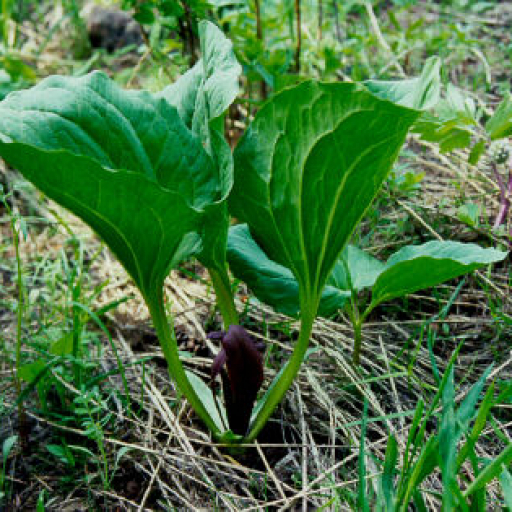
Often called the Idaho Trillium or Long-stalked Trillium, this woodland gem looks like a secret tucked into the forest floor. Unlike its taller cousins that wave in the breeze, Trillium petiolatum keeps a low profile, holding its deep, wine-colored blooms close to its chest. It is a master of the "ground-hugger" aesthetic, appearing as if its lush leaves are emerging directly from the soil.
🔍 How to Identify
- 🍃 The Long Stalks: The name "petiolatum" refers to the unusually long leaf stalks (petioles). This is its most distinctive feature, as most other trilliums have leaves that sit directly on the main stem.
- 🍷 The "Hidden" Flower: A single, three-petaled bloom that ranges from dark purple to deep brownish-maroon. The flower sits tightly at the base of the leaf stalks, often appearing to rest on the ground.
- 🟢 Leaf Shape: Three broad, rounded, or kidney-shaped leaves. When they first emerge, they may have a slightly mottled or "water-stained" pattern that fades to a solid, deep green as they mature.
🏡 In Your Garden
- 🌲 Woodland Mimicry: In a garden setting, this plant craves the cool, dappled shade of a coniferous or mixed forest. It thrives in rich, organic soil that stays consistently moist through the spring but can tolerate drier conditions once it goes dormant in the heat of summer.
- ⏳ The Patience Test: Trilliums are famously slow-growing. If you are starting from seed, it can take five to seven years to see the first bloom. Because they grow from a deep, fragile rhizome, they "hate" being transplanted—pick a permanent spot and let them settle in for the long haul.
⚠️ Safety & Toxicity
- 🐾 Mildly Toxic: The entire plant, particularly the underground rhizome and the berries, contains saponins which are toxic to humans and pets.
- 🤢 Symptoms: If ingested, it can cause severe stomach upset, vomiting, and diarrhea. While it isn't usually fatal, it is best kept away from curious puppies or toddlers who like to sample the greenery.
✨ Fun Fact
🐜 Ant Power: This trillium relies on a partnership with ants! Its seeds have a tiny, fatty attachment called an elaiosome. Ants carry the seeds back to their nests to feed the "fats" to their larvae, effectively "planting" the seeds in nutrient-rich underground tunnels where they are safe from birds and rodents.

Detailed Care Instructions
To grow Trillium petiolatum, also known as Savannah trillium or Giant Wake-robin, you can follow these steps:
- Climate and soil: Ensure you have the appropriate climate and soil conditions for Trillium petiolatum. They thrive in well-draining, humus-rich, and slightly acidic soil. This plant typically grows in USDA hardiness zones 6-9.
- Choosing a suitable location: Find a shady or partially shaded spot in your garden where the plant can receive dappled sunlight or a few hours of morning sunlight. Avoid areas with full sun as it may scorch the leaves.
- Planting: In late summer or early fall, which is the best time to plant trillium bulbs, dig a hole that is 2-3 inches deep. Place the rhizome in the hole with the growing tip pointing upwards. Cover it with soil while ensuring that the bud is at or slightly above soil level.
- Mulching: Apply a layer of organic mulch, such as leaf litter, wood chips, or compost, around the plant. This will help retain moisture and prevent weeds from sprouting.
- Watering: Trillium petiolatum prefers consistently moist but not waterlogged soil. It is important to water the plant regularly, especially during dry periods. Mulching can help with water retention, but do not let the soil become overly saturated.
- Fertilizing: Trilliums are typically low-maintenance plants and do not require regular fertilization. However, you can apply a slow-release, balanced fertilizer in early spring to provide some nutrients.
- Care: Remove any weeds that compete for resources with the trillium. Avoid disturbing the soil around the plant, as trilliums have delicate roots. In late fall, after the foliage has died back, you can cut it down to ground level.
- Propagation: Trillium petiolatum can be propagated by dividing clumps in early fall, as this is when the plant is dormant. Dig up the rhizomes, separate them, and replant them in suitable locations.
Remember, growing Trillium petiolatum may require some patience, as it can take several years for the plant to reach maturity and flower. However, their beautiful blooms and unique foliage make them worth the wait.

Place in a window with dappled sun or a spot in the middle of a room. Or directly in a window facing west or east.

Trillium Petiolatum is a plant that requires consistent and adequate watering to thrive. The plant should be watered deeply and regularly, but care should be taken not to overwater it as excess moisture can cause root rot. It is important to allow the soil to dry out slightly between waterings, but not to the point where the plant wilts. When watering, aim to water the soil directly rather than overhead watering, as this will help prevent soil compaction and reduce the risk of leaf diseases. During periods of drought or high temperatures, it may be necessary to increase the frequency of watering. It is also important to ensure that the plant is situated in well-draining soil and that any excess water is able to drain away freely.
To fertilize this plant, you will want to use a slow-release, balanced fertilizer with equal parts nitrogen, phosphorus, and potassium. Apply the fertilizer in early spring before the plant begins to bloom. Use a low-nitrogen fertilizer to avoid damaging the roots. Spread the fertilizer around the base of the plant, being careful not to get any on the leaves or stems. Water the plant thoroughly after fertilizing. Repeat this process once a year for best results.
Trillium petiolatum requires a well-draining soil mixture that is rich in organic matter. The soil should be slightly acidic with a pH level between 5.5 and 6.5. It is important that the soil does not become waterlogged, so adding perlite or sand to increase drainage may be necessary. Additionally, the soil should be moist but not overly wet. A mixture of sphagnum peat moss, pine bark, and perlite can provide an ideal blend for Trillium petiolatum. It is recommended to avoid using heavy soils that can retain water as well as soils that are highly alkaline.
Trillium Petiolatum is a perennial plant that can be propagated by division or seed. To divide a mature plant, carefully dig up the root ball and gently separate the rhizomes, making sure each division has at least one healthy shoot. Replant the divisions in a well-draining soil mixture, ensuring that the crown of the plant is just below the soil surface.
Propagation by seed can be done in the fall or early spring. Collect seeds from mature plants, soak them in water for 12-24 hours, and then plant them in a well-draining soil mixture, covering them with a very thin layer of soil. Keep the soil moist and place the container in a bright, filtered light environment. Seeds should germinate in 4-6 weeks.
Once the seedlings have developed at least two sets of true leaves, they can be transplanted into individual pots or into a prepared garden bed. It can take several years for Trillium Petiolatum to reach maturity, but with proper care, they will eventually produce their distinctive three-petaled flowers.








