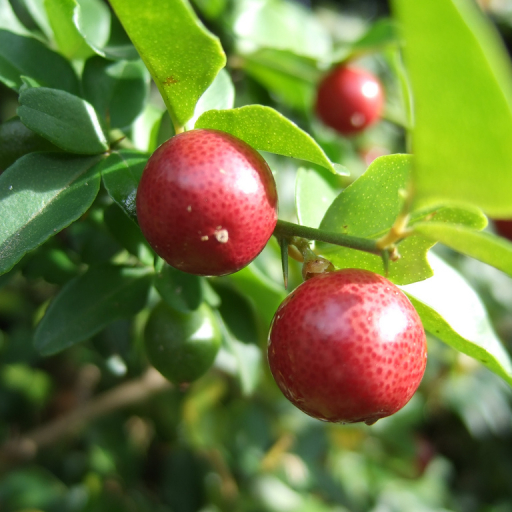
Plant Overview
Often called the Limeberry or Myrtle Lime, this Southeast Asian native is a charming, evergreen relative of the citrus family. While it produces dainty, orange-scented white flowers and bright crimson berries, it is a plant that "bites back" with its small, sharp spines. In many tropical regions, it is a favorite for creating "living fences" or being meticulously trained as a sophisticated bonsai.
🔍 How to Identify
- 🍃 Trifoliate Leaves: The plant gets its name from its dark green, glossy leaves that are divided into three distinct leaflets.
- 🌸 Star-Shaped Blooms: It produces small, white flowers with three petals that release a heavy, sweet fragrance reminiscent of orange blossoms.
- 🍒 The Berries: Small, fleshy fruits that transition from a dull green to a vibrant, shiny red when ripe, containing one to three green seeds.
- ⚔️ Hidden Thorns: Look closely at the leaf axils; the stems are armed with short, sharp, paired spines that help protect the plant.
🏡 In Your Garden
- 🌱 Bonsai Potential: Because it has naturally small leaves and responds well to pruning, it is highly prized by bonsai enthusiasts who want a "miniature citrus" look.
- ☀️ Light & Drainage: While it loves the sun, it is particularly sensitive to "wet feet." It thrives best in sandy, well-draining soil and prefers to dry out slightly between waterings to prevent root rot.
- 🛡️ Hedging Utility: Due to its dense growth habit and prickly nature, it makes an excellent ornamental barrier for keeping unwanted visitors (or neighbor's pets) out of specific garden beds.
⚠️ Safety & Toxicity
- 🟢 Status: Generally non-toxic, but physically hazardous.
- 🌵 The Danger: The primary risk comes from the sharp spines along the branches. These can cause painful punctures or scratches to curious pets and small children.
- 🍽️ Edibility: The red berries are technically edible and have a sweet, gummy, citrus-like flavor, often used in Southeast Asia for preserves or traditional medicine. However, always ensure a positive ID before tasting.
✨ Fun Fact
In the Philippines, the Limeberry is more than just a garden plant; the juice from the fruit is traditionally used as a natural cosmetic to help soothe and soften the skin, acting much like a tropical version of a lemon-based toner!

Detailed Care Instructions
To grow Triphasia Trifolia, also known as the Limeberry plant, you can follow these steps:
- Choose a suitable location: Select a location that receives full to partial sunlight throughout the day. Triphasia Trifolia prefers well-draining soil.
- Prepare the soil: Ensure that the soil is fertile, rich in organic matter, and well-draining. You can amend the soil with compost or well-rotted manure to improve its quality.
- Propagation: You can propagate Triphasia Trifolia from seeds or stem cuttings. If using seeds, soak them in warm water for about 24 hours before sowing. For stem cuttings, select healthy, young stems and place them in a mix of perlite and peat moss until they develop roots.
- Planting: Dig a hole that is slightly larger than the root ball of the plant. Place the seedling or rooted cutting into the hole and backfill it with soil, gently firming it around the plant. Water thoroughly after planting.
- Watering: Keep the soil consistently moist but not waterlogged. The Limeberry plant prefers regular watering, especially during dry spells. Avoid overwatering as it can lead to root rot.
- Fertilization: Triphasia Trifolia benefits from regular fertilization. Use a balanced fertilizer that is high in nitrogen, phosphorus, and potassium. Apply the fertilizer according to the manufacturer's instructions, usually in early spring, summer, and autumn.
- Pruning: Prune the plant regularly to maintain its shape and size. Remove any dead, damaged, or overgrown branches. Pruning also helps promote bushier growth and increased fruit production.
- Pests and diseases: Keep an eye out for common pests, such as aphids, scale insects, or mealybugs. Treat any infestations promptly using organic insecticides or by manually removing the pests. Watch for signs of diseases, such as leaf spots or powdery mildew, and take appropriate measures to control them.
- Harvesting: The Limeberry plant produces small, round, orange-red fruits that resemble miniature limes. Harvest the ripe fruits by gently twisting them off the plant. They can be used for culinary purposes, including making jams, jellies, or beverages.
With proper care and maintenance, the Triphasia Trifolia plant can grow into an attractive shrub and produce an abundance of delicious fruits.

Place in a bright room that is sun drenched almost all day. Or directly in a south-facing window.

To water this plant, one should first check the soil moisture level. This can be done by inserting a finger into the soil to a depth of about 2 inches. If the soil feels dry, it is time to water the plant. When watering, one should thoroughly soak the soil until water begins to drain from the bottom of the pot. It is important not to let the plant sit in standing water as this can lead to root rot. Watering frequency will depend on factors such as temperature, humidity, and sunlight, but as a general rule, this plant prefers to be kept on the slightly drier side. Overwatering can lead to yellowing leaves and stunted growth, while under-watering can cause the soil to dry out too much and lead to wilting.
First, prepare a well-draining potting mix that is rich in organic matter. Next, select a balanced fertilizer that contains equal amounts of nitrogen, phosphorus, and potassium. Avoid using fertilizers that are high in nitrogen as this can lead to excessive vegetative growth.
During the growing season, apply the fertilizer every two weeks at half strength. Dilute the fertilizer in water and water the plant thoroughly.
In the dormant season, reduce the frequency of fertilizer applications to once a month.
Always check the soil moisture level before fertilizing. If the soil is dry, water the plant first before applying fertilizer.
Finally, avoid fertilizing the plant during extreme temperatures or when it is stressed, as this can cause damage to the plant.
Triphasia Trifolia plant requires a well-draining soil mix that is slightly acidic and rich in organic matter. A good soil mix for this plant includes a combination of peat moss, perlite, and sand or gravel to improve aeration and draining. It is recommended to avoid using heavy or clay soils as these can retain too much moisture and lead to root rot. Additionally, it is essential to ensure that the soil is rich in nutrients such as nitrogen, phosphorus, and potassium, which can be achieved by adding a slow-release fertilizer to the soil before planting. Overall, the soil should be kept moist but not too wet, and regular fertilization and watering will help to promote healthy growth and fruit production.
To propagate this plant, start by choosing healthy stem cuttings from the parent plant. Make sure the cutting is at least 4 inches long and has 1-2 nodes (where the leaves grow from). Remove any lower leaves and dip the cut end in rooting hormone powder.
Fill a small pot with a well-draining soil mix and make a hole with your finger in the center. Insert the stem cutting into the hole and gently press the soil around it. Water the cutting well and cover the pot with a plastic bag or dome to create a greenhouse effect.
Place the pot in a bright, indirect light location and keep the soil moist but not waterlogged. After a few weeks, new leaves should start to emerge, indicating that the cutting has successfully rooted. Remove the plastic covering and gradually acclimate the new plant to normal conditions.
Once the new plant has grown enough and has developed strong roots, it can be transplanted into a larger pot or into the garden.








