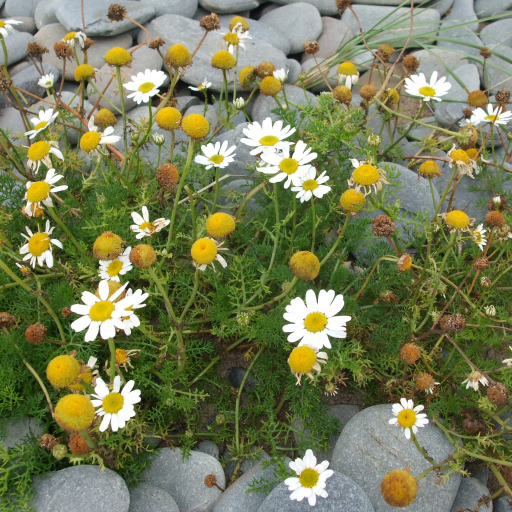
Plant Overview
Often called the Sea Mayweed, this hardy coastal resident looks like a delicate daisy but possesses the grit of a seasoned sailor. It thrives in the harsh, salty environments of rocky shores, shingle beaches, and cliffs across Northern Europe and parts of North America. While it may appear fragile, it is a pioneer species, often being one of the first plants to colonize and stabilize shifting coastal sands.
🔍 How to Identify
- 🌼 Daisy-Like Blooms: It features classic white ray florets surrounding a dense, domed yellow center; these flowers typically appear in abundance from mid-summer through autumn.
- 🌿 Succulent Foliage: The dark green leaves are feathery and finely divided, but they feel noticeably "fleshy" or succulent compared to inland daisies—an adaptation that helps the plant store water in salty air.
- 🌱 Mounded Growth: It generally forms low, sprawling cushions or mounds that hug the ground to stay protected from high-speed coastal winds.
🏡 In Your Garden
- 🌊 Salt Specialist: This plant is an excellent choice for "maritime gardening." If you live near the ocean where salt spray kills more sensitive species, the Sea Mayweed will feel right at home.
- 🏜️ Drainage is Vital: Because its natural habitat is sand and gravel, it cannot tolerate heavy, waterlogged clay. It requires very "lean" soil and sharp drainage to prevent the roots from rotting during the winter months.
⚠️ Safety & Toxicity
- ✅ Generally Safe: Sea Mayweed is not known to be toxic to humans, dogs, or cats, making it a safe addition to a family-friendly coastal landscape.
- 🧤 Skin Sensitivity: Like many members of the Aster family, the sap can occasionally cause mild skin irritation or "contact dermatitis" in sensitive individuals, so wearing gloves during pruning is a wise precaution.
- 🚫 Not for Tea: Although it looks nearly identical to Chamomile, it lacks the soothing medicinal properties and pleasant aroma; it is essentially odorless and should not be used for herbal infusions.
✨ Fun Fact
Despite its striking resemblance to the fragrant Chamomile used for tea, the Sea Mayweed's Latin name Tripleurospermum actually refers to its seeds—it translates to "three-ribbed seed," describing the tiny, structural ridges found on its microscopic fruits!

Detailed Care Instructions
To grow Tripleurospermum Maritimum, also known as Sea Mayweed or Scentless Mayweed, follow these steps:
- Choose a suitable location: Tripleurospermum Maritimum prefers full sun to partial shade. It can tolerate a wide range of soil conditions, but it thrives in well-draining soil.
- Prepare the soil: Before planting, ensure that the soil is loose, fertile, and free from weeds. Add organic matter like compost or well-rotted manure to improve the soil's nutrient content and drainage.
- Planting: Tripleurospermum Maritimum can be propagated from either seeds or division. If starting from seeds, sow them shallowly into the prepared soil and lightly cover them with a thin layer of soil. Water gently to keep the soil moist until germination. If using divisions, carefully separate young plants from an established clump and transplant them into the prepared soil.
- Watering: Water the plants regularly, keeping the soil evenly moist but not waterlogged. During hot summers or in arid climates, watering may need to be more frequent.
- Fertilization: Tripleurospermum Maritimum usually doesn't require much additional fertilization. However, you can apply a balanced slow-release fertilizer once or twice during the growing season for better growth and blooming.
- Pruning: Regular deadheading, which means removing spent flowers, can promote blooming and prevent self-seeding. Trim the plant back after flowering to keep it tidy and encourage a compact growth habit.
- Pest and disease control: Tripleurospermum Maritimum is generally resistant to most pests and diseases. However, keep an eye out for common garden pests like aphids, slugs, or snails. If necessary, apply organic pesticides or take appropriate measures to control them.
- Overwintering: In most regions, Tripleurospermum Maritimum is hardy and can survive the winter. However, if you live in an area with severe winters, it is advisable to provide a layer of mulch around the plant to protect the roots.
By following these guidelines, you should be able to successfully grow Tripleurospermum Maritimum and enjoy its beautiful daisy-like flowers.

Place in a bright room that is sun drenched almost all day. Or directly in a south-facing window.

Tripleurospermum Maritimum requires regular watering to thrive. To water this plant, one should first check the soil's moisture level by sticking their finger about an inch into the soil. If the soil feels dry, water the plant thoroughly until water runs through the drainage holes at the bottom of the pot or surrounding soil. However, it is crucial not to overwater the plant, as it can lead to root rot. It is best to water early in the morning or late in the evening to avoid evaporation. In the summer months, the plant may require more frequent watering due to increased temperatures and sunlight. Overall, it is essential to monitor the plant's soil moisture levels and adjust watering accordingly.
To fertilize this plant, apply a balanced fertilizer, such as a 10-10-10 formula, at a rate of 1 tablespoon per square foot of soil. Apply the fertilizer in early spring before new growth appears and again in mid-summer. Water the plant thoroughly after fertilizing to help distribute the nutrients. Avoid over-fertilizing, as it can lead to excessive growth and reduce the overall health of the plant.
The ideal soil for Tripleurospermum Maritimum plants is a well-draining and nutrient-rich soil with a pH range between 6.5 and 7.5. It should contain a mixture of organic matter, such as compost or peat moss, along with sand and loam to promote good drainage. The soil should be moist but not waterlogged to prevent root rot. It is important to avoid using heavy clay soils, as they can cause waterlogging and restrict root growth. Additionally, regular fertilization with a balanced fertilizer can help promote healthy growth and flowering.
To propagate this plant, you can start by collecting mature seeds from the parent plant. Once you have the seeds, you can prepare a well-draining potting mix and fill a small pot with it. Moisten the potting mix, but make sure it is not too wet.
Next, scatter the seeds on top of the potting mix and cover them with a thin layer of potting mix. Keep the pot in a warm and bright location, but out of direct sunlight.
After a few weeks, the seeds should germinate. As the seedlings grow, make sure to keep the soil moist but not waterlogged. You can also add a diluted liquid fertiliser to the soil to help the seedlings grow.
Once the seedlings have developed a few sets of true leaves, you can transplant them into larger pots or into the ground. Make sure to plant them in a well-draining soil and a spot that gets plenty of sunlight. Water regularly until the plants are established.
Over time, the plants will develop a deep root system, and you can divide them to create more plants. Simply dig up the plant and carefully separate the roots into smaller sections. Replant the sections in new pots or in the ground, and water regularly until they are established.








