Plant Overview
Known affectionately as the Water Gum or Kanooka, this Australian native is a true superstar of the rainforest and suburban streets alike. While it starts as a modest shrub, it eventually grows into a stately tree with a trunk that looks like a piece of marble art. In the wild, it hugs the banks of rocky creeks, standing strong against rushing floods with its incredibly tough, flexible wood.
🔍 How to Identify
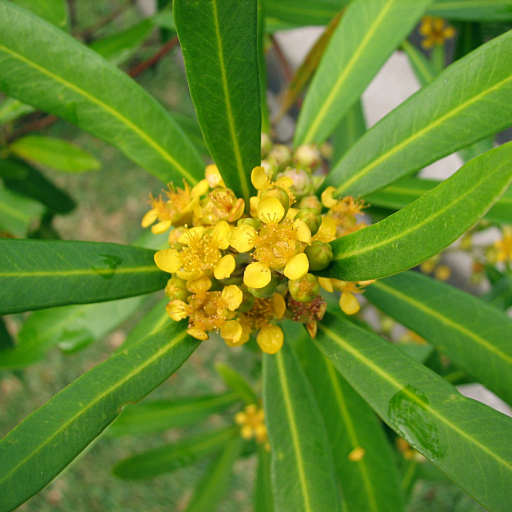
- 🍃 The Foliage: Look for narrow, glossy, dark green leaves that resemble those of a Bay Laurel. In cooler months, older leaves often turn a vibrant red before falling, adding a splash of seasonal color.
- 🪵 The Bark: This is the plant's most striking feature. As the tree matures, the old bark peels away in thin, papery strips to reveal a smooth, creamy-white or pale pink trunk underneath that feels cool to the touch.
- 🌼 The Blooms: During mid-summer, the tree is smothered in clusters of small, bright yellow flowers. They are rich in nectar and have a distinct, sweet scent that many people compare to honey or even buttered popcorn.
🏡 In Your Garden
- 💧 Thirsty but Flexible: Because its natural home is near riverbeds, it loves a deep watering during dry spells. However, it is surprisingly "urban-hardy" and can adapt to most soil types once its root system is established.
- 🌳 Urban Friendly: Unlike many trees that cause sidewalk havoc, the Water Gum has a non-invasive root system. This makes it a top choice for small backyards, narrow garden beds, or planting near pipes and pathways.
- 🐝 Wildlife Magnet: If you want to bring your garden to life, this is the tree for you. The yellow blossoms are a five-star restaurant for native bees, butterflies, and nectar-seeking birds.
⚠️ Safety & Toxicity
- ✅ Pet & Child Safe: Tristaniopsis laurina is considered non-toxic to humans, dogs, and cats. It is a very safe "family tree" for residential landscapes.
- 🧤 General Caution: While not toxic, the wood is extremely dense and hard. If you are pruning, ensure your tools are very sharp to prevent jagged cuts that could invite fungus into the tree.
✨ Fun Fact
The wood of the Water Gum is so incredibly dense and tough that it was historically used to craft tool handles, mallets, and even wooden screws for printing presses!

Detailed Care Instructions
To successfully grow Tristaniopsis laurina, also known as the Water Gum or Kanooka, follow these steps:
- Climate: Tristaniopsis laurina is native to Australia and thrives in a warm temperate climate. It prefers full sun but can tolerate some shade. Ensure that your region's climate is suitable for this plant.
- Soil: The plant prefers well-draining soil that is rich in organic matter. Before planting, amend the soil with compost or well-rotted manure to improve soil fertility and drainage.
- Watering: Tristaniopsis laurina has moderate water requirements. It prefers consistently moist soil but is somewhat drought-tolerant once established. Water deeply but infrequently, allowing the top few inches of soil to dry out between waterings.
- Mulching: Apply a layer of organic mulch around the base of the plant to help retain moisture, suppress weeds, and regulate soil temperature. However, avoid placing mulch against the trunk, as it can cause rot.
- Pruning: Tristaniopsis laurina generally requires minimal pruning. However, you can lightly prune to shape the plant or remove any diseased or dead branches. Prune during late winter or early spring before new growth emerges.
- Fertilizer: Tristaniopsis laurina generally does not require frequent fertilization unless the soil is poor. Apply a balanced slow-release fertilizer in early spring or use a liquid fertilizer every two to three months during the growing season.
- Pests and diseases: This plant is generally resistant to common pests and diseases. However, keep an eye out for any signs of aphids, scale insects, or fungal infections. Treat pest or disease issues promptly with appropriate solutions.
- Propagation: Tristaniopsis laurina can be propagated from seed or by taking semi-hardwood cuttings in late summer or early autumn. Provide bottom heat and a propagating mix until roots develop.
Remember to always consider the specific requirements and conditions of your region to ensure the proper growth and care of Tristaniopsis laurina.

Place in a bright room that is sun drenched almost all day. Or directly in a south-facing window.

To water this plant, first check the soil moisture level by sticking your finger about an inch into the soil. If it feels dry, it's time to water. Use a watering can or hose to water the soil around the base of the plant, being careful not to get water on the leaves or flowers. Water until the soil is moist but not waterlogged. This plant prefers regular watering but can handle brief periods of drought once established. Avoid letting the soil completely dry out between waterings. In very hot or dry weather, you may need to water more frequently.
To provide proper fertilization for this plant, use a slow-release fertilizer with balanced N-P-K (nitrogen, phosphorus, and potassium) ratios. Apply the fertilizer evenly around the base of the plant and water it well. Fertilize during the growing season, which may vary depending on your location. Be careful not to over-fertilize the plant as it can lead to burning roots and other issues.
Tristaniopsis Laurina plant prefers well-draining soil that is slightly acidic to neutral. It does not tolerate waterlogged soil. A mix of sandy loam soil and organic matter such as compost or peat moss is ideal for this plant to thrive. The soil should be kept consistently moist but not soggy. Adding a layer of mulch around the plant can help retain moisture and regulate soil temperature. It is recommended to avoid using soil that contains heavy clay or compacted soil, as this can impede root growth and cause waterlogging.
To propagate this plant, you will need to take a cutting from a healthy and mature plant. The cutting should be about 4-6 inches long with several nodes. Remove the leaves from the lower half of the cutting, leaving the top leaves intact. Dip the cut end of the cutting into rooting hormone powder and plant it in a small container filled with a well-draining potting mix. Water the cutting and cover the container with a plastic bag to create a humid environment.
Place the container in a bright, but not directly sunny, location and keep the soil moist. After a few weeks, new growth should appear, indicating that the cutting has successfully rooted. Once the new plant has become established, it can be transplanted into a larger container or directly into the garden, depending on your preference.








