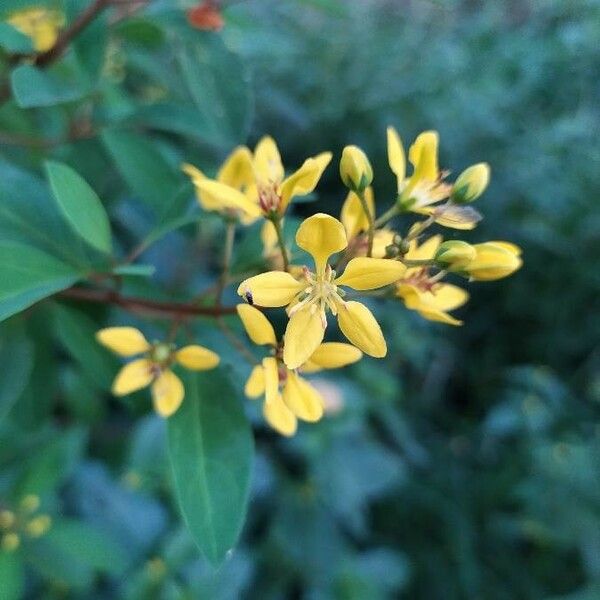
Plant Overview
Often called the Shower of Gold or Maiden’s Jealousy, this fast-growing tropical vine is a showstopper for any trellis or fence. Native to the coastlines of Southeast Asia and Australia, it is beloved for its year-round display of bright yellow, star-shaped blooms. It is the perfect choice for gardeners who want a lush "jungle" aesthetic without the high-maintenance drama of more sensitive climbers.
🔍 How to Identify
- 🌟 Star-Like Blooms: Features dense clusters (racemes) of bright yellow flowers, each with five distinct petals and prominent reddish-orange stamens at the center.
- 🍃 Glossy Foliage: The leaves are smooth, dark green, and oval-shaped, providing a rich, evergreen backdrop even when the plant isn't in peak bloom.
- 🌿 Twining Stems: Unlike ivy that uses suction, this plant climbs by twining its woody stems tightly around supports like wires, poles, or pergolas.
🏡 In Your Garden
- ⚓ Coastal Hero: This vine is exceptionally tolerant of salt spray, making it one of the few flowering climbers that thrives in beachfront gardens or windy balconies.
- ✂️ Growth Control: It is a vigorous grower; without regular pruning, it can quickly overwhelm smaller shrubs. It’s best to "shape" it after a heavy flowering flush to keep the base from becoming too woody and bare.
- 🏗️ Structural Support: Because the vine becomes heavy and woody with age, ensure your trellis or fence is sturdy enough to hold the weight of a mature plant.
⚠️ Safety & Toxicity
- ✅ General Safety: Tristellateia australasiae is generally considered non-toxic to humans and is not known for causing skin irritation.
- 🐾 Pets & Kids: While not listed on major toxic plant databases (like the ASPCA), it is always best to discourage pets or toddlers from chewing on the leaves, as ingesting fibrous plant material can cause mild stomach upset.
✨ Fun Fact
The genus name Tristellateia is derived from the Latin words for "three" and "star." This refers to the plant’s unique seed pods, which are shaped like tiny, three-winged stars that help the seeds catch the wind to travel to new locations!

Detailed Care Instructions
| Humidity | Normal |
| Lighting | Full Sun |
| Difficulty | Medium |
To grow Tristellateia Australasiae, also known as the Rose Vine, you can follow these steps:
- Climate: Ensure that you live in a suitable climate for growing the plant. Tristellateia Australasiae thrives in tropical and subtropical regions.
- Soil: Use well-draining soil that is rich in organic matter. Ideally, the soil pH should be slightly acidic to neutral.
- Sunlight: Place the plant in a location where it receives partial to full sun exposure. Tristellateia Australasiae prefers bright light but can tolerate some shade.
- Watering: Keep the soil consistently moist but not waterlogged. Water the plant deeply when the top inch of soil feels dry to the touch. Avoid allowing the soil to dry completely.
- Fertilization: Use a balanced, slow-release fertilizer during the growing season to promote healthy growth. Follow the instructions on the fertilizer packaging for the correct application rate.
- Pruning: Prune the plant regularly to maintain its shape and promote bushier growth. Remove any dead or diseased branches to maintain plant health.
- Support: As Tristellateia Australasiae is a climbing vine, provide it with a supporting structure, such as a trellis or pergola. This will allow the plant to climb and display its beautiful flowers.
- Propagation: Propagate the plant through stem cuttings. Take 4-6 inch cuttings from healthy, mature vines in early spring or summer. Remove the lower leaves and dip the cut end in rooting hormone before planting in well-draining potting mix. Keep the cuttings evenly moist until roots form.
- Pests and diseases: Monitor the plant for any signs of pests, such as mealybugs or aphids. Treat any infestations promptly with an organic insecticide. Ensure proper air circulation around the plant to prevent fungal diseases.
- Enjoy the blooms: Tristellateia Australasiae produces beautiful, fragrant pink or white flowers. Once established, the plant should bloom regularly, adding beauty to your garden.
Remember to regularly care for the plant by watering, fertilizing, and pruning as needed to ensure its healthy growth and maintenance.

Place in a bright room that is sun drenched almost all day. Or directly in a south-facing window.

Tristellateia Australasiae is a type of plant that requires consistent watering. It is important to ensure that the soil around the roots stays moist, but not waterlogged. One way to do this is to water deeply and infrequently, allowing the soil to dry out slightly between watering sessions. It is recommended to water this plant once or twice a week, depending on the humidity and temperature in its environment. When watering, it is best to avoid getting water on the leaves, as this can encourage fungal growth. Additionally, using room temperature water is important, as Tristellateia Australasiae is sensitive to extreme temperatures. Overall, consistent and careful watering practices are essential for the health and wellbeing of this plant.
To fertilize this plant, use a balanced, water-soluble fertilizer with equal amounts of nitrogen, phosphorus, and potassium. Apply the fertilizer during the active growing season, usually in spring and summer, once a month. Dilute the fertilizer in water and follow the application instructions on the package. Be sure to water the plant thoroughly after fertilizing to prevent fertilizer burn and sallow roots. Avoid fertilizing this plant during the dormant season and reduce the amount of fertilizer during winter.
When it comes to selecting soil for the Tristellateia Australasiae plant, it is important to choose a well-draining soil that is rich in organic matter. The soil should have a pH between 5.5 and 7.5, which is slightly acidic to neutral. It should also be able to retain moisture without becoming waterlogged. A loamy or sandy soil that is slightly acidic and rich in nutrients is recommended for optimal growth of the plant. Additionally, adding perlite or gravel to the soil mixture can enhance drainage and increase aeration of the roots. It is also recommended to add a slow-release fertilizer to the soil during planting to provide adequate nutrients that the plant needs for growth.
Tristellateia Australasiae can be propagated using stem cuttings. To do this, select a healthy stem from the plant and cut it cleanly with a sharp knife, making sure that the cutting is at least 4-6 inches long. Remove all leaves from the lower part of the cutting, leaving only a few leaves at the top. Dip the cut end of the stem into rooting hormone powder to help encourage rooting.
Prepare a potting mix of equal parts peat moss and perlite or vermiculite, dampen it, and fill a small pot or container with the mixture. Make a small hole in the center of the potting mix with a pencil or finger and insert the cutting into the hole, firming the soil around it. Water the cutting well and cover the container with a clear plastic bag or plastic wrap to create a humid environment.
Place the container in a warm, bright location but out of direct sunlight. Monitor the soil moisture and mist the cutting and potting mix with water as needed to keep them moist but not soggy. In a few weeks, roots should start to grow from the cutting. Once roots have formed, remove the plastic covering and gradually acclimate the cutting to direct sunlight.
Once the cutting has developed a strong root system and several new leaves, it can be transplanted into a larger container or directly into the ground.








