Plant Overview
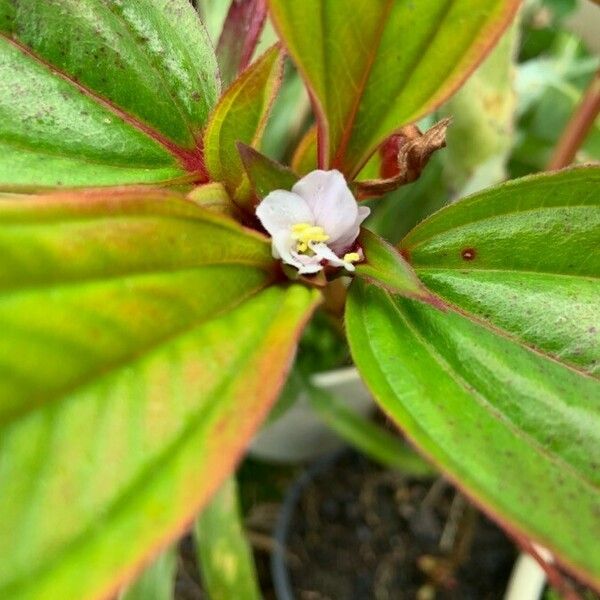
Commonly known as the Mauritian Melastome, this charming shrub is a globetrotter originating from the islands of the Indian Ocean and tropical Africa. It is often celebrated for its vibrant, crown-like flowers and its distinctive "etched" foliage that looks almost hand-drawn. While it’s a tropical beauty, it has a rebellious side, often spreading quickly in humid climates where it feels a bit too much at home.
🔍 How to Identify
- 🍃 Quilted Foliage: The leaves feature 3 to 7 prominent longitudinal veins that run parallel from the base to the tip, a classic "fingerprint" of the Melastome family.
- 🌸 Crowned Blooms: It produces delicate pink to lilac flowers with five petals and unique, curved stamens that look like tiny, elegant hooks.
- 🎋 Hairy Stems: Look closely at the square-ish stems; they are often covered in fine, reddish or translucent hairs that give the plant a fuzzy texture.
🏡 In Your Garden
- 💧 The Humidity Factor: This plant is a true child of the tropics; it thrives in high humidity and moist soil. It is an excellent choice for bog gardens or the edges of a garden pond.
- 🌱 Spreading Habit: Because it produces small, fleshy berries that birds love, it can "jump" over garden fences quite easily. In tropical regions, it’s best kept in a container to prevent it from becoming a local weed.
⚠️ Safety & Toxicity
- ✅ General Safety: Tristemma mauritianum is generally considered non-toxic to humans and common household pets.
- 🧤 Skin Sensitivity: While not poisonous, the fine hairs on the stems can occasionally cause mild skin irritation for those with very sensitive skin. It’s always a good idea to wear gloves when pruning heavily.
✨ Fun Fact
The genus name Tristemma comes from the Greek words for "three" and "crown," referring to the three ring-like structures found on the calyx of the flower, making it a true "three-crowned" beauty of the plant world!

Detailed Care Instructions

Place in a window with dappled sun or a spot in the middle of a room. Or directly in a window facing west or east.

Water-loving plants flourish in wet or sloppy soil and near ponds. The extensive root system enables these plants to absorb plenty of water. The surface of the soil should be kept moist at all times. Place your pot in a container filled with water to guarantee that plants get enough water. If the ground becomes dry, it is recommended that you water it well. Plants in smaller pots will need to be watered more frequently. Water the soil in which the plant is standing thoroughly using a watering can.








