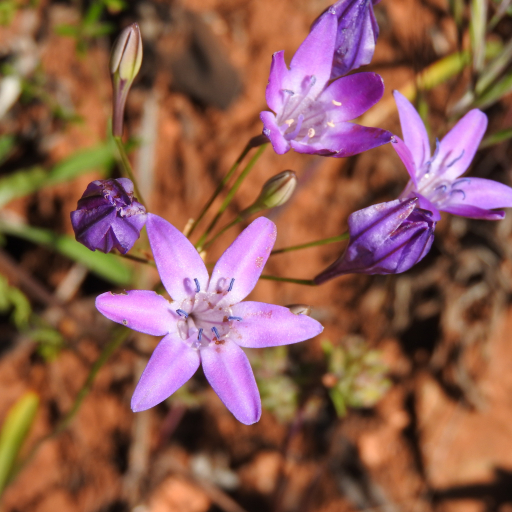
Plant Overview
Meet Triteleia bridgesii, often known as Bridges' Triteleia or Bridges' Brodiaea. This elegant West Coast native is a master of the "wildflower meadow" aesthetic, bursting into clusters of star-shaped blooms that look like a lavender-colored firework frozen in time. It is a resilient survivor, often found clinging to rocky slopes and open woodlands in California and Oregon.
🔍 How to Identify
- 🌸 The Umbel: The flowers grow in a wide, rounded cluster called an umbel, where dozens of individual flower stalks radiate from a single point like the ribs of an umbrella.
- 🎨 Funnel Flowers: Each individual blossom is funnel or trumpet-shaped, featuring six petals that range from a delicate lilac to a deep, royal violet.
- 🌿 Disappearing Leaves: The foliage is "basal" and grass-like. Interestingly, the long, narrow leaves often begin to wither and turn yellow just as the flowers reach their peak beauty.
🏡 In Your Garden
- ☀️ The Summer Siesta: This plant is a "drought-evader." Once it finishes blooming in late spring or early summer, it goes completely dormant. It is vital to stop watering it during this time; keeping the soil wet while the plant sleeps is the fastest way to rot its underground corms.
- 🪨 Drainage is King: Because it naturally grows on hillsides and in gravelly openings, it hates "heavy feet." It thrives in gritty, well-draining soil and is a perfect candidate for rock gardens or native meadows where it won't be disturbed.
⚠️ Safety & Toxicity
- 🐾 Pet Safety: Triteleia is generally considered non-toxic to cats and dogs, making it a much safer choice for "pet-friendly" landscapes than true lilies (which are notoriously dangerous).
- 🍽️ Human Caution: While historical records indicate that some indigenous groups traditionally roasted and ate the small corms (bulbs), you should never consume them. They can easily be confused with other toxic wild bulbs, and garden-grown varieties may be treated with systemic pesticides.
✨ Fun Fact
Bridges' Triteleia is a favorite "fast food" stop for butterflies! Its deep, tubular flowers are specifically shaped to accommodate the long tongues of pollinators, making it a vital nectar source during the transition from spring into the dry summer months.

Detailed Care Instructions
To grow Triteleia bridgesii, also known as California hyacinth or Ithuriel's spear, follow these steps:
- Choose the right location: Triteleia bridgesii prefers full sun to light shade. Choose a spot in your garden that receives at least 6 hours of direct sunlight per day.
- Prepare the soil: The plant prefers well-drained soil. Amend heavy clay or sandy soil with organic matter to improve drainage and fertility.
- Plant the bulbs: Triteleia bridgesii grows from bulbs. Plant them in the fall, around 3-4 inches deep and 4-6 inches apart. If planting in containers, use a well-draining potting mix.
- Watering: Water the bulbs thoroughly after planting, and then keep the soil evenly moist. Avoid overwatering, as it can cause bulb rot. During the growing season, provide regular water to keep the soil moist but not soggy.
- Fertilizing: Apply a balanced fertilizer, such as a slow-release granular fertilizer, in early spring as new growth emerges. Follow the instructions on the fertilizer package for application rates.
- Mulching: Mulch around the plants with a layer of organic mulch, such as compost or dried leaves. This will help retain moisture, suppress weeds, and provide extra nutrients as it breaks down.
- Support: Triteleia bridgesii tends to have tall stems that may require support to prevent them from bending or falling over. Stake the plants using bamboo sticks or other supports as necessary.
- Maintenance: Remove faded flowers regularly to keep the plant looking neat and to divert the plant's energy into bulb development. After the foliage turns yellow and dies back in late spring or early summer, you can cut it back to the ground.
- Division: Every few years, when the plants become overcrowded, you can dig up the bulbs, separate them, and replant them in fresh soil. This will help rejuvenate the plants and maintain their vigor.
- Pest and disease control: Triteleia bridgesii is relatively resistant to most pests and diseases. However, keep an eye out for any signs of damage or infestation. If necessary, treat with appropriate insecticides or fungicides following label instructions.
By following these steps, you can successfully grow Triteleia bridgesii and enjoy its beautiful blue or pink flowers in your garden.

Place in a bright room that is sun drenched almost all day. Or directly in a south-facing window.

To properly water this plant, it is recommended to pour water directly onto the soil around the base of the plant, rather than water the leaves or stem. The soil should be kept moist but not oversaturated. It is important to allow the topsoil to dry slightly between watering to prevent root rot. The plant may require more frequent watering during hot, dry weather or if grown in a pot with limited soil. Adequate drainage is also important to prevent waterlogging the roots.
- Choose a high-quality fertilizer that is specifically designed for bulbs or flowering plants.
- Apply the fertilizer to the soil around the base of the plant during the active growing season.
- Water the plant thoroughly after fertilizing to help distribute the nutrients to the roots.
- Avoid over-fertilizing as this can lead to burned or damaged foliage.
- Follow the recommended dosage and frequency on the fertilizer package for best results.
- Monitor the plant for signs of nutrient deficiencies or excesses and adjust fertilizing accordingly.
Triteleia Bridgesii requires well-draining soil that is rich in organic matter. The pH level of the soil should be slightly acidic to neutral, within the range of 6.0 to 7.0. It is best if the soil is loose and friable, allowing for easy root penetration and good aeration. Avoid soil that is heavy and clay-like, as it can retain too much moisture and become compacted. A mix of sand, peat moss, and loam can create an ideal soil composition for Triteleia Bridgesii. Adding compost or aged manure will help to enrich the soil and provide essential nutrients to the plant.
One way to propagate the plant known as Triteleia Bridgesii is through bulb division. To do this, carefully remove the plant from its soil and gently separate the bulbs attached at the base. Each bulb should have several roots attached. Replant the bulbs in fresh, well-draining soil. It is important to water the newly planted bulbs immediately and keep the soil consistently moist for the first few weeks. Another way to propagate Triteleia Bridgesii is through seed germination. Collect seeds from the plant when the seed heads are dry and brown. Plant the seeds in a seed tray filled with a well-draining soil mix. Water the soil and keep it moist, but not saturated. Wait for the seeds to germinate and establish before transplanting them into a separate container.








