Plant Overview
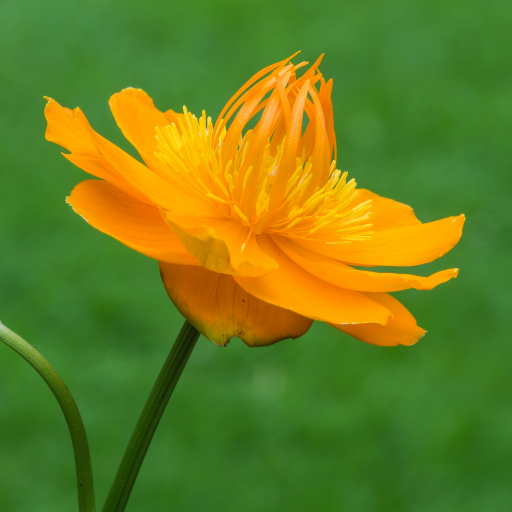
Known as the "Golden Queen," the Chinese Globeflower is a regal addition to any damp corner of the garden. Native to the cool, moist meadows of Northern China and Siberia, this plant is famous for its glowing, orange-gold blossoms that look like delicate buttercups on steroids. It is a favorite for those looking to add "cool-climate royalty" to their landscape.
🔍 How to Identify
- 👑 The Golden Crown: The most striking feature is the center of the flower, where long, narrow petals (nectaries) stand upright like a tiny golden crown.
- 🥣 Bowl-Shaped Blooms: The flowers are semi-double and bowl-shaped, measuring about 2-3 inches across, appearing atop sturdy stems.
- 🌿 Deeply Lobed Foliage: The leaves are dark green, deeply divided, and jagged-edged, creating a lush, fern-like carpet at the base of the plant.
🏡 In Your Garden
- 💧 Thirst for Moisture: Unlike many garden perennials, Trollius chinensis has "wet feet"—it thrives in boggy soil or beside ponds. If the soil dries out completely, the plant will quickly go dormant or perish.
- ❄️ Cooler is Better: This plant is a true northerner; it struggles in intense afternoon heat. In warmer zones, it must be tucked into a spot with dappled shade to prevent the foliage from scorching.
⚠️ Safety & Toxicity
- 🚫 Toxic if Ingested: Like most members of the Buttercup family (Ranunculaceae), the Chinese Globeflower contains protoanemonin, which is toxic to humans and pets.
- 🧴 Skin Sensitivity: Handling the plant can occasionally cause mild skin irritation or dermatitis in sensitive individuals. It is best to wear gloves when dividing or pruning.
✨ Fun Fact
The name Trollius is believed to be derived from the Old German word "troll," which means "globular" or "round"—a reference to the tightly packed, spherical shape of many species in this genus!

Detailed Care Instructions
To grow Trollius chinensis, also known as the Chinese globeflower, you can follow these steps:
- Select a suitable location: Choose a spot in your garden that receives full to partial sunlight. The soil should be moist, fertile, and well-draining.
- Prepare the soil: Amend the soil by adding organic matter, such as compost, to improve fertility and drainage. This plant prefers slightly acidic to neutral soil with a pH range of 6.0-7.0.
- Choose healthy plant material: Purchase healthy Trollius chinensis plants from a reputable nursery or start from seeds. If starting from seeds, make sure to follow the instructions on the seed packet for best results.
- Planting: Dig a hole that is wide and deep enough to accommodate the root ball of the plant or seedling. Place the plant in the hole, ensuring that the crown is level with or slightly above the soil surface. Backfill the hole with soil, gently firming it around the plant.
- Watering: After planting, water the plant thoroughly to settle the soil. Maintain evenly moist conditions throughout the growing season, but avoid overwatering or creating waterlogged conditions.
- Mulching: Apply a layer of organic mulch, such as wood chips or straw, around the base of the plant. This helps retain moisture, suppress weeds, and protect the roots from extreme temperatures.
- Fertilization: Feed the plant with a balanced, water-soluble fertilizer every 4-6 weeks during the growing season. Follow the instructions on the fertilizer package for application rates.
- Pruning: After blooming, you can cut the spent flower stems to promote further blooming or simply leave them in place for ornamental purposes. In late fall or early spring, you can also cut back the foliage to the ground to encourage fresh growth.
- Pests and diseases: Monitor the plant regularly for any signs of pests or diseases, such as aphids or powdery mildew, and take appropriate action if necessary. Regularly remove any dead or diseased plant material to maintain overall plant health.
- Winter care: In colder climates, apply a layer of winter mulch, such as straw or dried leaves, around the plant to protect it from frost and freezing temperatures.
With proper care, your Trollius chinensis plant should grow and bloom beautifully, adding a splash of color to your garden.

Place in a bright room that is sun drenched almost all day. Or directly in a south-facing window.

Trollius chinensis is a flowering plant that requires regular watering in order to thrive. When watering this plant, it is important to keep the soil consistently moist but not waterlogged. One way to achieve this is to water deeply and thoroughly, allowing the water to penetrate the soil down to the plant's root system. This can be accomplished by using a watering can or a hose with a gentle spray nozzle.
It is also important to avoid overhead watering, as this can lead to fungal diseases that can damage the plant. Instead, aim to water directly at the base of the plant, taking care to avoid wetting the foliage or flowers.
The frequency of watering will depend on the specific growing conditions and climate in which the plant is situated. In general, aim to water more frequently during periods of high heat or dryness, and less frequently during cooler or more humid weather.
Finally, it is important to monitor the soil moisture levels regularly to ensure that the plant is receiving enough water. Check the soil with your finger or a moisture meter to determine whether it is dry or moist, and adjust your watering schedule accordingly.
To properly fertilize this plant, begin by selecting a high-quality fertilizer that is specifically formulated for flowering plants. It is important to follow the manufacturer's instructions for the proper application rate and frequency.
When fertilizing, make sure the soil is moist to avoid burning the roots. Apply the fertilizer evenly around the base of the plant, and water thoroughly immediately after application.
To promote healthy growth and flowering, fertilize the plant monthly during the growing season. Reduce the frequency during the winter dormant period. Avoid over-fertilizing, as this can lead to excessive foliage growth at the expense of flowering.
Trollius chinensis is a plant that prefers well-drained soil. It is best to use a soil mix that is rich in organic matter, such as compost or leaf mold. The soil should have a pH level of around 5.5 to 7.5. It is important to ensure that the soil does not get waterlogged as this can lead to root rot and other fungal diseases. Adding perlite or sand to the soil can help improve drainage. Additionally, fertilizing the soil with a slow-release or organic fertilizer can provide the necessary nutrients for healthy growth.
To propagate this plant, first select a healthy and mature specimen and prepare a sterile cutting tool. Cut a stem with several healthy leaves and at least one node. Remove the lower leaves from the stem, leaving only a few at the top, and dip the cut end in rooting hormone powder.
Next, prepare a well-draining potting mix and create a hole in the center of the pot. Place the stem cutting in the hole and firm the soil around it. Water the cutting to settle the soil and ensure that it is evenly moist.
Finally, cover the cutting with a clear plastic bag or a plastic dome to create a humid environment. Place the pot in a bright, but indirect light location, and keep the soil moist but not waterlogged. After a few weeks, the cutting should start to root and grow new leaves. Gradually remove the plastic covering as the plant grows stronger.








