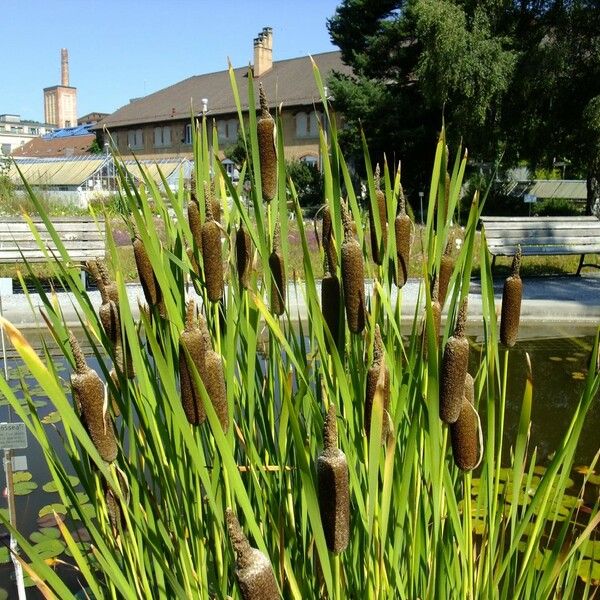
Plant Overview
Often called Shuttleworth’s Bulrush or the Lesser Reedmace, this elegant wetland dweller is the more refined, slender cousin of the common cattail. Native to the marshy landscapes of Central and Southern Europe, it creates a striking vertical silhouette that looks like a classic "sausage-on-a-stick" from a storybook. While it shares the iconic look of its larger relatives, its graceful proportions and rare status make it a prized find for naturalists and pond enthusiasts alike.
🔍 How to Identify
- 🌾 Slender Leaves: Features narrow, upright, sword-like leaves that possess a subtle blue-green tint, reaching heights of about 3 to 5 feet.
- 🍫 The "Cigar" Spike: The female flower spike is a dense, velvety cylinder that starts out silvery-grey before maturing into a rich, dark chocolate brown.
- 📏 Gapless Growth: Unlike many other cattail species, there is typically no gap (or a very tiny one) between the fluffy male flower on top and the thick female spike below.
🏡 In Your Garden
- 💧 Wet Feet Required: This plant is an obligate wetland species, meaning it must live in saturated soil or shallow water. It is perfect for the "marginal" zone of a pond.
- 🛑 Controlled Spreading: While it spreads via underground rhizomes like all cattails, Typha shuttleworthii is generally less aggressive than the Common Cattail, making it much easier to manage in a backyard water feature.
- 🦢 Wildlife Shelter: In a garden setting, it provides excellent cover for dragonflies to transition from water to air and offers nesting material for small birds.
⚠️ Safety & Toxicity
- ✅ Non-Toxic: This plant is generally considered non-toxic to humans, cats, dogs, and horses.
- 🧪 Bioaccumulator Warning: Be cautious; Typha species are "nature's filters" and absorb heavy metals and pollutants from the water they grow in. Never forage or nibble on plants growing in stagnant or urban runoff areas.
- 🌾 Skin Irritation: The dry "fluff" from the seed heads can occasionally irritate the eyes or throat if it becomes airborne in large quantities.
✨ Fun Fact
During World War II, the fluffy down from Typha seed heads was harvested and used as a substitute for "kapok" to fill life jackets and even line the flight suits of pilots because it is incredibly buoyant and insulating!

Detailed Care Instructions
To grow a Typha Shuttleworthii plant, also known as the Shuttleworth's bulrush or bog bulrush, you can follow these steps:
- Choose a suitable location: Typha Shuttleworthii plants are native to wetland areas, so they require a location with consistent moisture. Ensure the site receives full sun to partial shade.
- Prepare the soil: The plant thrives in moist, loamy soil. If your soil is sandy or heavy clay, amend it with organic matter such as compost or well-rotted manure to improve drainage and fertility.
- Sow seeds or plant rhizomes: Typha Shuttleworthii can be propagated from seeds or rhizomes. If using seeds, sow them in a container filled with wet soil and keep them in a sunny spot indoors for a few weeks. After the seedlings establish, transplant them outdoors. Alternatively, you can directly sow the seeds in the prepared soil outdoors. Rhizomes can be planted directly into the prepared soil at the desired location.
- Water regularly: Keep the soil consistently moist, but avoid waterlogging. Typha Shuttleworthii plants thrive in wetland conditions, so providing ample water is essential for healthy growth. Monitor the moisture levels and adjust watering accordingly.
- Mulch the area: Apply a layer of organic mulch around the plants to help retain soil moisture and suppress weed growth. This is particularly important during the establishment phase.
- Maintain the plants: Typha Shuttleworthii plants are low-maintenance, but they may benefit from occasional fertilization with a balanced, slow-release fertilizer. Remove any dead or damaged foliage to encourage new growth.
- Harvesting and propagation: Typha Shuttleworthii plants can spread quickly, producing rhizomes that can be divided and used for propagation. Divide the clumps every few years to maintain plant vigor and prevent overcrowding.
- Control pests and diseases: Check for any pests or diseases and take appropriate measures if necessary. Common pests may include aphids or snails, which can be controlled using organic insecticides or physical removal.
Remember to check your local regulations before introducing Typha Shuttleworthii plants to your area, as they can be considered invasive in some regions.

Place in a bright room that is sun drenched almost all day. Or directly in a south-facing window.

The best method to water this plant is to make sure that the soil is moist but not waterlogged. One should regularly check the moisture level of the soil using a moisture meter or by digging a small hole with a trowel to observe the soil's moisture level.
To water this plant, fill a watering can with room temperature water and pour it slowly around the base of the plant, taking care not to splash the leaves. It is best to water the plant early in the day or late in the afternoon to allow time for the soil to absorb water before the heat of the day.
During the plant's growing season, it may require more water than during the dormant season. In addition, it is crucial to ensure that the plant's roots are not standing in water as this may cause the roots to rot. Therefore, if the soil is compact and poorly draining, it may be necessary to improve the soil's drainage by adding compost or well-rotted manure.
Finally, it is essential not to overwater the plant, as this can cause root rot and other problems. It is best to water the plant deeply but less frequently, rather than shallowly and often.
To fertilize the plant, apply a balanced fertilizer with equal amounts of nitrogen, phosphorus and potassium. The fertilizer can be applied every two weeks during the growing season, which is typically from spring to early fall. Be sure to water the plant thoroughly after fertilizing to avoid any potential burn or damage to the roots.
The ideal soil for the growth of the plant should be well-draining and rich in nutrients. The soil should have a slightly acidic pH level between 5.5 to 7.0 for optimal growth. The soil should also be moist, but not waterlogged. The plant prefers loamy soil that is rich in organic matter and has moderate fertility. You can add organic compost or peat moss to improve the soil quality. It is also important to ensure that the soil has good aeration to help with root development.
To propagate this plant, you will need to identify mature, healthy and vigorous specimens. It is important to choose plants that are disease-free and have produced healthy seed heads.
- Identify the location: Find sites where the plant has already established and thrived.
- Collect seeds: The best time to collect seed is when the seed heads mature, and the seed can easily be collected.
- Soil preparation: Clear away any debris and prepare the soil by loosening it and mixing in some compost.
- Spread seeds: Scatter the seeds onto the soil surface where the plant is intended to grow. Water lightly to moisten the soil.
- Keep moist: Keep the soil moist by watering the seeds regularly, especially during dry spells. It is essential to keep the seeds moist during the first few weeks after planting.
- Look for germination: The seeds should germinate within two weeks. When small plants emerge, thin them out as necessary to ensure proper spacing.
- Transplant: When the plants are strong enough, transplant them to their permanent location.
- Maintain: Water the plants regularly and keep in mind that they enjoy moist soil. If the soil dries out, the plants can easily wilt. Also, ensure that the water you use to water the plant is clean.
- Care: Fertilize the plant occasionally to encourage healthy growth. It is important to take care and plenty of time in order to establish healthy and strong plants.








