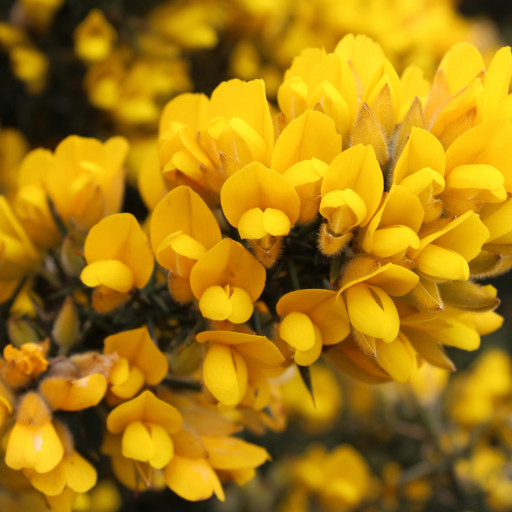
Plant Overview
Commonly known as Gorse, Whin, or Furze, this hardy evergreen is the golden guardian of the moorlands. It is famous for its vibrant yellow blooms that smell remarkably like coconut or sunblock on a warm day. In old British folklore, it was said that "when gorse is out of blossom, kissing is out of fashion"—a nod to the fact that this resilient shrub can be found in bloom almost every month of the year.
🔍 How to Identify
- 🌵 The Spines: Instead of traditional soft leaves, the plant is armed with stiff, green, needle-like spines that make the shrub almost impenetrable to predators.
- 🌼 Pea-Shaped Blooms: The flowers are a brilliant, buttery yellow and shaped like miniature sweet peas, appearing in dense clusters along the thorny branches.
- 📏 Growth Habit: It forms a dense, sprawling, and chaotic mound of dark green, often reaching up to 6-10 feet in height if left unpruned.
🏡 In Your Garden
- 🌱 Soil Warrior: Gorse is a "pioneer plant" and a nitrogen-fixer. This means it actually improves the soil it grows in, thriving in poor, acidic, or sandy earth where most other plants would wither.
- ☀️ Coastal Champion: It is incredibly salt-tolerant and wind-resistant, making it an excellent natural hedge or windbreak for seaside gardens. However, be cautious: its wood is high in oil and can be a significant fire hazard in dry climates.
⚠️ Safety & Toxicity
- ⚔️ Physical Hazard: The primary "danger" is the spines. They are incredibly sharp and can easily puncture skin or even thick denim, making pruning a task for heavy-duty leather gloves.
- 🐾 Seed Toxicity: While the flowers are sometimes used sparingly in syrups or wines, the seeds contain alkaloids (cytisine) and are toxic to humans, dogs, and livestock if ingested in significant quantities.
✨ Fun Fact
🥥 A Natural Chemist: The distinct coconut aroma of Gorse isn't just a trick of the nose; the flowers contain a high concentration of terpenes, the same organic compounds found in tropical fruits and resins!

Detailed Care Instructions
| Humidity | Dry |
| Lighting | Full Sun |
| Toxicity | Poisonous |
| Difficulty | Easy |
| Hibernation | Cold Period |
| Temperature | 20°C - 26°C |
| Hardiness Zones | 5 - 9 |
To grow Ulex europaeus, which is commonly known as gorse or furze, you can follow these steps:
- Climate and soil requirements: Ulex europaeus prefers mild maritime climates with well-drained soil. It can adapt to a wide range of soil types, but it thrives in poor, acidic, and sandy soil conditions.
- Propagation: The plant can be propagated through seeds or cuttings. Seeds should be scarified by scratching or nicking the hard outer layer to help with germination. Soak the scarified seeds overnight before planting.
- Planting: Choose a sunny location with well-drained soil and no competing vegetation. Plant the seeds or cuttings in early spring or late autumn.
- Watering: Initially, water the plants regularly to help establish the root system. Once the plants are established, they can tolerate dry conditions.
- Pruning: Gorse responds well to pruning and can be shaped to keep it neat and prevent overgrowth. Prune back in late winter or early spring before new growth begins.
- Fertilizing: Gorse generally doesn't require fertilizer, as it is well adapted to poor soil conditions. However, if the soil is extremely nutrient-poor, you can add a well-balanced organic fertilizer during the growing season.
- Weed control: Ensure that competing weeds are kept at bay until the Ulex europaeus plants are established. Mulching and regular weeding can help prevent weed growth.
- Pests and diseases: Gorse is generally resistant to pests and diseases, but occasionally, aphids or spider mites can cause problems. Use organic pest control measures if required.
- Wildfire risk: Gorse is highly flammable, so keep that in mind if you live in an area prone to wildfires. Regularly remove dry or dead vegetation to reduce the risk.
Please note that gorse is considered invasive in some regions. Make sure to check with your local agricultural authorities or invasive species list before growing Ulex europaeus to ensure it is suitable for your area.

Place in a bright room that is sun drenched almost all day. Or directly in a south-facing window.

Ulex Europaeus plants prefer well-draining soil and should be watered deeply once a week during the growing season. Before watering, check the soil moisture level by sticking your finger about an inch into the soil. If it feels dry, it's time to water. Water at the base of the plant, avoiding wetting the foliage. Overwatering can cause root rot, so make sure the soil doesn't stay waterlogged. During periods of drought, increase watering frequency but be careful not to overwater. In winter, reduce watering to once every two weeks.
To fertilize Ulex Europaeus, a shrub native to Europe, please follow these instructions:
- Begin fertilizing in the spring after the plant starts showing new growth.
- Use a well-balanced, slow-release fertilizer formulated for shrubs or flowering plants.
- Read and follow the instructions on the fertilizer package carefully.
- Apply the fertilizer around the base of the plant, keeping it a few inches away from the stem or trunk.
- Gently work the fertilizer into the soil surface using a hand rake or cultivator.
- Water the plant thoroughly after applying the fertilizer to help it absorb the nutrients.
- Repeat the fertilization process once or twice during the growing season, following the package instructions for frequency.
- Avoid over-fertilizing, as excess nutrients can harm the plant and the environment.
- If the Ulex Europaeus is grown in a container or pot, reduce the recommended fertilizer amount by half and apply more frequently throughout the growing season.
- Monitor the plant's response to fertilization and make adjustments as needed. If the foliage starts to show signs of burning or discoloration, reduce the fertilizer amount or frequency.
Note: It is important to research and understand the specific fertilizer requirements of the plant being cultivated to ensure optimal growth and health.
The ideal soil for Ulex Europaeus is well-draining and slightly acidic, with a pH level ranging from 5.5 to 6.5. The plant prefers soil that is sandy or gravelly in texture, with a low to moderate nutrient content. Ulex Europaeus does well in soils that are low in nitrogen, so avoid adding nitrogen-rich fertilizers. Additionally, it is important to avoid soil that is waterlogged or that retains too much moisture, as this can lead to root rot and other issues. Ulex Europaeus plants are well-suited to growing in a range of soil types, including loam, sand, and gravel, as long as the soil is well-draining.
Ulex Europaeus plant can be propagated through various methods such as seed propagation, softwood cuttings, and layering. Here are the detailed steps for each propagation method:
- Seed Propagation:
- Collect mature seeds from the Ulex Europaeus plant. Wait until the seedpods turn brown and dry.
- Gently break open the seedpods and collect the seeds.
- Prepare a seed tray or small pots with well-draining potting soil.
- Sow the Ulex Europaeus seeds on the soil surface. Lightly press the seeds into the soil without covering them.
- Water the seeds gently to keep the soil moist but not waterlogged.
- Place the seed tray or pots in a warm and bright location, such as a greenhouse or near a sunny window.
- Germination may take several weeks to a couple of months. Once the seedlings become strong enough, transplant them into individual pots or directly into the garden.
- Softwood Cuttings:
- Select healthy and vigorous shoots from the Ulex Europaeus plant that are still young and flexible, usually in spring or early summer.
- Using sterilized pruning shears or a sharp knife, take 4-6 inch long cuttings from the soft, new growth. Make sure each cutting has at least two sets of leaves.
- Dip the cut end of the cutting into rooting hormone powder to encourage root development.
- Insert the cutting into a pot filled with well-draining potting soil or a propagation tray with a mixture of peat moss or vermiculite.
- Water the soil to ensure it remains consistently moist but not saturated.
- Place the cuttings in a warm and bright area, out of direct sunlight, or use a propagation dome to maintain humidity.
- Rooting may take a few weeks to a month. Once the roots are well-developed, transplant the cuttings into larger pots or directly into the garden.
- Layering:
- Select a flexible and healthy stem of the Ulex Europaeus plant that is close to the ground.
- Bury a section of the stem, about 6-12 inches long, directly into the soil without detaching it from the main plant.
- You can slightly wound the buried section by scraping the outer layer of the bark to encourage root development.
- Secure the buried stem into the soil using U-shaped metal pins or small rocks to keep it in place.
- Water the buried stem regularly to keep the soil consistently moist.
- After a few months, or when the buried stem has developed roots, you can sever it from the parent plant and transplant it into a separate pot or directly into the garden.
Remember to provide proper care to the newly propagated Ulex Europaeus plant, including regular watering, suitable sunlight exposure, and protection from extreme weather conditions, to ensure healthy growth.








