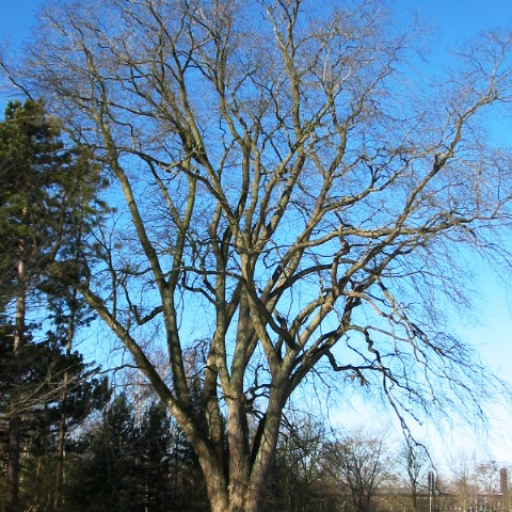
Plant Overview
Known as the Wych Elm or Scotch Elm, this majestic giant is the only elm species truly native to the British Isles and much of Northern Europe. Its name "Wych" stems from the Old English word wice, meaning "pliant" or "supple," referencing its flexible wood rather than anything supernatural. Unlike its cousins, it stands as a rugged individualist, preferring the wilder, cooler landscapes of the north over manicured southern hedgerows.
🔍 How to Identify
- 🍃 The Sandpaper Touch: The most distinctive feature is the leaf texture; the upper surface is incredibly rough and "toothy," feeling exactly like coarse sandpaper when rubbed.
- 🌿 Asymmetric Leaf Base: If you look closely at where the leaf meets the stem, one side is significantly longer than the other, often overlapping the short leaf stalk (petiole) entirely.
- 🌸 Clustered Samaras: Before the leaves even emerge in spring, the tree produces "samaras"—small, winged seeds that look like tiny green paper discs with the seed located perfectly in the center.
🏡 In Your Garden
- 🌳 Space and Scale: This is a massive, fast-growing tree that can reach heights of 30 meters. It is best suited for large estates or parklands rather than small suburban yards where its root system might interfere with structures.
- 💧 Cool & Moist Preferece: The Wych Elm hates drying out. It thrives in deep, fertile, and well-drained soil, particularly in areas with high humidity or near natural water sources.
- 🛡️ Dutch Elm Disease: While more resistant than the English Elm, it is still vulnerable to Dutch Elm Disease. It survives better in the north because the beetles that carry the fungus prefer the warmer climates of the south.
⚠️ Safety & Toxicity
- ✅ Non-Toxic: The Wych Elm is considered safe and non-toxic for humans, dogs, cats, and horses.
- 🤧 Allergy Alert: Like many deciduous trees, it releases wind-borne pollen in early spring, which can be a trigger for those who suffer from seasonal hay fever.
✨ Fun Fact
In Norse mythology, it is said that after the gods created the first man from an Ash tree, they created the first woman, Embla, from an Elm tree.

Detailed Care Instructions
Here are some steps to grow Ulmus glabra plant, also known as the Scots elm:
- Choose a suitable location: Ulmus glabra grows best in well-drained soil and full sun or partial shade. Make sure the location has enough space for the tree to reach its mature size.
- Purchase a healthy sapling: You can buy Ulmus glabra saplings from a local plant nursery or online. Make sure to choose a healthy and disease-free sapling with a strong root system.
- Prepare the planting hole: Dig a hole that is wider and deeper than the root ball of the sapling. Loosen the soil at the bottom to promote root growth.
- Plant the sapling: Place the Ulmus glabra sapling in the hole, making sure the top of the root ball is level with or slightly above the soil surface. Backfill the hole with soil, gently firming it around the roots.
- Water the plant: After planting, water the Ulmus glabra thoroughly to help settle the soil and provide moisture to the roots. Keep the soil consistently moist but not waterlogged during the first year of growth.
- Mulch around the tree: Apply a layer of organic mulch, such as wood chips or shredded bark, around the base of the tree. This will help retain moisture, suppress weeds, and protect the roots from extreme temperatures.
- Prune as necessary: Once the Ulmus glabra plant is established, you can prune it to maintain its shape and remove any dead, damaged, or diseased branches. Pruning should be done during the dormant season.
- Provide regular care: Ulmus glabra requires regular care to thrive. This includes regular watering, especially during dry spells, and fertilization with a balanced, slow-release fertilizer in early spring.
- Watch for pests and diseases: Ulmus glabra can be susceptible to various pests and diseases, including Dutch elm disease. Monitor the tree for signs of infestation or disease, and take appropriate measures to control or prevent them.
Remember that growing a tree requires patience, as Ulmus glabra can take several years to reach its full size and maturity. Take care of the plant, and it will reward you with its beauty and benefits to the environment.

Place in a bright room that is sun drenched almost all day. Or directly in a south-facing window.

To ensure proper watering for Ulmus Glabra, it is important to consider the plant's soil, environment, and growth stage. The soil should be kept consistently moist but not saturated, as too much water can drown the roots. The frequency of watering depends on the environment, with drier conditions requiring more frequent watering. It is also important to adjust the watering schedule to the plant's growth stage, providing more water during periods of active growth and less during dormancy. When watering, avoid getting the leaves and trunk wet to prevent fungal growth. A good method is to water deeply at the base of the plant and allow the water to soak in before repeating.
To fertilize this tree, select a balanced fertilizer with equal parts nitrogen, phosphorus, and potassium. Apply the fertilizer in early spring and again in late summer or early fall. Spread the fertilizer evenly around the base of the tree and water thoroughly afterwards. Avoid fertilizing during the winter months.
The best soil for Ulmus Glabra is a well-drained soil that is slightly acidic with a pH range of 5.5 to 6.5. The soil should be moist but not waterlogged, so it is important to ensure good drainage. It is recommended to use a sandy loam soil with a good mix of organic matter, such as compost or leaf mold. This will provide the plant with the necessary nutrients and help retain moisture in the soil. Additionally, avoid using heavy, clay soils as they may restrict the roots from growing properly. Overall, the soil for Ulmus Glabra should allow for adequate root development and provide the plant with the necessary nutrients for healthy growth.
To propagate this plant, take softwood cuttings in the early summer and prepare them by removing the lower leaves. Dip the cuttings in rooting hormone and plant them in moist soil. Keep the soil consistently moist and in a location with bright, indirect light. In a few weeks, small roots should begin to form. Once there is established growth, transplant the new plants into larger containers or into the ground.








