Plant Overview
Known colloquially as Caesarweed or the Pink Burr, Urena lobata is a resilient member of the mallow family that has traveled from its native tropical roots to nearly every warm corner of the globe. While it looks like a miniature hibiscus at first glance, its stubborn nature and "hitchhiking" seeds have earned it a reputation as a persistent traveler that refuses to stay put.
🔍 How to Identify
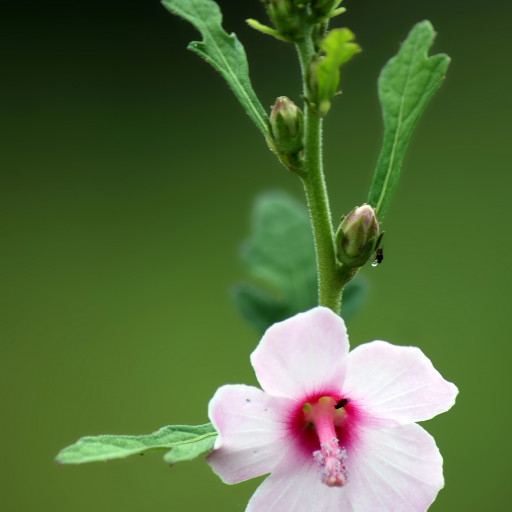
- 🌸 The Flower: Features small, five-petaled pink or rose-colored flowers with a prominent central column of stamens, mimicking a tiny wild Hibiscus.
- 🍃 Variable Leaves: The leaves are grayish-green and hairy. Interestingly, the shape changes depending on the plant’s age; lower leaves are usually rounded, while upper leaves are deeply lobed, resembling a hand or a maple leaf.
- 🧶 The "Velcro" Fruit: The most distinct feature is the small, round seed pod covered in tiny, hooked bristles (glochids) that cling aggressively to fur, clothing, and skin.
🏡 In Your Garden
- 🌱 Opportunistic Growth: This plant loves "disturbed" soil—think garden edges, roadsides, or patches of bare earth. If you find it in your yard, it’s likely because a pet or a hiking boot "planted" a seed there accidentally.
- ✂️ Maintenance Note: While the flowers are charming, most gardeners treat this as a weed. If you choose to keep it, be sure to prune it back before the seed pods form, or you will find "Pink Burrs" all over your house and yard the following season.
⚠️ Safety & Toxicity
- ✅ Status: Generally non-toxic and even used in various traditional medicines.
- 🪝 Physical Irritant: The real danger isn't poison, but the hooked hairs on the seeds. They can cause mild skin irritation or "creeping" sensations if they get stuck in fabric, and they are a nightmare to remove from the long fur of dogs or cats.
✨ Fun Fact
In many parts of the world, Urena lobata is known as Congo Jute. Its stems contain incredibly strong, bast fibers that have historically been used to manufacture high-quality rope, twine, and even rough sacks when traditional jute wasn't available!

Detailed Care Instructions
To grow Urena Lobata, also known as Caesarweed, follow these steps:
- Location: Choose a sunny spot in your garden or a place where the plant can receive at least 4-6 hours of sunlight daily. Urena Lobata prefers warm and tropical climates.
- Soil: It thrives in well-draining soil that is rich in organic matter. Prepare the soil by removing any weeds, debris, or rocks. You can enhance the soil fertility by adding compost or well-rotted manure.
- Sowing: You can grow Urena Lobata from seeds. Sow the seeds directly into the soil in early spring after the last frost. Space the seeds about 12-18 inches apart and plant them 1/4 inch deep in the soil.
- Watering: Keep the soil consistently moist but not waterlogged. Water the plants regularly, especially during dry spells or when the soil feels dry to the touch. Be careful not to overwater as it can cause root rot.
- Mulching: Apply a layer of organic mulch around the plants to help retain moisture, suppress weed growth, and keep the soil cool. Mulch also adds nutrients to the soil as it breaks down.
- Fertilization: Urena Lobata plants generally do not require heavy fertilization. However, you can provide a balanced slow-release fertilizer once or twice during the growing season to promote healthy growth.
- Pruning: Regularly prune the plant to promote bushier growth and to maintain its shape. Remove any dead or diseased branches. Pruning also encourages the plant to produce more flowers.
- Pests and diseases: Urena Lobata is relatively pest and disease resistant. However, keep an eye out for common garden pests like aphids or spider mites. If necessary, apply an organic insecticide or use other natural pest control methods.
Remember to check your local gardening authorities or consult a professional to ensure that Urena Lobata is suitable for your specific region and to get customized advice for the optimal growth of the plant.

Place in a bright room that is sun drenched almost all day. Or directly in a south-facing window.

Urena Lobata plant prefers to be watered regularly but not excessively. It is important to allow the soil to dry out slightly between watering sessions to prevent waterlogging and root rot. When watering, it is recommended to water the soil directly and avoid getting the leaves or flowers wet. It is also important to use lukewarm or room temperature water to avoid shocking the plant's roots. During the growing season, watering once or twice a week is usually sufficient, but in the winter months, it may only need to be watered every two weeks.
To fertilize this particular plant, it is important to use a balanced fertilizer with equal parts nitrogen, phosphorus, and potassium. During the growing season, feed the plant once a month with the appropriate fertilizer, being careful not to over-fertilize as it can lead to burnt leaves or even death of the plant. Also, be sure to water the plant well before and after fertilizing to prevent the roots from burning.
To cultivate Urena Lobata plants, it is recommended to use well-draining soil with a slightly acidic to neutral pH level. A general-purpose potting mix enriched with organic matter such as compost or peat moss can provide the necessary nutrients for the plant to thrive. Avoid using heavy clay soils that can lead to waterlogging, as this can increase the risk of root rot. Adding perlite or sand to the soil mix can help improve drainage and aeration. Mulching around the base of the plant can also help retain moisture and suppress weeds. Regularly monitoring the moisture levels of the soil and adjusting watering accordingly is essential for the successful growth of Urena Lobata plants.
Urena Lobata plant can be propagated through different means, including seed propagation, stem cuttings, or layering. Seed propagation involves collecting mature seeds from the plant and sowing them in a suitable potting mix. The seeds should be lightly covered with the mix and kept moist until germination occurs.
Stem cuttings are taken from healthy, mature stems of the Urena Lobata plant. The stems should be at least 5 inches long and should have a few leaves attached. Cut the stems cleanly with a sharp knife or pruning shears and remove the lower leaves. Dip the cut ends in rooting hormone powder and plant the stems in a potting mix. Keep the soil moist and in a warm, bright location until new growth appears.
Layering is another method of propagating the Urena Lobata plant, which involves choosing a healthy branch of the plant and partly burying it in the soil. Leave a part of the branch above the soil and secure it in place with a small stake or wire. Roots should begin to grow from the buried part of the branch, and once they are well established, the new plant can be separated from the parent plant and potted in a suitable mix.
Whatever method is used, it is important to keep the new plants in a warm, bright location, with moist soil and adequate ventilation until they are well established.








