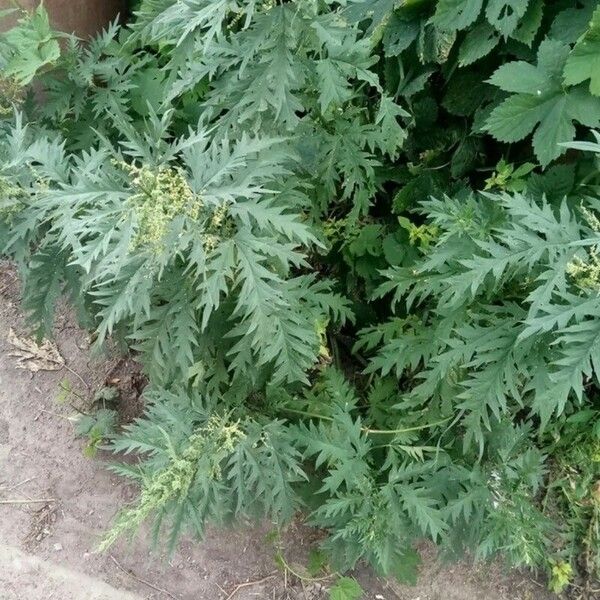
Plant Overview
Meet the master of disguise in the nettle world, often called the "Hemp-leaf Nettle." At first glance, this plant frequently causes a double-take because its deeply divided leaves look almost identical to those of a Cannabis plant. However, instead of any psychoactive properties, this Central Asian native offers the classic, sharp "bite" of a stinging nettle.
🔍 How to Identify
- 🍃 The Leaves: Unlike the heart-shaped leaves of common stinging nettles, these are deeply palmate and divided into 3 to 5 jagged, finger-like lobes, mimicking the silhouette of hemp.
- 🦷 Stinging Hairs: The entire plant is guarded by "trichomes"—tiny, hollow needles that look like fine fuzz but inject irritating chemicals upon contact.
- 🌾 Growth Habit: This is a sturdy perennial that can grow quite tall, often reaching 3 to 5 feet, with upright, square stems typical of the Nettle family.
🏡 In Your Garden
- 🌱 Nitrogen Lover: This plant thrives in "disturbed" soils rich in nitrogen. If you find it popping up, it’s usually a sign that your soil is fertile and moist.
- 🏃 Aggressive Spreader: It spreads via tough underground rhizomes and can become quite invasive in a garden setting. It is rarely planted intentionally unless for its strong fibers or as a botanical curiosity.
- 🦋 Wildlife Magnet: While humans avoid it, it is a vital host plant for several species of butterflies whose caterpillars are immune to the stings.
⚠️ Safety & Toxicity
- 🚫 Status: Skin Irritant.
- 🧤 The Sting: Touching any part of the plant causes immediate redness, itching, and a burning sensation due to formic acid and histamine. Always wear thick gardening gloves and long sleeves when handling.
- 🐾 Pets & Kids: It is generally not "poisonous" if accidentally nibbled, but the stinging sensation in the mouth or on paws is extremely painful and can cause drooling or swelling in pets.
✨ Fun Fact
Despite its painful reputation, Urtica cannabina has been used for centuries to produce "Nettle Cloth." Its stem fibers are incredibly strong and were historically used in Eastern Europe and Asia to make ropes, fishing nets, and even fine linen-like fabric!

Detailed Care Instructions
To grow Urtica cannabina, also known as the hemp nettle, you can follow these steps:
- Climate and location: Hemp nettle is native to Europe and prefers a temperate climate. It can adapt to various soil types but thrives in well-drained, fertile soil. Choose a sunny or partially shaded location for planting.
- Soil preparation: Prepare the soil by removing any weeds or debris. Turn the soil using a shovel or garden fork and amend it with organic matter like compost or well-rotted manure to improve its fertility and drainage.
- Sowing: Urtica cannabina can be sown from seeds. Choose high-quality seeds from a reputable source. Sow the seeds directly in the garden bed in early spring when the soil is moist and the risk of frost has passed. Scatter the seeds evenly and lightly rake them into the soil, ensuring they are not buried too deep.
- Watering: Keep the soil consistently moist while the seeds germinate and the plants establish themselves. Hemp nettle requires regular watering, especially during dry spells. However, avoid overwatering to prevent waterlogging.
- Thinning: As the seedlings emerge and grow, thin them out to allow proper spacing. Space the plants about 6-12 inches apart, depending on the desired density.
- Mulching and weed control: Apply a layer of organic mulch around the hemp nettle plants to suppress weed growth, conserve moisture, and improve soil fertility. Additionally, regularly remove any weeds that may appear near the plants.
- Fertilization: Urtica cannabina generally does not require heavy fertilization, but you can apply a balanced organic fertilizer once or twice during the growing season to support healthier growth.
- Maintenance: Monitor the plants for any signs of pests or diseases. Remove any damaged or diseased foliage promptly. Hemp nettle may attract beneficial insects like bees and butterflies, so avoid using harsh chemicals that could harm these pollinators.
- Harvesting: Harvest the hemp nettle leaves and stems when they are at their prime, generally before the flowers fully open. Use gloves when handling the plant due to the stinging hairs it possesses. Cut the stems just above a leaf node and hang them in a dry, well-ventilated area to dry for later use.
By following these steps, you can grow Urtica cannabina successfully and enjoy the benefits it provides.

Place in a bright room that is sun drenched almost all day. Or directly in a south-facing window.

To properly water this plant, it is important to consider the type of soil it is planted in. The soil should be well-draining and not too compact to ensure that water can easily penetrate deeply into the roots. When it comes to watering, it is best to water deeply but infrequently, allowing the soil to dry out slightly between waterings. It is also important to avoid getting water on the leaves and instead target the soil directly. This plant prefers a consistent level of moisture, so it may require more frequent watering during hot, dry weather.
To fertilize this plant, it is recommended to use a balanced fertilizer with equal amounts of nitrogen, phosphorus, and potassium. Fertilize once every two weeks during the growing season. Follow the instructions on the fertilizer packaging for proper application rates. Avoid over-fertilizing as it can lead to burnt and damaged roots.
The recommended soil for Urtica Cannabina plants should have good drainage capabilities to prevent waterlogging. The soil should also be rich in organic matter, with a slightly acidic pH level ranging between 6.0 and 6.5. Additionally, the soil should be well aerated, with good levels of nitrogen, phosphorus, and potassium to support healthy growth. It is also recommended to provide regular fertilization and proper watering to support the plant's growth.
Urtica Cannabina can be propagated through several methods such as seed propagation, division and stem cuttings.
To propagate through seed, collect mature seeds from the plant and sow them in well-draining soil. Cover lightly with soil and keep the soil moist. Germination usually takes 2-3 weeks.
To propagate through division, dig out the parent plant and separate the clumps into smaller divisions with roots and shoots. Replant the divisions in well-prepared soil and water regularly.
To propagate through stem cuttings, select healthy stems that have at least two leaves. Cut the stem about 10-15 cm long, remove the lower leaves and dip the cut end in rooting hormone. Plant the cutting in well-draining soil and keep it moist, either covered with a plastic bag or misted every day. After several weeks, roots will appear, and the plant can be transplanted.
Propagation of Urtica Cannabina can be done at any time of the year, but it is best to do it during the growing season to ensure that the plant has enough time to establish itself before winter.








