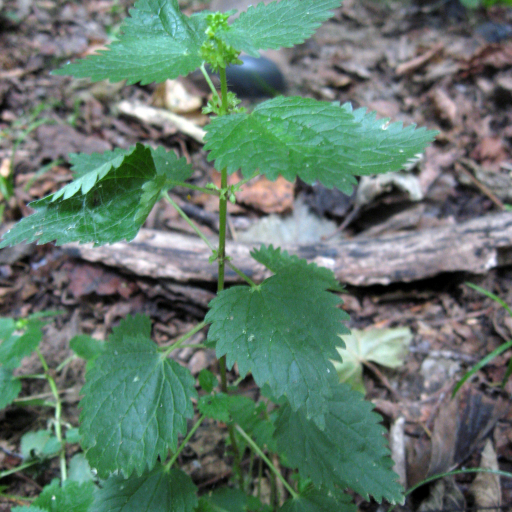
Plant Overview
Often called the Heartleaf Nettle, this plant is a master of defense masquerading as a delicate woodland herb. While it is sometimes referred to as "Weak Nettle," the name is a bit of a trick—it refers to its slender, reclining stems rather than the strength of its sting. You’ll often find it carpeting damp forest floors or hiding in the shady, nitrogen-rich corners of southern gardens.
🔍 How to Identify
- 💚 The Foliage: Features distinctive heart-shaped leaves with deeply "toothed" or serrated edges that grow in opposite pairs along the stem.
- 🪡 The Defensive Coating: If you look very closely (but don't touch!), you will see tiny, glass-like needles called trichomes covering the stems and leaf surfaces.
- 🌿 Growth Habit: Unlike its tall, upright cousins, this variety is relatively low-growing and often looks a bit "floppy," sprawling across the ground in moist areas.
🏡 In Your Garden
- ☁️ The Shade Seeker: This plant thrives in dappled sunlight and moist, organic soil. If it is popping up spontaneously, it is a biological indicator that your soil is very high in nitrogen.
- 🦋 A Butterfly Nursery: While gardeners often pull it on sight, it is a vital host plant for the Red Admiral butterfly. If it's growing in a spot where no one walks, consider leaving it to help support local pollinator populations.
- 🌱 Management: Because it spreads via seeds and underground runners, it can become invasive in garden beds. Always wear thick gloves when weeding to avoid a painful surprise.
⚠️ Safety & Toxicity
- 🚫 Physical Irritant: Touching any part of the plant with bare skin results in an immediate, sharp "burning" sensation followed by localized itching and small white welts.
- 🐾 Pets & Children: The sting is painful for both humans and pets. Keep curious dogs away, as the stinging hairs can irritate sensitive noses and paws.
- 🧼 First Aid: If stung, avoid rubbing the area, as this pushes the needles deeper. Wash with soap and water or use a piece of strong tape to pull the microscopic needles out of the skin.
✨ Fun Fact
The stinging hairs on this plant act like tiny biological hypodermic needles. The tips are made of silica (glass), and when brushed, they snap off to inject a chemical cocktail of formic acid and histamine directly into the skin!

Detailed Care Instructions
To grow Urtica Chamaedryoides, also known as the Stinging Nettle, you can follow these steps:
- Obtain seeds or young plants: You can purchase seeds or young plants from online nurseries, local garden centers, or from gardeners who may already have established plants.
- Select a suitable location: Urtica Chamaedryoides prefers full sun or partial shade. Choose a location in your garden that receives at least 4-6 hours of direct sunlight daily.
- Soil preparation: The plant grows well in well-draining soil that is rich in organic matter. Prepare the soil by adding compost or well-rotted manure to improve fertility and drainage.
- Sow the seeds or plant the young seedlings: If you have seeds, sow them in the desired location at a depth of ¼ inch (6 mm). If you have young seedlings, dig a hole slightly larger than their root ball and place them in the hole. Space the plants about 12-18 inches apart to allow for their spreading growth habit.
- Watering: Keep the soil moist but not waterlogged, especially during the initial stages of growth. Avoid overwatering to prevent any potential root rot.
- Mulching: Apply a layer of organic mulch, such as wood chips or straw, around the plants to help retain moisture, suppress weeds, and improve soil health.
- Care and maintenance: Regularly check for weeds and remove them to prevent competition for nutrients. Urtica Chamaedryoides is a relatively low-maintenance plant, but you may need to provide support or a trellis if the plant starts to mature and spread out.
- Harvesting: You can harvest the leaves of Urtica Chamaedryoides when they are young and tender. Wear gloves or use tools to avoid stinging yourself while harvesting.
- Propagation: The plant can also be propagated through division. Divide large clumps every few years to maintain plant health and vigor.
Remember that Urtica Chamaedryoides has stinging hairs on its leaves, so handle it with care or wear gloves when working with the plant to avoid irritation.

Place in a bright room that is sun drenched almost all day. Or directly in a south-facing window.

The watering requirements for this particular plant depend on several factors, including the climate and weather conditions in your area, the type of soil it's planted in, and its age and size. In general, it's recommended to water this plant regularly but not excessively, ensuring that the soil is consistently moist but not waterlogged. The best way to achieve this is to water the plant deeply, allowing the water to penetrate the soil down to the roots, and then allowing the soil to dry out slightly before watering again. It's important to avoid getting the foliage wet while watering, as this can lead to fungal growth and other issues. Using a watering can or drip hose is often the best way to water this plant, as it allows for precise control over the amount and placement of water. It's also a good idea to monitor the plant closely and adjust watering frequency and amount based on its individual needs.
To fertilize this plant, use a balanced fertilizer with equal parts nitrogen, phosphorus, and potassium. Apply the fertilizer once a month during the growing season, which is typically from spring to fall. Be sure to follow the instructions on the fertilizer packaging for the correct application rate. Avoid over-fertilizing, as this can lead to leaf burn and other issues. Additionally, consider incorporating organic matter, such as compost, into the soil to improve overall soil health and fertility.
Urtica Chamaedryoides plant prefers a specific type of well-drained soil that is rich in organic matter, with a slightly acidic to neutral pH level. The soil should be moist but not waterlogged, and should not be clay-based as the plant's roots require good aeration. A soil mix that contains peat moss, compost, and sand would be ideal for this plant. It is also recommended to ensure that the soil is loose and crumbly, with good drainage to prevent water retention which can lead to root rot. Finally, it is important to avoid over-fertilizing the plant as this can result in excessive growth that is not healthy for the plant.
To propagate this particular plant, you can start by collecting seeds from mature plants in the fall. Store the seeds in a cool, dry place until the following spring. In the spring, sow the seeds in a well-draining soil mixture and keep the soil consistently moist. The seeds should germinate in about two weeks.
Another method of propagation is through stem cuttings. Take a 4-6 inch cutting from a healthy and mature plant in the spring or early summer. Remove the lower leaves and dip the cut end in rooting hormone. Plant the cutting in a well-draining soil mixture and keep the soil moist. Place the pot in a bright, indirect light and wait for roots to appear.
Urtica Chamaedryoides can also be propagated through division. Carefully dig up a mature plant and separate the roots into smaller sections with a clean and sharp knife. Replant the sections in well-draining soil mixture and keep the soil moist. Place the pots in a bright, indirect light and the new plants should begin to grow within a few weeks.








