Plant Overview
The Utricularia juncea, commonly known as the Southern Bladderwort, is a botanical ninja hiding in plain sight. While it looks like a simple clump of grass or a stray wildflower, it is actually a sophisticated carnivore that hunts tiny organisms beneath the soil or underwater. Found primarily in the bogs and wet sands of the Americas, this plant is a favorite among carnivorous plant collectors for its cheerful yellow blooms and its "secret" predatory lifestyle.
🔍 How to Identify
- 🌾 The "Rush-like" Stem: The species name juncea comes from the Latin for "rush." It sends up tall, wiry, leafless stalks that can reach up to 18 inches, often appearing quite stiff.
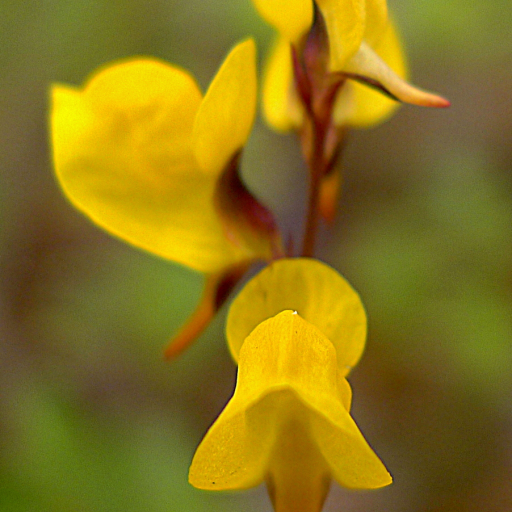
- 💛 Snapdragon Blooms: The flowers are a vibrant, sunny yellow with a distinct "spur" pointing downward, resembling tiny snapdragons or orchids clustered at the top of the stalk.
- 🕸️ Hidden Traps: Unlike Venus Flytraps, you won't see the "mouths" of this plant easily. Its traps are tiny, translucent bladders attached to underground or submerged stems (stolons) that act like high-speed vacuums.
🏡 In Your Garden
- 💧 The Bog Life: Because it naturally grows in pine flatwoods and wet savannahs, it requires a "wet feet" environment. It thrives in a mix of peat moss and sand that is kept constantly saturated with distilled or rainwater—never tap water, as the minerals will "burn" its sensitive traps.
- Microscopic Hunting:** You don't need to "feed" this plant like a pet. It captures protozoa and rotifers from the soggy soil. It’s a great companion for Sarracenia (Pitcher Plants) because they share the same love for acidic, nutrient-poor, sunny wetlands.
⚠️ Safety & Toxicity
- ✅ Status: Non-toxic and safe.
- 🐾 Details: There are no known toxic effects for cats, dogs, or humans. While it is a "meat-eater," its prey is limited to microscopic organisms, making it perfectly safe to handle and keep on a sunny windowsill.
✨ Fun Fact
The traps of the Bladderwort are among the fastest moving parts in the entire plant kingdom. When a tiny hair on the bladder is touched, the trap door swings open and shut in less than a millisecond, sucking in its prey with a force that is nearly impossible to escape!

Detailed Care Instructions
To successfully grow Utricularia Juncea, also known as the bladderwort plant, you can follow these steps:
- Obtain a Utricularia Juncea plant: You can purchase seeds or established plants from a reputable nursery or online store specializing in carnivorous plants. Utricularia Juncea is not commonly found in local garden centers.
- Select a suitable growing medium: Utricularia Juncea grows well in a mix of sphagnum moss and perlite, or a mixture of peat moss and sand. These mediums provide good drainage and retain moisture.
- Choose a container: The container should have drainage holes and be shallow since the plant has a shallow root system. A standard plastic or clay pot works well.
- Prepare the growing medium: Mix the chosen growing medium with water until it is moist but not waterlogged. Utricularia Juncea requires constant moisture, so it's important to maintain a consistently moist environment.
- Plant the Utricularia Juncea: Gently place the plant into the container and cover its roots with the prepared growing medium. Ensure that the crown of the plant is just above the surface of the medium.
- Provide the right environment: Utricularia Juncea thrives in bright, indirect sunlight. Place the plant in a location that receives at least 6-8 hours of sunlight per day. A windowsill or a greenhouse with filtered sunlight is ideal. Avoid exposing the plant to direct sunlight, as it can burn the leaves.
- Maintain moisture levels: Utricularia Juncea should be kept constantly moist by adding water to the container's saucer or using a tray filled with water to create humidity. Always use distilled or rainwater, as tap water contains minerals that can harm the plant.
- Avoid fertilizers: Utricularia Juncea is a carnivorous plant that derives nutrients from insects it traps in its bladder-like structures. It does not require additional fertilizers. In fact, fertilizers can harm the plant.
- Propagation: Utricularia Juncea can be propagated through division. When the plant becomes overcrowded or starts producing multiple rosettes, carefully separate the plant into smaller sections and repot them individually. Ensure each division has both leaves and roots intact.
- Mind the dormancy period: Utricularia Juncea experiences a dormancy period during winter. During this time, the plant may stop producing new leaves or start dying back. Reduce watering and provide a cool environment (between 50-60°F or 10-15°C) to mimic its natural winter conditions.
By following these steps, you can successfully grow Utricularia Juncea and enjoy its unique beauty in your home or garden.

Place in a bright room that is sun drenched almost all day. Or directly in a south-facing window.

Utricularia Juncea plants require a very specific watering regime in order to thrive. These plants thrive in a moist, boggy environment, so it is important to keep their soil consistently moist. However, they are also very sensitive to overwatering, and their roots can easily rot if they are left in standing water for too long.
To water Utricularia Juncea, you should aim to keep their soil moist but not waterlogged. This can be achieved by watering them lightly and frequently, rather than giving them a heavy watering all at once. It is also important to allow their soil to drain completely between waterings, as they can be prone to root rot if left in standing water.
When watering Utricularia Juncea, it is also important to avoid getting water on their leaves or flowers, as this can cause damage or lead to disease. Instead, aim to water them at the base of the plant, or use a watering can with a very narrow spout to target the soil directly.
Overall, watering Utricularia Juncea requires a careful balance between providing enough moisture for their needs and avoiding overwatering. With the right care, however, these plants can thrive and produce stunning blooms.
To fertilize this plant, dissolve a water-soluble fertilizer in water and pour it directly onto the soil around the plant. This should be done once a month during the growing season, which is typically from spring to fall. It is important not to over-fertilize, as this can damage the plant. Follow the instructions on the fertilizer package carefully, and avoid getting any fertilizer on the leaves or flowers.
Utricularia Juncea is a carnivorous plant that requires specific type of soil to thrive. The soil should be composed of sphagnum peat moss, perlite, and sand. The peat moss provides acid pH and good water retention abilities, while perlite and sand provide good drainage and aeration for the roots. The soil should not contain any fertilizers or chemicals, as it can harm the plant. Additionally, the plant should be grown in a container or pot with drainage holes to prevent waterlogging and root rot. It is recommended to water the plant with distilled or rainwater as tap water may contain minerals that can harm the plant. Overall, the soil must maintain a damp but not waterlogged environment for Utricularia Juncea to grow best.
Utricularia Juncea plant can be propagated through vegetative division or by taking stem cuttings. To propagate through vegetative division, carefully remove the plant from its pot and gently separate the plant into smaller divisions. Make sure each division has roots and leaves attached. Plant each division in its own pot with fresh potting mix and water well.
To propagate through stem cuttings, select a healthy stem with several leaves attached. Cut the stem just below a node with a sharp, clean pair of scissors or pruning shears. Remove the lower leaves from the cutting, leaving only a few at the top. Dip the cut end of the stem in rooting hormone and plant it in moist potting mix. Cover with a clear plastic bag to create a humid environment and place in a bright, but not direct, light. Keep the soil moist and within a few weeks, roots should form and a new plant will grow.
It is important to keep the soil moist and in a warm, humid environment while the plant is establishing itself. Once it has rooted and new growth appears, gradually acclimate the new plant to its growing conditions.








