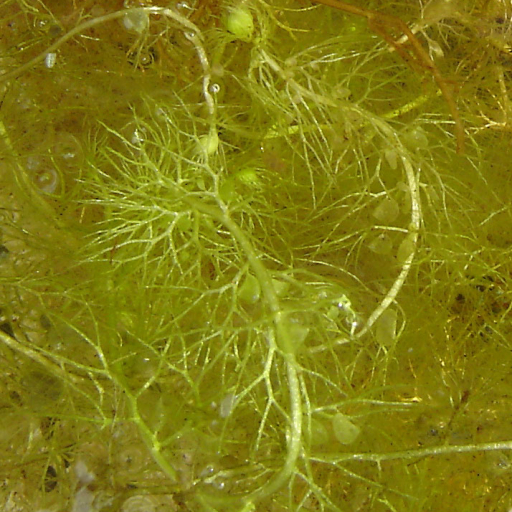
Plant Overview
Known as the "Silent Vacuum of the Pond," Utricularia vulgaris, or the Common Bladderwort, is a master of underwater deception. While its bright yellow flowers suggest a delicate garden inhabitant, beneath the surface lies a sophisticated aquatic predator. Floating freely without roots, this plant has evolved to hunt microscopic prey to survive in nutrient-poor waters across the Northern Hemisphere.
🔍 How to Identify
- 🌼 Snapdragon-like Blooms: In mid-summer, it sends up tall, leafless stalks that hold clusters of vibrant yellow flowers well above the water line.
- 🌿 Feathery Submerged Stems: Below the surface, the plant consists of long, flexible stems densely packed with fine, hair-like green segments.
- 🎈 The Bladders: Look closely at the submerged "leaves" to find thousands of tiny, translucent pear-shaped sacs. These are the traps, which often turn dark or black once they have captured and digested prey.
🏡 In Your Garden
- 💧 The Floating Lifestyle: Because it is rootless, this plant is best suited for garden ponds or large water features. It doesn't need to be "planted"; it simply drifts where the current or wind takes it, absorbing nutrients directly from the water and its prey.
- 🦟 Natural Pest Control: It is a fantastic addition to stagnant water features because it actively hunts mosquito larvae and water fleas. It acts as a biological filter, keeping the microscopic ecosystem of your pond in balance.
⚠️ Safety & Toxicity
- ✅ Safe for Pets and Humans: The Common Bladderwort is non-toxic. It poses no threat to curious dogs, cats, or children who might encounter it near the water's edge.
- 🐟 Small Fry Warning: While harmless to humans, it can occasionally trap very tiny, newly-hatched fish fry. However, for most established ponds, it is considered a beneficial and fascinating resident.
✨ Fun Fact
The trap of the Bladderwort is the fastest-moving mechanism in the entire plant kingdom! When a tiny organism touches the trigger hairs, the bladder door swings open and sucks the prey inside in less than a millisecond—a speed so high that it can only be captured with specialized high-speed cameras.

Detailed Care Instructions
| Humidity | Normal |
| Difficulty | Medium |
| Hibernation | Cold Period |
| Temperature | 15°C - 35°C |
| Hardiness Zones | 4 - 8 |
To grow Utricularia vulgaris, or bladderwort, follow these steps:
- Choose the right location: Bladderworts thrive in wet and boggy areas, like marshes or pond edges. They prefer full sun to partial shade.
- Prepare the substrate: Use a substrate that is low in nutrients, such as a mix of peat moss and sand. Fill a container or pond with this substrate, making sure it is constantly moist but not waterlogged.
- Acquire a live plant or seeds: You can purchase Utricularia vulgaris plants or seeds from plant nurseries or online retailers specializing in carnivorous plants.
- Plant Utricularia vulgaris: If you have a live plant, gently remove it from its container and place it into the substrate. Press it gently into the substrate, making sure the roots make good contact. Alternatively, if you have seeds, sprinkle them on the substrate and lightly press them down.
- Provide proper water supply: Utricularia vulgaris is an aquatic plant, so it requires a constant supply of water. If you are growing it in a pond, make sure the water level is sufficient at all times. If you are using a container, keep the substrate consistently moist, but avoid waterlogging.
- Feed the plant: Bladderwort plants are carnivorous and obtain nutrients by trapping and digesting small organisms. They have tiny bladders on their leaves, which suck in prey when triggered. In an outdoor setting, the plant will generally find enough prey by itself, but you can also supplement its diet with small insects or dried bloodworms.
- Provide proper lighting: Utricularia vulgaris thrives in full sun to partial shade. Make sure it receives at least 6 hours of direct sunlight each day.
- Maintain proper temperature: This plant prefers cool to moderate temperatures between 59-77°F (15-25°C). Avoid extremes of temperature.
- Monitor growth and trim if necessary: Utricularia vulgaris can spread rapidly under favorable conditions. If it starts to overcrowd other plants or takes up too much space, you may need to trim it back.
By following these steps, you should be able to successfully grow Utricularia vulgaris. Remember to regularly monitor the plant's health and provide the necessary care to ensure its growth and survival.

Place in a bright room that is sun drenched almost all day. Or directly in a south-facing window.

Utricularia Vulgaris is a plant that requires regular watering to grow and thrive. Here are some tips on how to water this plant:
- Water the plant once a week or when the top inch of soil feels dry to the touch.
- Use room temperature or tepid water to avoid shocking the plant's delicate roots.
- Water the soil around the base of the plant, being careful not to get water on the leaves or stem.
- Avoid overwatering, which can lead to root rot. Make sure the pot has drainage holes to allow excess water to drain away.
- Use a watering can or a gentle spray bottle to add water slowly and evenly.
- Monitor the plant for signs of dehydration or overwatering, such as wilting, yellowing leaves, or a mushy stem.
- Adjust your watering frequency as needed based on the plant's individual needs and the humidity levels in your home or office.
- Use a balanced fertilizer with equal amounts of nitrogen, phosphorus and potassium.
- Dilute the fertilizer solution to half the recommended strength.
- Apply the fertilizer to the soil or water around the plant once every two weeks during the growing season.
- Avoid over-fertilizing as this can cause damage to the delicate roots of the plant.
- Monitor the plant for any signs of nutrient deficiencies or excesses, such as yellowing leaves or stunted growth.
- Always follow the instructions on the fertilizer packaging and wear protective gloves when handling the solution.
The ideal soil for Utricularia Vulgaris is a mixture of organic matter and inorganic materials that have good drainage and aeration properties. It should contain a blend of peat moss, sphagnum moss, perlite, and sand. The peat moss provides acidity and moisture retention, while the sphagnum moss helps to keep the soil fluffy and aerated. Perlite and sand add drainage, which is important for this plant as it prefers moist but not waterlogged soil. The soil should not contain any fertilizers or nutrients as this can cause damage to the plant's sensitive roots. The pH of the soil should be between 4.5-6.5, which is slightly acidic, to best suit the plant's needs.
To propagate this particular plant, you can start by taking a few healthy stems and carefully cutting them at the base with a sterile blade or scissors. Then, remove all the leaves from the bottom half of the stem, leaving only a few at the top.
Next, fill a small pot or container with a mixture of peat moss and perlite or sand. Make a hole in the center of the mix and insert the stem, ensuring that the cut end is covered by the mix.
Place the pot or container in a shallow tray of water, so that the mix is damp, but not waterlogged. Keep the tray in a bright but shaded area, where sunlight is limited.
Within a few weeks, you should see new shoots growing from the base of the stem. At this stage, you can carefully separate the new plants from the parent plant and replant them in their own pots.
Be sure to keep the new plants in a warm, moist environment and avoid overwatering to prevent damage to the delicate stems. With proper care, your new Utricularia Vulgaris plants will thrive and produce beautiful flowers in due time.








