Plant Overview
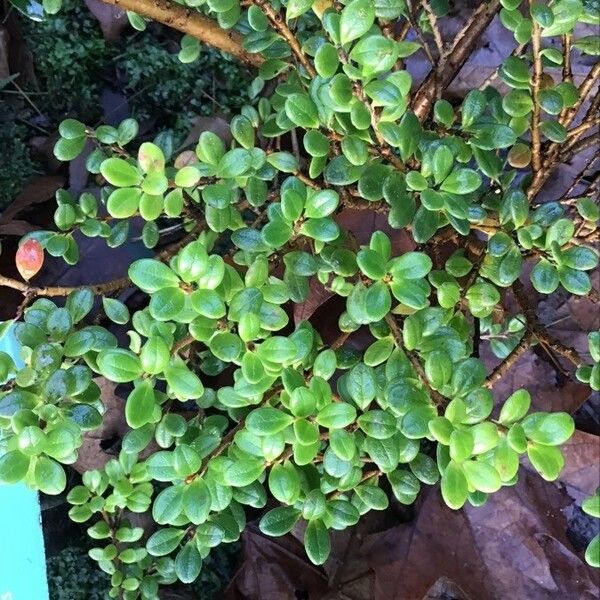
Known as the "Tree-Loving Blueberry," Vaccinium dendrocharis is an enchanting evergreen shrub that defies the typical ground-dwelling nature of its berry-bearing cousins. Hailing from the misty, high-altitude mountain forests of Southeast Asia, it often lives life "off the ground" as an epiphyte, perching on mossy branches. Its compact, bonsai-like growth habit and delicate bell-shaped flowers make it a hidden gem for collectors of rare, woodland flora.
🔍 How to Identify
- 🍃 Foliage: Small, leathery, and glossy evergreen leaves that are densely packed, often turning a deep bronzy-red when young or stressed by cold.
- 🔔 Urn-Shaped Blooms: Dainty, white-to-pale-pink flowers that resemble miniature porcelain bells, hanging in small clusters from the leaf axils.
- 🫐 Berries: Small, globose fruits that transition from a pale green to a dark, dusky red or purple-black when fully mature.
🏡 In Your Garden
- ☁️ Epiphytic Nature: In its natural habitat, this plant grows on trees or rocks. In a home environment, it demands a very airy, acidic medium—similar to an orchid or azalea mix—rather than dense, heavy garden soil.
- 💧 Cool & Consistent: It thrives in "cloud forest" conditions. This means it prefers dappled light, high humidity, and consistent moisture without ever being waterlogged. It is particularly sensitive to hard water, so rainwater is its preferred drink.
⚠️ Safety & Toxicity
- ✅ Safe Status: Like most members of the Vaccinium genus (blueberries and cranberries), it is considered non-toxic to humans.
- 🐾 Pet Friendly: There are no known toxicities for cats or dogs, making it a safe choice for a "pet-friendly" rare plant collection. However, ingestion of any ornamental plant may cause mild tummy upset in curious pets.
✨ Fun Fact
The species name dendrocharis is derived from the Greek words dendron (tree) and charis (grace or beauty), literally translating to "the grace of the trees"—a poetic nod to its habit of decorating mossy branches in the wild.

Detailed Care Instructions
To successfully water this particular plant, it is important to first understand its specific needs for hydration. This plant prefers moist soil, but not soil that is constantly soggy. It is important not to overwater, as this can lead to root rot and other issues.
To water the plant, first check the soil with your finger or a moisture meter to see if it is dry to the touch. If it is, water the plant thoroughly, allowing the water to soak in and reach the roots. It is important to water at the base of the plant, avoiding getting the foliage wet.
To prevent water from sitting on the surface of the soil, causing the top layer to dry out quickly, it is a good idea to mulch around the base of the plant with a layer of organic matter. This can help retain moisture in the soil and also provide nutrients to the plant as it breaks down over time.
It is also important to pay attention to the plant's surroundings and adjust watering accordingly. If the plant is in a humid environment, it may not need as much water as if it is in a dry and hot environment. Similarly, if it is in direct sun, it may require more frequent watering than if it is in a shaded area.
Overall, the key to watering this plant is to provide consistent moisture without overdoing it, as well as paying attention to the plant's specific needs based on its environment.
The Vaccinium Dendrocharis plant requires a well-draining soil that is rich in organic matter. The soil should have a pH between 4.5 and 5.5, which is acidic in nature. A high-quality soil mix that is designed for acid-loving plants is recommended. This type of soil mix typically contains a blend of peat moss, perlite, and vermiculite. It is important to ensure that the soil remains consistently moist, but not overly saturated, to help the plant thrive. Proper drainage is also essential to prevent the plant from becoming waterlogged. Adding a layer of organic mulch to the surface of the soil can help regulate moisture levels and also provide some protection for the plant's roots.








