Plant Overview
Known affectionately as the Alaska Blueberry or Oval-leaf Huckleberry, this hardy shrub is a jewel of the Pacific Northwest and cold coastal forests. Long before commercial berries hit the shelves, indigenous communities were harvesting these tart, blue treasures to survive long winters. It is often the first blueberry to bloom in the spring, signaling the awakening of the forest floor.
🔍 How to Identify
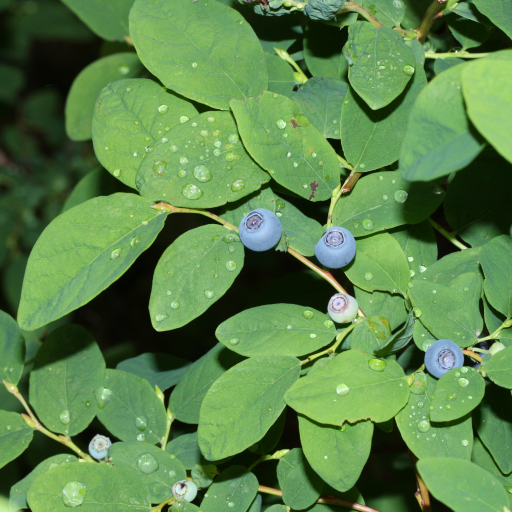
- 🍃 The Leaves: True to its name, the leaves are perfectly oval or egg-shaped with smooth edges. They have a delicate, thin texture and a soft matte-green color.
- 🔔 The Blooms: Small, solitary, pinkish-white flowers shaped like tiny upside-down bells. They often appear just as the leaf buds are breaking, dangling elegantly from the stems.
- 🫐 The Fruit: Round, dark blue to nearly black berries, often covered in a waxy, powdery "bloom" that gives them a frosted appearance.
- 🌿 The Stems: Young twigs are notably yellow-green and slightly angled or "winged," turning a grayish-brown as the plant matures into a tall, spreading shrub.
🏡 In Your Garden
- 🌲 Acidic Ambitions: This plant is a "calcifuge," meaning it detests lime and alkaline soil. To keep it happy at home, you must mimic the forest floor using peat moss, pine needles, or sulfur to keep the pH low.
- 💧 Moisture Logic: Unlike some garden shrubs, the Alaska Blueberry has a shallow root system. It doesn't like "wet feet" (soggy roots), but it will drop its leaves quickly if the soil dries out completely during a summer heatwave.
- 🦉 Wild Neighbors: If you plant this, expect visitors! It is a vital high-energy food source for bears, birds, and small mammals. In a suburban garden, it serves as an excellent "habitat plant" for local pollinators.
⚠️ Safety & Toxicity
- ✅ Status: Safe and Edible.
- 🐾 Details: The berries are non-toxic to humans, dogs, and cats. In fact, they are packed with antioxidants. However, when foraging in the wild, always ensure you aren't mistaking it for the Nightshade family—though the woody, shrubby growth of the blueberry is usually a clear giveaway.
✨ Fun Fact
Indigenous groups of the Pacific Coast didn't just eat the berries; they used the juice as a potent purple dye for goat-wool blankets and basketry, and the dried bark was often brewed into a medicinal tea to help manage "sweet blood" (early observations of diabetes).

Detailed Care Instructions
To grow Vaccinium ovalifolium (oval-leafed huckleberry), follow these steps:
- Choose a suitable location: Vaccinium ovalifolium plants prefer well-draining, slightly acidic soil with a pH between 4.5 and 6.0. They thrive in full to partial sunlight, so find a spot in your garden that receives at least 4-6 hours of direct sunlight each day.
- Prepare the soil: Test the soil pH and make any necessary adjustments by adding organic matter like compost or well-rotted manure to improve drainage and acidity. Work the amendments into the soil to a depth of 8-12 inches.
- Planting: Dig a hole slightly larger than the root ball of the Vaccinium ovalifolium plant. Place the plant in the hole, ensuring that the top of the root ball is level with the soil surface. Backfill the hole with soil, gently firming it around the roots. Water thoroughly after planting.
- Watering: Keep the soil consistently moist but not waterlogged, especially during the growing season. Water deeply when the top inch of soil feels dry to the touch. Avoid overhead watering to prevent disease.
- Mulching: Apply a layer of organic mulch (such as wood chips or pine needles) around the base of the plant to help retain moisture, suppress weed growth, and maintain a cool root environment. Ensure that the mulch is a few inches away from the plant stem to prevent rotting.
- Pruning: Vaccinium ovalifolium plants generally do not require extensive pruning. However, you can remove any dead, damaged, or overcrowded branches in late winter or early spring before new growth appears. This promotes airflow and overall plant health.
- Fertilizing: Vaccinium ovalifolium plants do not require heavy fertilization, as they are adapted to nutrient-poor soils. However, you can apply a balanced, slow-release organic fertilizer in early spring before new growth begins. Follow the package instructions for dosage recommendations.
- Pest and Disease Control: Monitor your plants regularly for any signs of pests or diseases, such as aphids, mites, or leaf spots. If you notice any issues, promptly address them with appropriate organic pest control methods, such as spraying with neem oil or insecticidal soap.
- Harvesting: Vaccinium ovalifolium plants typically produce berries in late summer or early fall. Harvest the ripe berries by hand, gently plucking them from the plant. Avoid excessive handling, as the berries are delicate.
By following these steps and providing proper care, you can successfully grow Vaccinium ovalifolium plants in your garden.

Place in a bright room that is sun drenched almost all day. Or directly in a south-facing window.

Watering this particular plant requires the use of a watering can or hose with a fine mist attachment. It is important not to overwater the plant, since it prefers moist soil but can suffer from root rot if left in standing water. Ideally, the soil should be kept consistently moist but not saturated, and watering is best done in the morning or during cooler periods of the day to avoid evaporation. If the plant is potted, make sure to allow excess water to drain before returning it to its preferred location.
To fertilize this plant, apply a slow-release, acidic fertilizer in early spring before new growth appears. Use a balanced fertilizer with equal parts nitrogen, phosphorus, and potassium. Apply the fertilizer evenly around the base of the plant, taking care not to get any on the leaves. Water the plant thoroughly after fertilizing. Repeat the fertilization once every six months during the growing season.
Vaccinium Ovalifolium is a type of plant that is highly sensitive to the quality and type of soil it is grown in. It requires well-drained, acidic soils with a pH range between 4.0 and 5.5. These soils should be rich in organic matter, as the plant has a shallow root system and relies heavily on nutrient uptake from the soil. The plant can tolerate sandy or loamy soils, but it requires a consistent supply of moisture. It is sensitive to root damage, which can be caused by compacted or heavy soils. Therefore, the soil should be loose and friable to allow for adequate aeration and water infiltration. It is also important to avoid using soil that has been previously contaminated by pesticides or herbicides, as this may harm the plant. Overall, using a well-drained, acidic soil that is rich in organic matter and nutrient-dense is ideal for growing Vaccinium Ovalifolium plants.
To propagate this plant, one can take softwood cuttings from the mother plant in the spring. The cuttings should be approximately 4-6 inches long and taken from healthy, disease-free branches. Remove the leaves from the bottom 2 inches of the cutting and dip the cut end in rooting hormone. Plant the cutting in a well-draining soil mix and cover with a plastic bag to create a humid environment. Keep the soil moist and place the cutting in indirect sunlight until it roots. Once roots have formed, the cutting can be transplanted into a larger container or planted outdoors in a suitable location.








