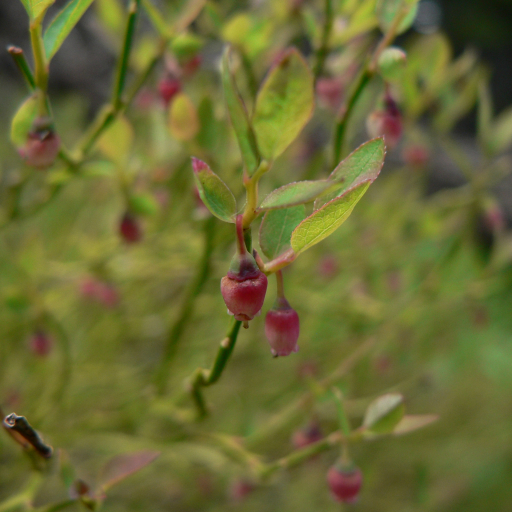
Plant Overview
Often called the Grouseberry or Little-leaf Whortleberry, this resilient subshrub is the "understory carpet" of the high mountains. It belongs to the same family as blueberries and cranberries, but it trades height for hardiness, thriving in thin, rocky soils where few other berries dare to grow. In the wild, it forms vast, intricate mats that protect the soil from erosion and provide a secret buffet for forest creatures.
🔍 How to Identify
- 🍃 Lilliputian Leaves: The foliage consists of tiny, bright green, oval-shaped leaves that rarely exceed half an inch in length, giving the plant a delicate, lacy texture.
- 🧹 Broom-like Stems: Its Latin name scoparium means "broom-like." You’ll notice numerous slender, green, and sharply angled branches that stand upright like a miniature, upside-down kitchen broom.
- 🔴 Jewel-toned Berries: Unlike the dark blue of its famous cousins, the Grouseberry produces translucent, bright red berries that look like tiny garnets nestled among the green stems.
🏔️ Habitat & Ecology
- 🌲 Pine Wood Companion: In its native habitat, it is almost always found under the canopy of Lodgepole Pines or Subalpine Firs. It loves the dappled light and the acidic "duff" created by fallen needles.
- ❄️ The Snow Blanket: This plant relies on a thick layer of winter snow for insulation. Without this "thermal blanket," its green stems can suffer from desiccation (drying out) in the harsh mountain winds.
⚠️ Safety & Toxicity
- 🥣 Edible Status: The berries are safe and surprisingly sweet! While they are delicious, they are so small that you’ll need to pick dozens just to get a single mouthful.
- 🐾 Pet Safety: Grouseberry is non-toxic to dogs, cats, and horses. However, because it grows in wild areas, always ensure the plant hasn't been treated with forest-management chemicals before letting a pet near it.
✨ Fun Fact
The Grouseberry is a true "superfood" for the Dusky Grouse. These birds depend so heavily on the berries and the plant's high-protein buds that their seasonal migrations are often timed specifically to when the Vaccinium scoparium is most nutritious!

Detailed Care Instructions
To grow Vaccinium scoparium, also known as lingonberry or cowberry, follow these steps:
- Select a suitable location: Lingonberries prefer full sun to partial shade. They can tolerate a range of soil types, but prefer moist, acidic soils with good drainage.
- Prepare the soil: Before planting, amend the soil if necessary to make it more acidic. You can add organic matter like peat moss or pine needles to lower the pH. Ensure the soil is loose and well-draining.
- Planting: Lingonberries can be planted as seeds, young plants, or propagated from cuttings. If using seeds, start them indoors about 8-10 weeks before the last frost. Transplant seedlings outdoors after the frost danger has passed. If using young plants or cuttings, plant them directly in the prepared soil, spacing them about 12-24 inches apart.
- Watering: Lingonberries have shallow roots, so keeping the soil consistently moist is important. However, they also dislike overly wet conditions, so avoid waterlogging the soil. Provide regular watering, especially during dry spells.
- Mulching: Apply a layer of organic mulch around the plants. This will help conserve moisture, regulate soil temperature, and suppress weeds.
- Fertilizing: Lingonberries generally do not require much fertilizer, especially if the soil is already rich in organic matter. However, a light application of a balanced fertilizer in early spring can benefit their growth. Follow the instructions on the fertilizer packaging for the appropriate dosage.
- Pruning: Prune lingonberry plants annually in early spring before new growth begins. Remove any dead or damaged branches, and thin out overcrowded growth to improve air circulation.
- Protection: Lingonberries are generally hardy, but they may benefit from protection in extremely cold climates. Cover plants with a layer of straw or burlap before winter to insulate them from harsh conditions.
- Harvesting: Lingonberries typically ripen in late summer or early fall. Harvest the berries when they turn red and are fully mature. They can be used for culinary purposes, such as making jams, jellies, sauces, or enjoyed fresh.
By following these guidelines, you can successfully grow Vaccinium scoparium plants and enjoy their delicious berries.

Place in a bright room that is sun drenched almost all day. Or directly in a south-facing window.

The plant in question prefers consistently moist soil, but not waterlogged or soggy conditions. It is important to water deeply, allowing the soil to absorb the moisture before watering again. It is best to avoid getting water on the foliage, as this can lead to disease or fungal issues. When watering, it is best to target the root zone rather than watering the entire plant. It is important to monitor the soil moisture levels regularly and adjust watering frequency accordingly, taking into account the weather, temperature, and humidity levels. Over-watering or under-watering can harm the plant, so it is important to strike a balance and avoid extremes.
To fertilize this particular plant, you should first assess the soil's pH level to ensure it is within a range of 4.0 to 5.5. If necessary, adjust the pH level using appropriate amendments.
In early spring, before the plant's growth period, apply a balanced fertilizer that is low in nitrogen but high in phosphorus and potassium. This will encourage healthy root development and promote flower formation.
Apply the fertilizer evenly around the base of the plant, making sure not to touch the leaves or stems. Water the plant thoroughly after fertilizing to help the nutrients penetrate the soil.
Throughout the growing season, you can apply a light application of a balanced fertilizer once a month to give the plant an additional boost of nutrients.
Avoid over-fertilizing as this may result in excessive vegetative growth and reduce flowering. Also, be sure to follow the manufacturer's instructions for the specific fertilizer you choose.
Vaccinium Scoparium is a plant that prefers acidic soil with a pH range of 4.5 to 5.5. It requires well-draining, moist soil that is rich in organic matter. The plant can also handle sandy, loamy, or clay soils. It is recommended to avoid heavy, compacted soils as it hinders root growth. Adding peat moss or pine needles to the top layer of the soil can help maintain the soil's acidity levels. Additionally, the soil should be kept evenly moist to prevent the plant from drying out or developing root rot.
To propagate this plant, start by locating a healthy stem that is around 4-6 inches long and has at least two or three sets of leaves. Carefully remove the stem from the mother plant, making sure to leave some length for rooting. Strip off the lower set of leaves so that the bottom inch or two of the stem is bare.
Dip the cut end into rooting hormone and plant it in moist potting soil, making sure that about half of the stem is buried under the soil. Keep the soil consistently moist and place the cutting in a warm and bright location, but out of direct sunlight. After a couple of weeks, the cutting should start growing new leaves, which is a sign that rooting has taken place.
Once the new plant has grown strong enough to be transplanted, move it to a larger pot or outside into the garden, making sure to keep the soil consistently moist while it establishes itself. With proper care, this new plant should grow into a healthy and mature specimen.








