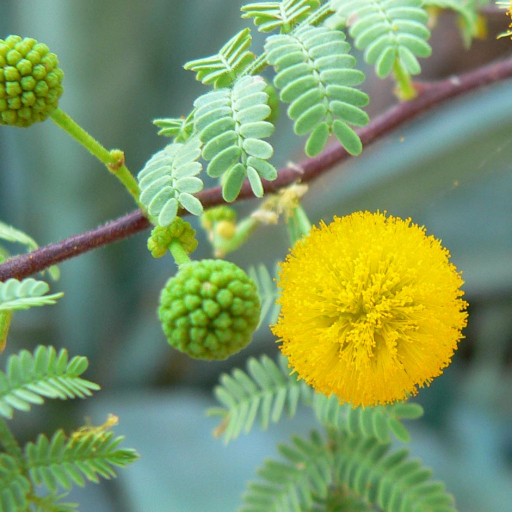
Plant Overview
Often called the Whitethorn Acacia, this desert survivor is a rugged staple of the American Southwest and Northern Mexico. It transforms from a scrubby, defensive shrub into a golden beacon when its fragrant, puffball flowers bloom after seasonal rains. It is a plant that tells a story of desert resilience, thriving in rocky soils where few other species can find a foothold.
🔍 How to Identify
- 🦴 The Thorns: Look for long, straight, bone-white spines that grow in pairs at the base of the leaves. These "white thorns" are its most iconic identification feature.
- 🟡 The Blooms: Small, bright yellow, spherical "puffball" flower heads. They are highly fragrant and usually appear in late spring and again after summer monsoons.
- 🌿 The Foliage: Very small, feathery green leaflets (bipinnate) that give the plant a delicate, airy appearance despite its sharp defenses.
🏡 In Your Garden
- ☀️ Sun & Space: This plant is a sun-worshiper that requires full exposure to thrive. Because of its deep taproot, it is incredibly drought-tolerant once established but deeply dislikes being moved, so choose its "forever home" carefully.
- 🦋 Pollinator Hub: It serves as a vital nectar source for native bees and butterflies. In a garden setting, it functions beautifully as a "living security fence" due to its dense, thorny growth habit that deters intruders.
⚠️ Safety & Toxicity
- ⚔️ Physical Hazard: The primary concern is the thorns. They are stiff, sharp, and can easily pierce skin or thin clothing. Wear heavy-duty gloves when pruning.
- 🐾 Pet & Child Safety: While the plant is not known to be chemically toxic if nibbled, the thorns pose a significant risk of injury. It is best planted away from walkways, play areas, or dog runs.
✨ Fun Fact
The species name constricta refers to its unique seed pods. Unlike many flat bean pods, these are tightly "constricted" between each seed, making the pod look like a tiny, reddish-brown string of pearls or a miniature strand of sausages.

Detailed Care Instructions

Place in a bright room that is sun drenched almost all day. Or directly in a south-facing window.

The presence of a dry surface layer of soil does not indicate that the plant requires water. Instead, stick your finger 1-2" (3-5 cm) deep in the soil to feel dampness or moisture content. If the soil seems dry, it's time to water your greens. If the soil is still moist, however, it is better not to water your plant and instead wait a day or two. Overwatering or waterlogging raises the risk of root rot. So if the soil takes longer than a week to dry, check the light conditions because it's likely that the plant isn't getting enough light. It's fine if the upper layer of soil is dry between waterings, but the deeper soil layer should always have some moisture.








