Plant Overview
Often called the Bullhorn Acacia, this fascinating tree is nature’s version of a medieval fortress. Native to Mexico and Central America, it is legendary for its "living security system"—a mutualistic relationship with aggressive ants that live inside its hollow thorns. In a garden, it provides a striking, prehistoric silhouette that serves as a dramatic focal point.
🔍 How to Identify
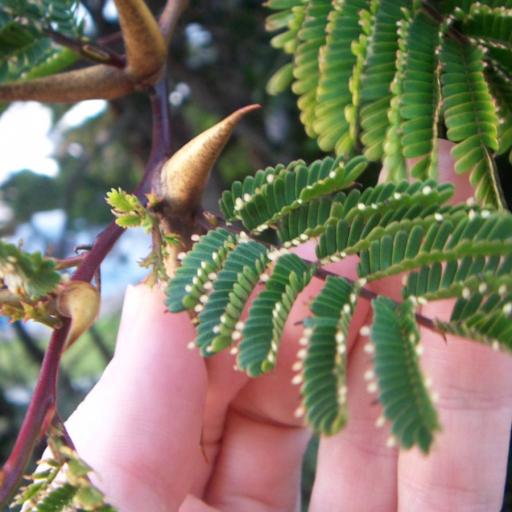
- 🐂 The Horns: Its most famous feature is the pair of oversized, hollow spines at the base of the leaves, which strongly resemble the horns of a bull.
- 🌿 Feathery Foliage: The leaves are delicate and fern-like (bipinnate), providing a soft, airy contrast to the intimidating thorns.
- 🌼 Golden Spikes: In the spring, it produces small, cylindrical yellow flower clusters that look like fuzzy golden puffs.
- 🍯 Food Glands: If you look closely at the tips of new leaves, you might see tiny orange "Beltian bodies"—protein-rich snacks the tree grows specifically to feed its ant protectors.
🏡 In Your Garden
- 🐜 Ant-Free Zone: While wild trees are almost always inhabited by stinging ants, nursery-grown plants in non-tropical climates usually lack their tiny bodyguards. However, the tree still produces the hollow thorns and sugary nectar regardless!
- ☀️ Thirst for Light: This is a sun-worshipper. It requires full sun to develop those iconic thorns. If kept in too much shade, it may become leggy and lose its structural integrity.
- ✂️ Space Management: Because of its aggressive thorns, plant it away from walkways or "high-traffic" areas where people or pets might accidentally brush against it.
⚠️ Safety & Toxicity
- 🌵 Physical Hazard: The primary danger is mechanical. The thorns are incredibly sharp, rigid, and can easily pierce skin or thin clothing. Wear heavy-duty gloves when pruning.
- 🐾 Pets & Kids: The plant is generally considered non-toxic if nibbled, but the thorns pose a significant risk of eye or skin injury to curious pets and running children.
✨ Fun Fact
The Bullhorn Acacia doesn't just provide the ants with a home; it pays them! In exchange for living in the thorns, the ants act as a private militia, attacking any herbivore that tries to eat the leaves and even clearing away competing vines that try to grow over the tree.

Detailed Care Instructions
To grow Vachellia cornigera plants, also known as bullhorn acacia or bull's horn thorn, you can follow these steps:
- Obtaining seeds: You can try obtaining seeds from a reputable nursery or from a trusted online source. Make sure the seeds are fresh and viable.
- Germination: Soak the seeds in warm water for 24 hours before planting to help soften the hard seed coat. This will facilitate germination. Alternatively, you can slightly scratch the seed coat to help water penetrate.
- Potting mix: Fill a small nursery pot with a well-draining potting mix. A mix of sand, perlite, and a little organic matter like compost or peat moss works well.
- Planting: Plant the seeds about 1-2 centimeters deep in the potting mix. Firmly press the soil around the seeds to eliminate air pockets.
- Watering: Water the seeds gently, keeping the soil evenly moist but not waterlogged. Avoid overwatering, as excessive moisture may lead to rotting.
- Germination environment: Place the pot in a warm location with indirect sunlight or under grow lights. Maintain a temperature around 70-80°F (21-27°C) for optimal germination.
- Growth and care: Once the seeds have germinated and sprouted, provide them with plenty of bright light. As the plants grow, gradually expose them to more sunlight. Water the plants as needed, allowing the topsoil to dry out slightly between waterings.
- Transplanting: After the seedlings have developed a few sets of true leaves and have grown to a suitable size, carefully transplant them into larger pots or in a prepared outdoor garden bed. Ensure that you transplant them during the appropriate season, taking into consideration your climate and the plant's growth requirements.
- Maintenance: Prune the plants to maintain their shape and promote bushiness. Provide occasional fertilization with a balanced, slow-release fertilizer according to the package instructions.
- Protection: If you plan to grow Vachellia cornigera outdoors, make sure to protect the young plants from extreme temperatures, heavy rains, and strong winds until they become established.
Remember, each plant species has specific requirements, so it is always best to consult additional local resources or a horticulturist to ensure you are meeting the specific needs of Vachellia cornigera in your region.

Place in a bright room that is sun drenched almost all day. Or directly in a south-facing window.

To properly water this plant, ensure that the soil is completely dry before watering. Give the plant a thorough watering until the water runs out of the drainage holes. Do not allow the plant to sit in standing water as this can lead to root rot. Watering frequency may vary depending on the climate, but generally, it is best to water this plant once every 1-2 weeks.
To fertilize this plant, you should use a balanced fertilizer with equal amounts of nitrogen, phosphorus, and potassium. You should apply the fertilizer at a rate of 1/4 cup per square yard of soil, and spread it evenly over the area around the plant. The best time to fertilize is in early spring, before new growth begins, and again in mid-summer. Be careful not to over-fertilize, as this can damage the plant and cause it to grow poorly. Remember to water the plant thoroughly after fertilizing, to help the nutrients reach the roots.
The Vachellia Cornigera plant requires well-draining soil that is rich in nutrients and organic matter. The soil should have a pH level between 6.0 and 7.5. It is recommended to use a sandy loam soil that has been mixed with compost or peat moss to improve the soil structure and fertility. The plant prefers a slightly acidic soil that is not too compact, allowing sufficient oxygen and water to reach the roots. It is important to avoid using heavy clay soils, which can retain too much moisture and lead to root rot. Additionally, the soil should be kept consistently moist but not waterlogged.
Vachellia cornigera can be propagated through seeds or cuttings.
Propagation through seeds involves harvesting the mature pods from the plant. The pods should be dried in a cool, dry place and crushed to release the seeds. The seeds can then be sown in seed trays filled with a well-draining soil mixture and covered lightly with soil. The trays should be kept in a warm and humid environment, such as a greenhouse, and watered regularly. Once the seedlings reach a certain size and strength, they can be transplanted into individual pots or directly into the ground.
Propagation through cuttings involves taking a section of the plant stem with several leaves attached. The cutting should be about 10-15cm long and stripped of its lower leaves. The bottom of the stem should be dipped into rooting hormone and inserted into a well-draining soil mixture. The cutting should be kept in a warm and humid environment and watered regularly. Once the cutting has rooted, it can be transplanted into individual pots or directly into the ground.








