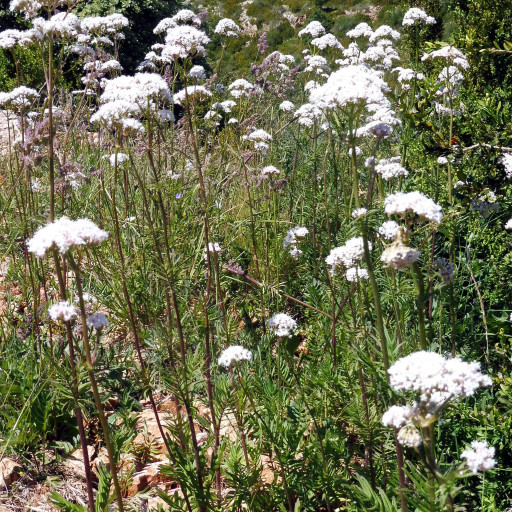
Plant Overview
Often called "Garden Heliotrope" or simply "All-Heal," Valerian has been a staple in European cottage gardens and apothecary shelves for centuries. While it is famous today as a natural sleep aid, the plant itself is a towering, elegant perennial that bridges the gap between a medicinal herb and a decorative wildflower. Its history is steeped in folklore, ranging from protection against witchcraft to being a secret ingredient in ancient perfumes.
🔍 How to Identify
- 🌿 Leaf Structure: Features deeply divided, fern-like green leaves that grow in opposite pairs along the stem, giving the base a lush, tufted appearance.
- 🌸 Floral Clusters: Produces umbrella-like clusters (corymbs) of tiny, tubular flowers that range from pure white to a delicate pale pink.
- 👃 The Scent Paradox: The flowers emit a lovely, sweet fragrance reminiscent of cherry pie or vanilla, but the roots possess a famously pungent, earthy odor often compared to aged cheese or "dirty socks."
🏡 In Your Garden
- 💧 Moisture Lover: Valerian thrives in "heavy" soil that stays consistently damp. It is a perfect choice for boggy corners of the yard or near a garden pond where other perennials might struggle with wet feet.
- 📏 Vertical Presence: Because it can reach heights of up to five feet, it acts as a "back-of-the-border" plant. It may require staking in windy areas, as the tall, hollow stems can lean after a heavy summer rain.
- 🐝 Pollinator Hub: The nectar-rich blossoms are a magnet for hoverflies and tiny beneficial wasps, making it an excellent companion plant for organic vegetable gardeners looking to increase natural pest control.
⚠️ Safety & Toxicity
- 🐾 Pet Behavior: Valerian contains actinidine, a compound that acts as a stimulant for cats, much like catnip. While not toxic, your feline friends may try to dig up the roots or roll aggressively in the foliage.
- 👶 Human Caution: While generally safe for adults in prepared medicinal forms, the raw plant should not be ingested by children or pregnant women. Excessive use of the root can lead to "Valerian hangover," characterized by grogginess or vivid dreams.
✨ Fun Fact
- 🐀 The Pied Piper’s Secret: According to some versions of the medieval legend, the Pied Piper of Hamelin didn't just use a magic flute to lure the rats out of town; he reportedly carried dried Valerian roots in his pockets to use the scent as a powerful rodent attractant!

Detailed Care Instructions
| Color | White, Pale Pink |
| Soil Ph | Tolerant Of Most Soils |
| Humidity | Normal |
| Invasive | Weed |
| Lighting | Full Sun |
| Soil Type | Average, Well-Drained, Loam |
| Bloom Time | Early Summer |
| Difficulty | Medium |
| Plant Type | Perennial |
| Hibernation | Cold Period |
| Mature Size | 3 To 5 Feet Tall |
| Native Area | Europe, Asia |
| Temperature | 21°C - 38°C |
| Sun Exposure | Full Sun To Partial Shade |
| Hardiness Zones | 3-9 |
To grow Valeriana officinalis (Valerian) plants, follow these steps:
- Choose a suitable location: Valerian plants prefer full sun to partial shade. Select a spot in your garden that receives at least 6 hours of sunlight per day. The soil should be loamy, well-draining, and rich in organic matter.
- Prepare the soil: Before planting, amend the soil with compost or aged manure to improve fertility and drainage. Remove any weeds or grass from the planting area.
- Sow seeds or plant seedlings: Valerian can be grown from seeds or seedlings. If starting from seeds, sow them directly into the garden in early spring or fall, as they require a cold stratification period. Alternatively, you can start seeds indoors 6-8 weeks before the last frost and transplant them outside when the weather is suitable.
- Space the plants: Plant the Valerian seedlings or thin the seedlings to about 18-24 inches apart. This will allow enough space for the plants to grow and spread.
- Watering: Valerian plants need consistent moisture, so water them regularly, especially during dry periods. However, ensure that the soil is well-draining to avoid waterlogging, as this can cause root rot.
- Fertilizing: Valerian plants generally do not require heavy feeding. However, you can apply a balanced, organic fertilizer once or twice during the growing season to provide additional nutrients.
- Mulching: Apply a layer of organic mulch around the plants, such as straw or wood chips, to help regulate soil moisture, suppress weeds, and provide insulation to the roots.
- Pruning: Valerian plants may require occasional pruning to remove dead or faded flowers and maintain the desired shape. Prune back the entire plant after flowering to encourage rejuvenation and prevent self-seeding.
- Harvesting: The roots of Valerian plants are commonly used in herbal medicine. To harvest the roots, wait until the second or third growing season, after the plant has become well-established. Dig up the roots in early spring or fall when they are most potent.
Overall, with proper care and attention to their growing requirements, Valerian plants can thrive and provide you with beautiful flowers and medicinal properties.

Place in a bright room that is sun drenched almost all day. Or directly in a south-facing window.

Valeriana Officinalis is a plant that requires frequent watering in its growing season, but not too much water that it becomes waterlogged. To water it, fill a watering can with water and gently pour the water at the base of the plant, taking care to avoid getting water on the leaves or flowers. It is important to water the plant regularly, but allow the soil to dry out slightly between watering sessions. Additionally, be mindful of the location of the plant and adjust your watering schedule accordingly - for example, plants in direct sunlight may require more regular watering than those in a shaded area. It is also important to note that water quality can affect the growth of Valeriana Officinalis - if the water in your area is hard or contains high levels of chlorine, consider using filtered or boiled water to avoid damaging the plant.
To fertilize this plant, you should choose a slow-release natural or organic fertilizer with balanced nutrients. Apply the fertilizer in early spring after the last frost or during the early growth stage. Scatter or sprinkle the fertilizer lightly around the base of the plant and water it thoroughly. Repeat the application in mid-summer to encourage healthy growth and abundant blooms. Avoid using synthetic fertilizers or over-fertilizing, as it may harm the plant and affect its medicinal properties.
Valeriana Officinalis prefers a well-draining, loamy soil that is rich in organic matter. The soil pH should be between 6.0 and 7.0, which is slightly acidic to neutral. The plant can tolerate a variety of soil types, including clay, sandy, and rocky soil, as long as it is not too heavy or compacted. It is important to ensure that the soil does not become waterlogged, as this can cause the plant to rot. Adding compost or well-rotted manure to the soil before planting will help to improve the soil structure and provide nutrients to the plant. A layer of mulch around the base of the plant can help to retain moisture in the soil and suppress weeds.
Valeriana Officinalis plant can be propagated through division and seeds.
To propagate through division, it's recommended to do it during the plant's dormant season in early spring. Begin by gently digging up the plant and carefully dividing the clumps into smaller ones using a sharp tool or your hands. Make sure each new clump contains a good amount of roots and foliage. Transplant them immediately into the desired location and water thoroughly.
To propagate through seeds, collect the mature seeds in autumn after the flowers have faded and the seed capsules have turned brown. Sow the seeds in well-draining soil in either pots or directly in the garden bed where they will grow. They take about two to four weeks to germinate. Make sure to keep the soil evenly moist until the seedlings have established themselves.
It's important to note that Valeriana Officinalis plant prefers slightly moist soils and partial to full sun exposure.
Common pests of the garden-heliotrope include Spider mites, aphids, larvae. Make a habit of checking your garden-heliotrope frequently for pests so that any infestations can be caught and managed early.








