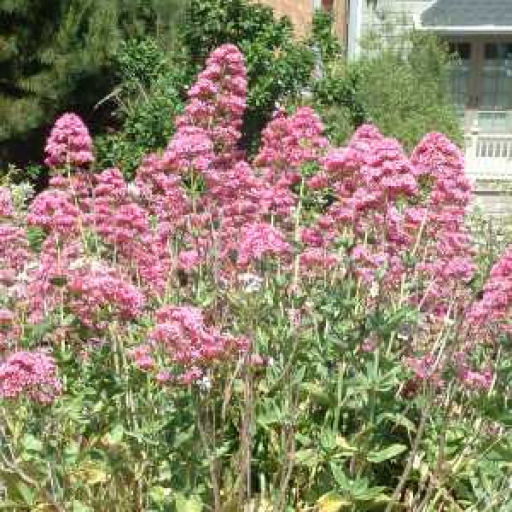
Plant Overview
Often called Jupiter’s Beard or Red Valerian, this Mediterranean native is a staple of the classic "cottage garden" look. Despite the name, it isn't a true Valerian, but it shares the same exuberant, wild energy. It is famous for its ability to thrive in the most impossible places, often seen bursting through the cracks of ancient stone walls or clambering over rocky cliffs.
🔍 How to Identify
- 🌸 The Blooms: Tiny, star-shaped flowers gathered in dense, rounded clusters (cymes). While usually a vibrant crimson or deep pink, you may occasionally find "Albus" varieties in pure white.
- 🍃 The Foliage: The leaves are a distinct succulent-like blue-green (glaucous) color. They are lance-shaped and grow in opposite pairs along the stems.
- 🌿 Growth Habit: It forms a bushy, upright mound that can become slightly woody at the base as the plant matures. It typically reaches about 2 to 3 feet in height.
🏡 In Your Garden
- 🧱 Wall-Climber: This plant is a "calcicole," meaning it loves lime. It thrives in poor, alkaline soil and is one of the best choices for planting in the crevices of dry stone walls where other plants would wither.
- ✂️ The Deadhead Rule: It is a prolific self-seeder. If you don't want a garden full of "volunteers" next year, cut the flower heads back as soon as they fade. This often triggers a second flush of blooms in late summer.
- ☀️ Drought Warrior: Once established, it is incredibly drought-tolerant. It prefers "tough love"—too much fertilizer or rich soil will actually make the plant floppy and short-lived.
⚠️ Safety & Toxicity
- ✅ Pet & Human Safe: Red Valerian is generally considered non-toxic to dogs, cats, and humans. It is a safe choice for family-friendly landscapes.
- 💊 Medicinal Note: Do not confuse this with Valeriana officinalis (the medicinal Valerian used for sleep). While Centranthus ruber was used historically in some folk medicine, it does not have the same sedative properties.
✨ Fun Fact
Red Valerian is a magnet for the Hummingbird Hawk-moth. Because the flowers have a deep "spur" containing nectar, these fascinating moths—which look and fly exactly like tiny hummingbirds—are one of the few insects with a long enough proboscis to reach the treat inside!

Detailed Care Instructions
Growing Valeriana rubra, also known as red valerian or Jupiter's beard, is relatively easy. Here are some steps to help you grow this plant:
- Choose a suitable location: Select a spot in your garden that receives full sun or partial shade. Red valerian prefers well-drained soil, so make sure the planting site has good drainage.
- Prepare the soil: Before planting, improve the soil by adding organic matter such as compost or well-rotted manure. This will help enhance drainage and fertility.
- Sow or transplant: If you start from seeds, sow them directly in the garden in early spring after the last frost date. Alternatively, you can also start the seeds indoors 6 to 8 weeks before the last frost and transplant the seedlings outside after they have developed a few sets of leaves. Space the plants about 12 to 18 inches apart.
- Watering: Red valerian prefers moderately moist soil. Make sure to water regularly, especially during dry spells. Avoid overwatering, as this can cause root rot.
- Mulching: Apply a layer of organic mulch around the plants to help retain soil moisture and suppress weed growth.
- Fertilizing: Red valerian doesn't require heavy fertilization. You can apply a balanced, slow-release fertilizer or compost to the soil in spring to provide the necessary nutrients.
- Maintenance: Regularly remove spent flowers to encourage continuous blooming. You can also lightly prune the plant after blooming to maintain its shape and promote new growth.
- Pests and diseases: Red valerian is generally resistant to pests and diseases. However, keeping the plants well-spaced and properly watered can help prevent issues like powdery mildew.
- Propagation: Red valerian can easily self-seed in favorable conditions. To propagate, you can collect the seeds from the dried flower heads and sow them in the desired location or share them with other gardeners.
By following these steps, you should be able to successfully grow Valeriana rubra in your garden. Enjoy its beautiful red flowers and its aromatic presence!

Place in a window with dappled sun or a spot in the middle of a room. Or directly in a window facing west or east.

Valeriana Rubra is a flowering plant that needs to be watered regularly for healthy growth. To water this plant, you need to make sure that the soil is moist but not waterlogged. You can check the soil moisture by touching the top layer of the soil with your finger. If the soil feels dry, it's time to water the plant.
When watering Valeriana Rubra, use a watering can or a hose with a gentle spray nozzle to avoid damaging the delicate leaves and flowers. Water the plant thoroughly, making sure that the water reaches the roots. Avoid watering the leaves as this can cause fungal diseases.
It's important not to overwater Valeriana Rubra as this can lead to root rot. Wait until the top layer of the soil is dry before watering the plant again. In addition to regular watering, this plant also needs good drainage to prevent waterlogging. You can achieve this by adding sand or perlite to the soil mix to improve drainage.
Overall, watering Valeriana Rubra requires a balance of regular watering and good drainage to ensure healthy growth. By following these simple steps, you can help your Valeriana Rubra thrive.
To fertilize Valeriana Rubra plant, follow these instructions:
- Choose a balanced, water-soluble fertilizer with equal amounts of nitrogen (N), phosphorus (P), and potassium (K) or close to a 10-10-10 ratio.
- Dilute the fertilizer according to the package instructions. Generally, use about half the recommended strength to avoid over-fertilizing.
- Water the plant thoroughly before applying fertilizer to ensure the soil is moist.
- Apply the diluted fertilizer around the base of the plant, avoiding direct contact with the leaves or stems.
- Use a watering can or a gentle sprinkler attachment to evenly distribute the fertilizer.
- Be cautious not to apply too much fertilizer as it can lead to fertilizer burn or the plant becoming dependent on the nutrients.
- Fertilize the Valeriana Rubra plant every two to four weeks during the growing season, which typically occurs in spring and summer.
- Monitor the plant's response to fertilization. If the leaves start turning yellow or show signs of nutrient deficiency, consider adjusting the fertilizer application or type.
- Remember to follow the specific instructions provided by the fertilizer manufacturer as they may vary.
Valeriana rubra grows best in a well-draining soil with a slightly acidic pH level between 5.5- 6.5. The soil should be rich in organic matter, such as compost, to ensure proper nutrient availability for the plant. It is important to avoid soils that are too heavy or compacted, as this can lead to poor drainage and root rot. Adding perlite or sand can improve soil texture and promote better drainage. Additionally, the plant prefers moist but not waterlogged conditions, so it is crucial to ensure the soil is kept consistently moist.
Valeriana Rubra, a herbaceous perennial plant, can be propagated using several methods. Here are the steps to propagate it:
- Division: This is the most common method of propagation for Valeriana Rubra. Start by digging up an established plant in early spring or fall when it is dormanthricycle. Carefully separate the plant into smaller sections, ensuring that each division has healthy roots and shoots.
- Cuttings: Take stem cuttings from a healthy Valeriana Rubra plant during its active growth phase, usually in spring or early summer. Choose a stem that is around 6-8 inches long and contains several healthy leaves. Remove the lower leaves and cut the stem just below a node. Dip the cut end in a rooting hormone to promote root development. Plant the cutting in a well-draining potting mix and keep it in a warm and humid environment until roots develop.
- Seed propagation: Collect seeds from mature Valeriana Rubra plants when the seed heads turn brown and dry. Lightly scarify the seeds by scratching or lightly nicking their surface to enhance germination rates. Sow the seeds in a seed tray or small pots filled with a moist seed-starting mix. Cover them lightly with a thin layer of soil and provide bottom heat or use a propagator to maintain a warm temperature around 70°F (21°C). Keep the soil consistently moist and within a few weeks, the seeds should germinate.
- Self-sowing: Valeriana Rubra has a tendency to self-sow its seeds. By allowing the plants to mature and produce seeds naturally, you can let them spread and establish new plants on their own. Additionally, if you have an established Valeriana Rubra plant, you can scatter the seeds in desired areas of your garden and let them go through the natural germination process.
Regardless of the propagation method chosen, ensure that the new plants have suitable growing conditions. Valeriana Rubra prefers a sunny location with well-draining soil rich in organic matter. Provide regular watering to keep the soil consistently moist, but not waterlogged. With proper care, these propagated plants will grow and flourish, adding beauty and fragrance to your garden.
Common pests of the red valerian include Mealybugs, aphids. Make a habit of checking your red valerian frequently for pests so that any infestations can be caught and managed early.








