Plant Overview
Often called the Discoid Cornsalad or Medallion Cornsalad, this charming Mediterranean native is a master of miniature geometry. While it may look like a humble wildflower at first glance, its most striking feature appears after the flowers fade, when it develops intricate, star-shaped seed pods that look like tiny pieces of ancient jewelry. It belongs to the same family as the common "Lamb’s Lettuce," making it a delicate and fascinating addition to dry, sunny patches of a garden.
🔍 How to Identify
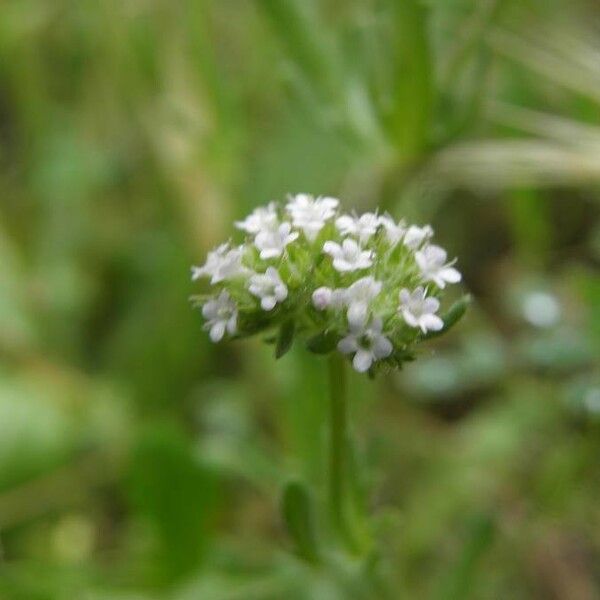
- 🌸 The Flowers: Clusters of very tiny, pale lilac or white tubular flowers bloom at the tips of forking stems. They are subtle but beautiful when viewed up close.
- 🍃 The Foliage: Lower leaves form a soft green rosette, while the upper leaves are narrower and often have small "teeth" near the base, clasping the stem.
- 🛡️ The "Discoids": The namesake feature is the fruit. After flowering, the calyx (the base of the flower) expands into a flat, circular, or bowl-shaped crown with tiny teeth, resembling a miniature medallion or a "disco" ball.
🏡 In Your Garden
- 🌱 Sun & Soil Nuance: Because it originates from rocky, Mediterranean slopes, this plant thrives in poor, well-drained soil. It’s a "pioneer" species, meaning it loves to fill in bare spots where other plants might struggle with the heat.
- 🔄 The Self-Seeding Habit: If you have this plant in your garden, you rarely need to replant it. It is an annual that focuses its energy on producing those ornate seed pods, which drop and wait for the next growing season to emerge.
⚠️ Safety & Toxicity
- ✅ Status: Generally considered non-toxic and safe.
- 🥗 Details: It is closely related to the edible corn salad (Valerianella locusta) used in gourmet salads. While V. discoidea is not usually grown for food, it is not known to be harmful to humans, dogs, or cats if accidentally brushed against or nibbled.
✨ Fun Fact
The specific epithet discoidea comes from the Greek word for "discus-like." This refers to the unique, flattened shape of the fruit's crown, which helps the seeds catch the wind or hook onto passing animals to travel to new locations!

Detailed Care Instructions
To grow Valerianella discoidea, also known as mâche or corn salad, follow these steps:
- Climate: Check if the climate in your region is suitable for growing mâche. It grows best in cool seasons, like spring and fall, and may have difficulty in areas with hot summers.
- Soil preparation: Ensure you have well-draining soil that is rich in organic matter. Mâche prefers a soil pH level between 6.0 and 6.8. Add compost or well-rotted manure to improve soil fertility.
- Sowing seeds: Directly sow the seeds outdoors. Choose a location with partial shade or full sun exposure. Rake the soil to remove any debris and create a fine seedbed. Broadcast the seeds and gently tap them into the soil. Space the seeds around 1 inch apart and cover them with a thin layer of soil, approximately ¼ inch deep.
- Watering: Keep the soil consistently moist during germination and growth. Water the plants regularly, providing about 1 inch of water per week. Try not to let the soil dry out completely, as this can negatively impact the growth of the plants.
- Thinning: Once the seedlings emerge, thin them to provide adequate spacing. Thin the plants to around 4-6 inches apart. This allows for proper airflow and prevents overcrowding.
- Mulching: Apply a layer of organic mulch, such as straw or shredded leaves, to retain soil moisture and suppress weed growth. This can be particularly helpful during warmer months when the soil tends to dry out quickly.
- Fertilization: Mâche generally doesn't require much fertilization. However, if your soil lacks nutrients, you can apply a balanced fertilizer according to the product instructions.
- Harvesting: Mâche is typically ready for harvest within 40-60 days after sowing. You can harvest the entire plant or cut the outer leaves, allowing the inner leaves to continue growing. Harvesting the outer leaves while leaving the center intact can help prolong the harvest period.
Remember to always refer to the specific instructions provided with the seeds or consult a local gardening expert for any additional advice tailored to your specific growing conditions.

Place in a window with dappled sun or a spot in the middle of a room. Or directly in a window facing west or east.

Valerianella Discoidea is a plant that requires regular watering to ensure proper growth and development. It is important to water this plant deeply, allowing the soil to become saturated without causing water to pool on the surface. The soil should be allowed to dry out slightly between waterings to prevent overwatering, which can lead to root rot and other problems.
When watering Valerianella Discoidea, it is important to avoid getting water on the leaves or flowers, as this can lead to fungal diseases. Instead, water the plant at the base, using a watering can or hose with a gentle spray nozzle. Water early in the morning or in the evening to avoid evaporation and to allow the plant to absorb water more efficiently.
The amount of water Valerianella Discoidea requires will depend on a variety of factors, including the size of the plant, the temperature and humidity of the environment, and the type of soil it is growing in. As a general rule, the plant should be watered deeply every 7-10 days, but this may need to be adjusted based on the specific needs of the plant.
In addition to regular watering, it is important to provide Valerianella Discoidea with adequate drainage to prevent water from pooling around the roots. This can be achieved by ensuring that the plant is grown in well-draining soil and by adding a layer of mulch around the base of the plant to help retain moisture.
Overall, caring for Valerianella Discoidea involves giving it regular water without overdoing it and allowing it to absorb as much water as it needs to grow and thrive.
To provide adequate nutrition for this particular plant, it is important to use a high-quality, balanced fertilizer that contains nitrogen, phosphorus, and potassium. Apply the fertilizer according to the manufacturer's instructions, making sure to water the plant before and after application to prevent burning the roots. In addition, it is recommended to fertilize the plant every 3 to 4 weeks during the growing season to promote healthy growth and blooms. Always monitor the plant for signs of over-fertilization, such as wilting or yellowing leaves, and adjust the feeding schedule accordingly.
Valerianella Discoidea plant requires a soil that is well-draining and rich in organic matter. It should contain a balanced mix of sand, loam and clay, with a pH range between 6.0 and 7.0. The soil should hold moisture but not become waterlogged, as this can cause root rot. The addition of compost or aged manure can help to improve soil fertility. It is important to avoid using soil that is compacted, heavy or contains a high percentage of clay, as this can impede growth and lead to poor drainage. Adding a layer of mulch around the base of the plant can help to keep soil moisture levels consistent and provide a source of nutrients as it decomposes.
To propagate this plant, you will need to take stem cuttings from a mature plant. Choose stems that are healthy and free from any signs of damage or disease.
Using a sharp, clean pair of scissors or pruning shears, clip off a stem that is 4-6 inches long. Make the cut at a 45-degree angle, just below a node. Nodes are the points on the stem where leaves come out.
Strip off the lower leaves from the stem, leaving only a few at the tip. Dip the cut end of the stem into a rooting hormone powder. This will help encourage the stem to grow roots.
Fill a small pot with a well-draining potting soil. Moisten the soil gently with water. Use a pencil or finger to poke a hole in the soil. Insert the stem cutting into the hole, pressing the soil around it firmly.
Keep the pot in a warm, bright location, but not in direct sunlight. Water the cutting regularly, keeping the soil moist but not soggy. After a few weeks, the stem should start to grow roots and new leaves.
Once you see new growth, you can transplant the new plant into a larger pot or even into your garden. Be sure to protect it from extreme temperatures and water it regularly until it becomes established.








