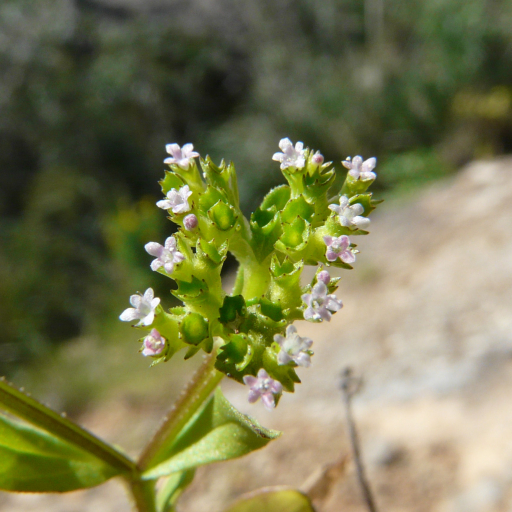
Plant Overview
Often called the Italian Cornsalad, Valerianella eriocarpa is the rustic, Mediterranean cousin of the more common lamb’s lettuce. While it might look like a simple garden weed at first glance, this delicate annual has a long history as a foraged green. It arrives early in the spring, offering a splash of soft green before most other plants have even woken up from their winter slumber.
🔍 How to Identify
- 🍃 Leaf Shape: The leaves grow in a tidy basal rosette; they are spatula-shaped, slightly succulent, and have a soft, matte finish.
- 🌸 Tiny Blooms: It produces very small, pale blue to nearly white flowers that sit in dense clusters at the ends of forking stems.
- 🧶 Hairy Fruits: The defining feature is the seed (fruit). Unlike its smooth-seeded relatives, the fruit of this species is covered in tiny, fine hairs—giving it the name eriocarpa, or "woolly fruit."
🏡 In Your Garden
- 🌱 The Opportunist: This plant loves disturbed soil. You’ll often find it tucked into the corners of vegetable beds or along gravel paths where other plants struggle to take hold.
- ❄️ Cool Weather Friend: It is a "winter annual," meaning it germinates in the cool autumn air, stays green through winter, and bolts into flower as soon as the spring sun hits.
- 🥗 Culinary Context: While not as fleshy as commercial cornshred, the leaves are entirely edible and have a mild, nutty flavor. It’s perfect for those looking to encourage "edible weeds" in a permaculture-style garden.
⚠️ Safety & Toxicity
- ✅ Status: Non-toxic and safe.
- 🐾 Details: This plant is generally considered safe for humans, cats, and dogs. In fact, many garden birds enjoy snacking on the tiny, woolly seeds once the plant begins to dry out in the summer heat.
✨ Fun Fact
The genus name Valerianella is a diminutive of "Valerian." While it is a distant relative of the medicinal Valerian root used for sleep, the Italian Cornsalad doesn't share the same potent sedative properties—it’s much better suited for a salad bowl than a medicine cabinet!

Detailed Care Instructions
To grow Valerianella eriocarpa (also known as lamb's lettuce or corn salad), follow these steps:
- Choose a suitable location: Valerianella eriocarpa prefers partial shade to full sun, so find a spot in your garden that receives 4-6 hours of sunlight per day. It can tolerate a wide range of soil types, but well-draining soil is ideal.
- Prepare the soil: Loosen the soil in your chosen area by removing any weeds or rocks. Add organic matter like compost or aged manure to enhance soil fertility and drainage.
- Sow the seeds: You can sow Valerianella eriocarpa seeds directly into the garden bed in either early spring or early fall. Sprinkle the seeds thinly and evenly over the soil surface and lightly press them into the soil. Avoid burying the seeds too deep, as they require light to germinate.
- Watering and maintenance: Keep the soil consistently moist but not waterlogged. Regularly water the young plants to ensure proper growth. Weeding should be done regularly to prevent competition with the desired plants. Applying a layer of mulch around the base of the plants can help retain moisture and suppress weed growth.
- Harvesting: Valerianella eriocarpa can be harvested when the leaves are young and tender, typically around 30-40 days after planting. You can harvest the outer leaves, allowing the inner leaves to continue growing for future harvests. This plant is known for its ability to regrow after cutting.
- Pests and diseases: Valerianella eriocarpa is relatively resistant to pests and diseases. However, watch out for aphids, slugs, and snails, which may occasionally attack the plants. Remove any affected leaves or use organic pest control methods, if necessary.
By following these steps, you should be able to successfully grow Valerianella eriocarpa in your garden.

Place in a window with dappled sun or a spot in the middle of a room. Or directly in a window facing west or east.

To water Valerianella eriocarpa properly, you need to consider a few key factors. Firstly, ensure that you provide the plant with an adequate amount of water without overwatering. This can be achieved by following these guidelines:
1. Determine the water requirements: Valerianella eriocarpa prefers consistently moist soil, but not waterlogged conditions. It is important to avoid drought stress, as it can negatively impact the plant's growth and overall health.
2. Check soil moisture: Before watering, check the soil moisture level by inserting your finger about an inch into the soil. If it feels dry at this depth, it is an indicator that the plant needs watering.
3. Watering technique: When watering, aim to wet the root zone thoroughly without water pooling on the surface. This can be accomplished by watering at the base of the plant, directly onto the soil.
4. Frequency of watering: The ideal watering frequency depends on various factors such as climate, humidity, and soil type. As a general rule, water Valerianella eriocarpa when the top inch of soil feels dry to the touch.
5. Mulching: To conserve moisture and prevent soil drying out too quickly, consider applying a layer of organic mulch around the base of the plant. Mulching helps to retain moisture and reduce water evaporation.
6. Avoid waterlogging: While the plant requires moist soil, it is crucial not to leave it in standing water. Ensure proper drainage by using well-draining soil and pots or planting beds with adequate drainage holes.
7. Growth stage: Adjust the watering routine according to the plant's growth stage. Younger plants may require more frequent watering until they establish a strong root system.
Remember, it is always better to err on the side of underwatering rather than overwatering. Overwatering can cause root rot and other problems that may harm Valerianella eriocarpa. Observe the plant closely and modify your watering schedule based on its specific needs.
To fertilize Valerianella eriocarpa plants, follow these instructions:
- Choose a balanced, water-soluble fertilizer with an N-P-K ratio close to 10-10-10 or 20-20-20.
- Dilute the fertilizer according to the instructions provided on the label. Different brands may have different concentration recommendations.
- Apply the diluted fertilizer to the soil around the base of the plant, avoiding direct contact with the leaves or stem.
- Water the plant thoroughly after applying the fertilizer to ensure proper nutrient absorption and to prevent any potential fertilizer burn.
- Repeat the fertilization process once every month during the growing season, which is typically from spring to fall.
- Monitor the plant's growth and adjust the fertilization frequency or concentration if necessary. Avoid over-fertilization, as it may result in lush foliage but limited flower production.
- Consider performing a soil test to determine if any specific nutrients are lacking in the soil. This will help you choose a fertilizer with the appropriate micronutrients if necessary.
- Follow the recommended dosage and frequency guidelines for the specific brand of fertilizer you are using to ensure optimal growth and health of the Valerianella eriocarpa plant.
Valerianella eriocarpa is an herbaceous annual plant that belongs to the Valerianaceae family. When growing this plant, it is important to use the right type of soil to ensure proper growth and development.
Valerianella eriocarpa prefers a well-draining soil that is rich in organic matter. The soil should have a loamy or sandy texture that allows for good drainage and root aeration. Its root system requires a soil that is loose and friable to facilitate healthy root development and prevent waterlogging.
The pH of the soil should be slightly acidic to neutral, ranging from 6.0 to 7.0. This range provides an optimal environment for nutrient uptake and overall plant health. It is recommended to conduct a soil test to determine the pH level and make any necessary adjustments through soil amendments.
Additionally, Valerianella eriocarpa requires a soil that is fertile and nutrient-rich. Organic matter, such as well-rotted compost or aged manure, can be added to the soil prior to planting to improve its fertility. This will provide essential nutrients, enhance soil structure, and promote healthy growth.
Furthermore, the plant thrives in soils that have good moisture-retaining capabilities. However, it is crucial to avoid waterlogged or compacted soil, as it can lead to root rot and hamper plant growth. Regular watering should be done to keep the soil evenly moist, but not overly saturated.
In summary, Valerianella eriocarpa prefers a well-draining, slightly acidic to neutral soil that is fertile, rich in organic matter, and retains moisture. Meeting these soil requirements will contribute to the successful cultivation of this plant and encourage optimal growth and productivity.
To propagate Valerianella Eriocarpa plant, you can follow these steps:
- Identify a mature and healthy Valerianella Eriocarpa plant from which you wish to take cuttings for propagation. Choose a plant that has strong stems and vibrant green leaves.
- Prepare a clean and sharp pair of garden shears or scissors, as well as a clean container or pot for planting the cuttings.
- Fill the container or pot with a well-draining propagation mix. You can create your own mix by combining equal parts of perlite, vermiculite, and peat moss.
- Take a cutting from the Valerianella Eriocarpa plant by cutting a stem just below a leaf node. Make sure the cutting is around 4-6 inches long. Remove any lower leaves on the stem.
- Dip the cut end of the stem into a rooting hormone powder or gel to promote root development. This step is optional but can increase the success rate of propagation.
- Create a hole in the propagation mix with a pencil or your finger and gently place the cutting into the hole. Firmly press the mix around the stem to ensure good contact.
- Mist the cutting thoroughly with water to increase humidity and moisture levels. If you have a clear plastic bag or a propagation dome, you can cover the container to create a mini greenhouse effect.
- Place the container in a warm location with indirect sunlight. Avoid exposing the cuttings to direct sunlight, as it may cause them to wither. Maintain a temperature of around 70-75°F (21-24°C) for optimal root growth.
- Check the moisture levels regularly and mist the cuttings whenever the propagation mix feels dry. Ensure that the container has good drainage to prevent waterlogged conditions.
- After a few weeks, gently tug on the cuttings to check for resistance. If you feel resistance, it indicates that roots have formed. At this stage, you can gradually acclimate the new plants to outdoor conditions by exposing them to increasing amounts of sunlight over the course of a week.
- Once the new Valerianella Eriocarpa plants have developed a healthy root system, you can transplant them into individual pots or directly into the garden. Ensure that the soil is fertile, well-draining, and receives partial shade or filtered sunlight.
By following these steps, you can successfully propagate Valerianella Eriocarpa plants and expand your collection or share them with others.








