
Plant Overview
Known to many as "Lamb’s Lettuce" or "Mâche," Valerianella locusta is the secret superstar of the winter garden. While most greens wither at the first sign of frost, this resilient little rosette thrives in the cold, offering a buttery, nutty flavor when everything else is dormant. It even holds a place in folklore; it is the very "Rapunzel" plant that the famous fairy-tale mother craved so intensely she was willing to trade her child for a handful of its leaves.
🔍 How to Identify
- 🍃 The Rosette: It grows in a low-to-the-ground, circular pattern. The leaves are small, spatula-shaped, and incredibly soft to the touch.
- 🎨 Deep Green Foliage: Unlike the pale green of traditional lettuce, Mâche has a rich, dark emerald hue with a matte, velvet-like finish.
- 🌸 The Bloom: If left to "bolt" in the spring, it sends up a delicate, branched stalk tipped with tiny, clusters of pale blue or white flowers that are almost microscopic.
🏡 In Your Garden
- ❄️ A Cold-Weather Champion: This plant doesn’t just tolerate the cold—it loves it. It is often harvested from under a layer of snow. In the garden, it acts as a perfect "gap filler" for the months when other vegetables refuse to grow.
- 🌱 Delicate Roots: Because it has a very shallow and fragile root system, it hates being moved. It’s best to sow the seeds exactly where you want them to stay. It prefers "lean" soil and doesn't need heavy fertilizers to produce its signature sweet flavor.
⚠️ Safety & Toxicity
- 🥗 Safe & Nutritious: This plant is entirely non-toxic and is a culinary delicacy. It is exceptionally high in Vitamin C, beta-carotene, and even Omega-3 fatty acids.
- 🐾 Pet Friendly: It is safe for cats, dogs, and even pet rabbits or tortoises. There are no known irritants or toxic compounds in the foliage or flowers.
✨ Fun Fact
The name "Lamb’s Lettuce" comes from the fact that the plant appears in pastures right around the same time that lambs are born in the early spring, providing them with their first fresh forage of the season.

Detailed Care Instructions
| Color | Green |
| Soil Ph | 6.5-7.0 |
| Humidity | Normal |
| Lighting | Part Sun |
| Toxicity | Non-Toxic |
| Soil Type | Rich, Well-Draining |
| Bloom Time | Spring, Summer |
| Difficulty | Medium |
| Plant Type | Annual |
| Mature Size | 1-2 Feet Tall |
| Native Area | Europe, North Africa, Western Asia |
| Temperature | 10°C - 21°C |
| Sun Exposure | Full Sun, Part Shade |
| Hardiness Zones | 2-10 |
Growing Valerianella locusta, also known as corn salad or lamb's lettuce, can be done by following these steps:
- Choose a suitable planting location: Select a spot in your garden that receives partial shade or full sun, as Valerianella locusta can tolerate both. The soil should be well-draining and fertile.
- Prepare the soil: Loosen the soil and remove any weeds or debris. Incorporate organic matter like compost or well-rotted manure to improve the soil's fertility.
- Sow the seeds: Scatter the Valerianella locusta seeds directly onto the prepared soil. Gently press the seeds into the soil but avoid covering them completely, as they require light to germinate.
- Water regularly: Keep the soil consistently moist but not waterlogged. Water as necessary to prevent the soil from drying out completely. Consider using a watering can or gentle mist spray to avoid displacing the seeds.
- Thin out the seedlings: Once the seedlings have grown to about 2-3 inches tall, thin them out to allow sufficient space for each plant to develop. Maintain a spacing of about 6-12 inches between plants.
- Fertilize if needed: If your soil lacks fertility, you can apply a balanced organic fertilizer or a nitrogen-rich fertilizer. Follow the package instructions for application rates and frequency.
- Harvesting: Valerianella locusta leaves can be harvested when they are young and tender, usually around 30-40 days after sowing. Use a pair of scissors or garden snips to cut the leaves near the base of the plant, leaving the central growing point intact for regrowth.
- Successive planting: To enjoy a continuous harvest, consider sowing new seeds every 2-3 weeks throughout the growing season. This will ensure a constant supply of fresh leaves.
Remember to keep an eye out for any pests or diseases that may affect your Valerianella locusta plants. Regularly monitor for signs of damage and treat accordingly if needed.

Place in a bright room that is sun drenched almost all day. Or directly in a south-facing window.
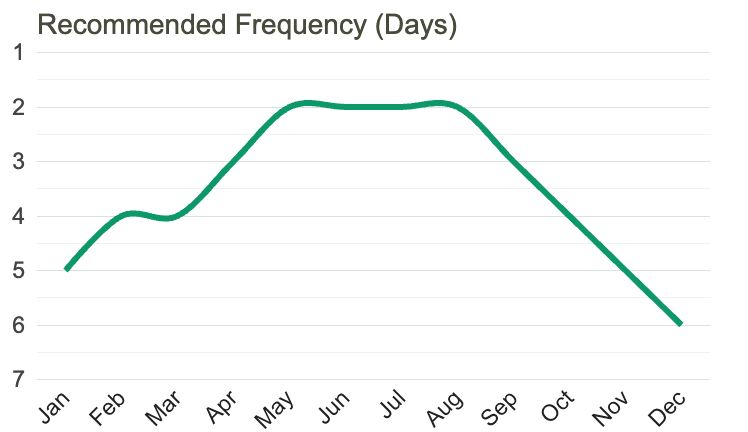
To water the plant, make sure to evenly moisten the soil surface around the base of the plant. Watering is best done in the early morning or late afternoon to avoid evaporation. Avoid overwatering, as this can lead to root rot. Instead, wait until the top inch of soil is dry before watering again. Use room temperature water, not cold water from the tap, to avoid shocking the plant. Watering can be adjusted depending on weather conditions - less water in cooler temperatures, and more water in warmer temperatures.
For best results, fertilize the plant in early spring using a well-draining, nutrient-rich soil. Use a balanced fertilizer with equal parts nitrogen, phosphorus, and potassium, and apply it according to the manufacturer's instructions. Water the plant immediately after fertilizing, to help the fertilizer penetrate the soil. Repeat the fertilization process every six to eight weeks during the growing season, but be careful not to over-fertilize, as this can damage the plant.
Valerianella locusta is a type of leafy green plant that requires a specific type of soil to thrive. It prefers a well-draining soil that is rich in organic matter, with a pH level between 6.0-7.5. It is important to avoid using heavy, clay-like soils that retain too much water, as this can lead to root rot and other fungal diseases. Instead, a sandy loam soil with good aeration is best suited for Valerianella locusta. Additionally, adding compost or other organic matter to the soil can help support healthy growth and nutrient uptake. It is also important to ensure that the soil stays moist but not waterlogged, as too much or too little water can have a negative impact on the plant's health.
Valerianella Locusta is propagated through the collection of its mature seeds or stem cuttings taken from healthy, mature plants. The seeds can be gathered after the plant has finished blooming and the seed heads have turned brown and dry. The heads can then be carefully shaken over a seed tray to release the seed. The seedlings should be kept moist and grown in partial shade until they are large enough to transplant into individual pots or a prepared garden bed.
Alternatively, stem cuttings from mature plants can be taken in the early summer when new growth is present. The cuttings should be taken from the top of the plant and should be around 6-8 inches long. These cuttings should then be dipped in rooting hormone and planted in moist potting soil. The cuttings should be placed in partial shade until they have rooted and can then be transplanted into individual pots or prepared garden beds.
It is important to ensure that the soil is kept moist but not waterlogged during the propagation period, to encourage healthy growth. Additionally, providing the plants with adequate sunlight and nutrients during the growing period can help to ensure strong, healthy plants.
Common pests of the lamb's lettuce include Aphids, snails. Make a habit of checking your lamb's lettuce frequently for pests so that any infestations can be caught and managed early.








