Plant Overview
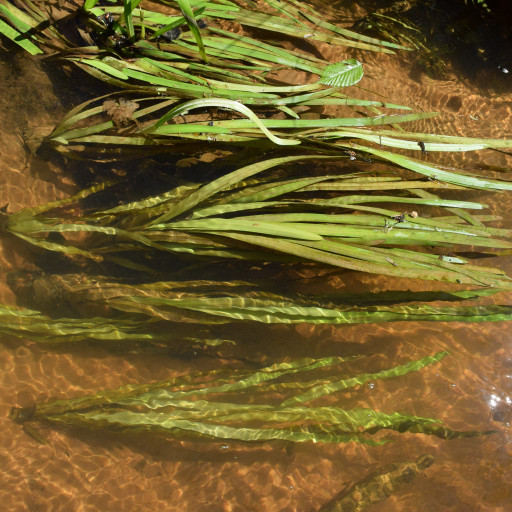
Often called "Jungle Val" or "Tape Grass," Vallisneria americana is the underwater equivalent of a lush, waving meadow. Native to North America, this hardy perennial is a cornerstone of freshwater ecosystems, acting as both a natural filtration system and a sprawling nursery for small fish. Its rhythmic swaying in the current makes it a favorite for "aquascapers" looking to add a sense of movement to their tanks.
🔍 How to Identify
- 🌿 The Leaves: Long, translucent, ribbon-like blades that can grow from a few inches to several feet long, depending on the water depth.
- 🌀 The Pattern: If you look closely, the leaves feature a distinct "raised" central vein area and a faint, honeycomb-like cellular structure.
- 🌱 The Growth Habit: It does not have a traditional stem; instead, all leaves emerge from a central rosette at the base, spreading across the floor via "runners" (stolons).
🏡 In Your Garden (or Aquarium)
- ⚓ Rooting Strategy: This plant is a heavy "root feeder," meaning it draws most of its nutrients from the soil or gravel rather than the water. Because it develops a massive root system, it hates being moved once established—think of it as "planting for keeps."
- ✂️ Pruning Nuance: While it’s tempting to haircut the long leaves when they reach the surface, cutting the tips can cause the entire leaf to die back or rot. It is best to let the leaves "carpet" the surface or prune them off entirely at the very base.
- 🧪 Chemical Sensitivity: It is notoriously sensitive to certain liquid carbon supplements (like glutaraldehyde). If you are using these in your tank, introduce them slowly, or the "Val" may "melt" away overnight.
⚠️ Safety & Toxicity
- 🐾 Pet & Child Safe: This plant is non-toxic and perfectly safe for homes with curious pets or children.
- 🐢 Herbivore Heaven: Be aware that herbivorous fish (like large Goldfish) and aquatic turtles find these leaves delicious. It isn't a danger to them, but they might be a danger to your beautiful underwater forest!
- 🌊 Eco-Warning: Never release Vallisneria into local ponds or rivers outside its native range. It is a fast grower and can quickly become invasive, clogging waterways and outcompeting local flora.
✨ Fun Fact
- 💌 The Floating Proposal: Vallisneria has a romantic way of breeding. The male flowers actually detach from the plant and float like tiny boats on the water's surface until they randomly drift into a female flower, which is tethered to the base by a long, coiled spring.

Detailed Care Instructions
To grow Vallisneria Americana (also known as American eelgrass) plant, follow these steps:
- Choose the right conditions: Vallisneria Americana thrives in freshwater aquariums with moderate to high lighting. Ensure that the temperature of the water is between 70-82°F (21-28°C), and maintain a pH level around 6.5-7.5.
- Select a suitable aquarium substrate: Vallisneria Americana requires a nutrient-rich substrate for root growth. You can use a mixture of aquatic plant soil and gravel for the best results.
- Planting technique: Separate the individual Vallisneria plants from the bunches they are typically sold in. Dig small holes in the substrate using your finger or a pair of tweezers. Plant each Vallisneria plant individually, making sure to bury the roots gently in the substrate while keeping the crown (where the roots and leaves meet) above the surface.
- Adequate lighting: Position your aquarium lights properly so that they provide sufficient illumination to the bottom of the tank. Vallisneria Americana plants need moderate to high lighting conditions to grow well.
- Co2 supplementation: If you have a high-tech planted aquarium setup with injected CO2, it can help enhance growth. However, Vallisneria Americana can still grow well without CO2 supplementation.
- Regular fertilization: Provide essential nutrients to the plant through liquid or root fertilizers. Look for a fertilizer designed specifically for aquatic plants and follow the instructions for application.
- Maintain optimal water quality: Regular water changes are necessary to maintain optimal conditions for plant growth. Ensure that your aquarium water is free from toxins, and test the levels of ammonia, nitrite, and nitrate regularly.
- Pruning: Vallisneria Americana tends to send out runners that spread and produce new plants. If these runners start overcrowding your aquarium, you may need to prune them by cutting them close to the parent plant.
- Patience: Vallisneria Americana is a slow-growing plant, so it may take some time for it to establish and spread in your aquarium. Be patient and provide consistent care for the best results.
By following these steps, you should be able to successfully grow Vallisneria Americana in your freshwater aquarium.

Place in a bright room that is sun drenched almost all day. Or directly in a south-facing window.

Vallisneria Americana is a submerged aquatic plant that requires regular watering to thrive. To water this plant, you should ensure that it is planted in a suitable aquatic substrate and submerged in water that is at least 6 inches deep. The water should be clean and free from any pollutants or chemicals that could harm the plant.
You can use a watering can or hosepipe to water the plant, ensuring the water is poured directly into the substrate. Try to avoid pouring water directly onto the leaves as this can damage them.
It is important to maintain the correct water temperature and pH level for Vallisneria Americana, as this can affect its growth and health. Aim for a temperature between 68-82°F (20-28°C) and a pH level between 6.8-7.5.
Regular water changes are also essential to maintain water quality and ensure the plant receives adequate nutrients. You should aim to change around 10-15% of the water once a week, using a dechlorinator to neutralize any harmful chemicals in tap water.
Overall, watering Vallisneria Americana requires diligence and attention to detail, as it is a sensitive plant that requires a specific set of growing conditions to thrive.
First, make sure the plant has root space in the substrate. When fertilizing, use a liquid fertilizer designed for aquatic plants according to the instructions on the packaging. It is important not to over-fertilize, as excess nutrients can harm the plant and create algae problems. A balanced formula with a 2:1:2 or 3:1:2 ratio of nitrogen, phosphorus, and potassium should be sufficient. Fertilize once a week or as needed based on the plant's growth and the water's nutrient levels.
The ideal type of soil for the Vallisneria Americana plant is a specific type of substrate that contains a mix of mineralized soil, clay, and sand. This mixture provides the plant with optimal nutrients and allows it to anchor itself firmly into the substrate. The soil should be relatively fine-grained to ensure that the plant's roots can easily penetrate it and absorb nutrients efficiently. It is also important to avoid using soils that contain excess organic material, which can lead to excessive algae growth and poor water quality. Overall, a well-draining substrate rich in essential plant nutrients is crucial for the healthy growth of the Vallisneria Americana plant.
Vallisneria Americana is a submerged aquatic plant that can be propagated through runners produced by the plant. To propagate this plant, you will need to carefully cut the runner from the parent plant using a sharp, sterilized tool. Be sure to leave a few inches of the runner attached to the parent plant to prevent damage.
Next, plant the runner in a substrate in a new location, making sure to bury it deep enough for the roots to take hold. Trim any excess leaves or roots from the propagated plant to reduce stress and help it acclimate to its new environment.
Provide the propagated plant with plenty of light and nutrients to encourage healthy growth. Over time, the plant will establish new runners and expand its growth, creating a lush and vibrant aquatic environment.








