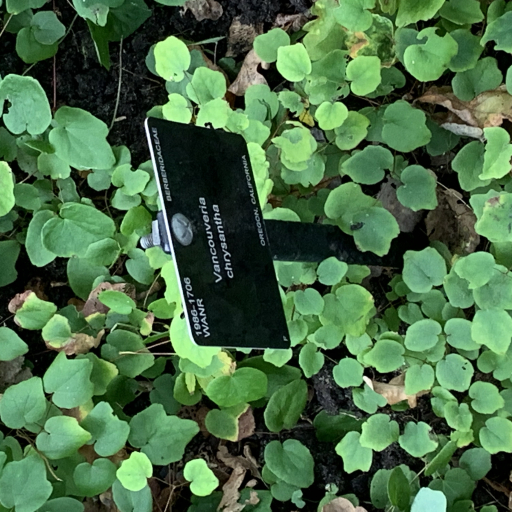
Plant Overview
Often called the Golden Inside-out Flower, this Pacific Northwest native is a rare gem of the Siskiyou Mountains. Its dainty, butter-yellow blossoms appear as if a tiny gust of wind caught them mid-bloom, blowing their petals backward to reveal the inner workings of the flower. It is a resilient, evergreen groundcover that brings a touch of wild mountain magic to shaded garden corners.
🔍 How to Identify
- 🌼 The Blooms: Small, bright yellow flowers with petals and sepals that curve sharply backward (reflexed), making the flower look like a tiny, inside-out umbrella.
- 🍃 The Foliage: Leathery, "duck-foot" shaped leaves that stay green year-round. They often feature a subtle bronze or reddish tint during the colder months.
- 🌱 Growth Habit: A low-growing perennial that spreads slowly via underground stems (rhizomes) to form a delicate, airy carpet of green and gold.
🏡 In Your Garden
- ⛰️ Serpentine Specialist: In the wild, this plant is famous for thriving in mineral-rich serpentine soils that would be toxic to many other species. In a garden setting, this means it is incredibly hardy and adaptable to rocky or poor-quality soil.
- 🌲 Dry Shade Hero: Unlike many woodland plants that require constant moisture, the Golden Inside-out Flower is surprisingly drought-tolerant once established. It is the perfect candidate for those tricky, dry spots under the deep shade of evergreen trees.
⚠️ Safety & Toxicity
- ✅ Safe Status: Vancouveria chrysantha is considered non-toxic to humans and common household pets like cats and dogs.
- ✋ Garden Sensitivity: While it won't hurt you, you might "hurt" it—this plant has a sensitive root system and dislikes being moved. Once you plant it, try to leave it in its forever home to avoid transplant shock.
✨ Fun Fact
The "Inside-out" flower is a close relative of the popular garden Epimedium (Barrenwort). While they look delicate, these plants are survivors of the last ice age, having found refuge in the unique mountain pockets of the Oregon-California border.

Detailed Care Instructions
To grow Vancouveria chrysantha, also known as yellow inside-out flower, follow these steps:
- Planting location: Choose a shady spot in your garden with well-draining soil. Vancouveria chrysantha prefers moist, rich soil.
- Planting time: It is best to plant Vancouveria chrysantha in the spring or fall when the weather is mild.
- Prepare the soil: Dig a hole twice as wide and deep as the plant's root ball. Loosen the soil and add organic compost to improve drainage and fertility.
- Planting the plant: Place the plant in the hole, making sure the top of the root ball is level with the soil surface. Backfill the hole and gently firm the soil around the plant.
- Watering: After planting, water the Vancouveria chrysantha thoroughly to settle the soil around the roots. Keep the soil consistently moist, particularly during dry spells. Avoid overwatering to prevent root rot.
- Mulching: Apply a layer of organic mulch around the plant to help conserve moisture and suppress weeds. Keep the mulch a couple of inches away from the base of the plant to prevent rotting of the stem.
- Maintenance: Vancouveria chrysantha requires minimal maintenance. Keep the soil consistently moist but not waterlogged. Regularly check for pests or diseases and address them promptly. Remove any dead or damaged foliage to maintain the plant's appearance.
- Propagation: Vancouveria chrysantha can be propagated by division in early spring. Carefully dig up the plant, divide the root ball into smaller sections, and replant them. Water well after division.
Following these guidelines should help you grow Vancouveria chrysantha successfully.
To properly water this plant, it is best to begin by checking the moisture level of the surrounding soil. One can do this by sticking their finger about one inch deep into the soil. If the soil feels dry at this depth, it is time to water the plant.
When watering, it is important to pour water slowly and directly onto the soil, avoiding the leaves and stem of the plant. This helps prevent any damage to the plant and ensures the water reaches the roots where it is needed most.
It is recommended that the plant be watered once a week during the growing season and less frequently during the winter months. However, watering frequency may vary depending on the climate and humidity level of the plant's environment.
When in doubt, it is better to underwater than overwater this plant, as excess moisture can lead to root rot and other harmful diseases.
- Begin fertilizing Vancouveria Chrysantha in early spring when new growth emerges.
- Use a balanced fertilizer with equal amounts of nitrogen, phosphorus, and potassium.
- Apply the fertilizer evenly around the base of the plant, making sure to avoid touching the foliage.
- Water the plant thoroughly after fertilizing to encourage the nutrients to penetrate the soil.
- Repeat fertilization every 6-8 weeks throughout the growing season, ending in late summer.
- Do not fertilize Vancouveria Chrysantha in fall or winter, as the plant is entering a dormant period.
Vancouveria chrysantha requires a well-draining and nutrient-rich soil that is slightly acidic. The ideal soil type for this plant is a loamy soil that is rich in organic matter and has a pH between 5.0 and 6.5. It is important to ensure that the soil is not too heavy or compacted, as this can impede the plant's growth and development. Additionally, this plant prefers a soil that is consistently moist but not waterlogged, so be sure to avoid overwatering. Adding a layer of mulch to the soil around the plant can help to retain moisture and protect the roots from temperature fluctuations. Overall, providing Vancouveria chrysantha with a well-balanced soil environment is key to promoting healthy growth and vibrant foliage.
To propagate this plant, you can take stem cuttings or divide the root system in the fall or early spring. For stem cuttings, choose a healthy stem that is at least six inches long and has several leaves. Cut the stem just below a node and remove the lower leaves. Dip the cut end in rooting hormone and plant it in well-draining soil. Keep the soil moist and in indirect light until roots form.
To divide the root system, dig up the plant and carefully separate the rhizomes. Each rhizome should have several healthy roots and shoots. Replant the divisions in a new location or container with well-draining soil and water thoroughly. Keep in a shaded location until new growth appears.








