Plant Overview
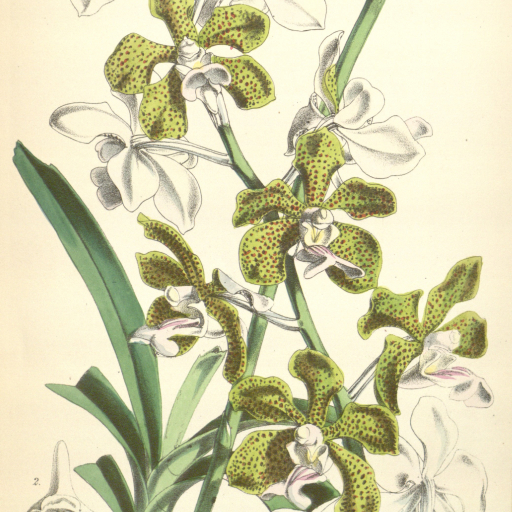
Benson's Vanda is a regal orchid that hails from the rugged teak forests of Myanmar, Thailand, and Laos. Often sought after by dedicated collectors for its sophisticated "checkered" petals, it adds a touch of wild, tropical elegance to any indoor collection. Unlike many flashy modern hybrids, this wild species remains a favorite for its classic, spicy-sweet fragrance that intensifies when the sun hits its blooms.
🔍 How to Identify
- 🌸 The Flowers: Look for yellowish-green or cream-colored petals heavily marked with reddish-brown "tessellations"—a distinct net-like pattern that gives the bloom a textured appearance.
- 👅 The Lip: A striking feature is its three-lobed lip, which typically sports a soft rose-purple or white hue, providing a bright contrast to the darker, patterned petals.
- 🌿 Growth Habit: This is a monopodial orchid, meaning it grows upward from a single stem. It features thick, strap-like leathery leaves that are curved and arranged in two neat rows.
🏡 In Your Garden
- 💨 Aerial Roots: As a true epiphyte, this plant naturally grows on tree trunks with its roots dangling in the wind. It will "suffocate" in standard potting soil; it thrives best in wooden slat baskets or mounted on cork where its thick, silvery roots can wander freely.
- ☀️ Light & Airflow: It craves very bright, filtered light and high humidity. If you find it isn't blooming, it’s likely asking for a bit more sunshine. Proper air circulation is vital to prevent moisture from sitting too long on the leaves, which can lead to crown rot.
⚠️ Safety & Toxicity
- ✅ Status: Generally considered non-toxic and safe.
- 🐾 Details: Like most members of the Vanda family, this plant is not known to be poisonous to cats, dogs, or humans. However, the leaves are quite fibrous and tough, so it’s best kept out of reach of curious pets to avoid any digestive upset or damage to the plant's slow-growing crown.
✨ Fun Fact
- 👃 Scent Schedule: Vanda bensonii is most fragrant during the late morning and early afternoon. It timed its "perfume release" over thousands of years to perfectly match the peak activity hours of its specific pollinators in the Southeast Asian heat.

Detailed Care Instructions
To grow a Vanda bensonii plant, follow these steps:
- Choose the right location: Vanda bensonii plants thrive in bright but indirect light. Place them near a north or east-facing window where they can receive plenty of indirect sunlight.
- Temperature and humidity: These plants prefer warm temperatures, ideally around 70-85°F (21-29°C) during the day and cooler nights around 60-70°F (15-21°C). They also need high humidity levels, ideally around 60-70%. You can increase humidity by using a humidifier, placing a tray of water near the plant, or misting the aerial roots.
- Watering: Vanda bensonii plants have aerial roots that absorb moisture from the air. It's best to water them in the morning, giving them a thorough soak until the roots turn green. Allow the roots to dry out before watering again, as they don't like being constantly wet.
- Potting medium: These plants are typically grown in wooden baskets or slatted pots filled with a well-draining orchid mix. The mix can consist of coarse fir bark, sphagnum moss, perlite, and charcoal to provide good drainage and aeration.
- Fertilizing: Feed your Vanda bensonii plant with a balanced orchid fertilizer diluted to half strength. Apply the fertilizer every 2-3 weeks during the growing season (spring and summer), and reduce or stop fertilizing during the winter months.
- Air circulation: Good air movement is important for Vanda bensonii plants to prevent rot and promote healthy growth. Make sure there is adequate airflow around the plant by using a fan or opening windows.
- Repotting: Vanda bensonii plants don't require frequent repotting. However, if the potting medium starts to break down or the plant becomes too large for its container, you can repot it in fresh orchid mix during the spring.
- Pruning: Remove any dead or yellowing leaves or roots to promote the plant's health and appearance.
- Pests and diseases: Keep an eye out for common orchid pests like aphids, mealybugs, and scale. Treat them promptly using an appropriate insecticide or by manually removing them. Additionally, be vigilant for signs of root rot, which can occur if the plant remains overly wet.
By following these care instructions, you should be able to successfully grow your Vanda bensonii plant.
To water this specific orchid species, it is important to use high-quality water with low mineral content, such as rainwater or reverse osmosis water. This plant should be watered frequently, often daily during warm months and every other day during cooler months. When watering, it is crucial to avoid getting water on the foliage or crown of the plant as this can result in rot or fungal infections. Soaking the roots for a short period of time, between 10 and 20 minutes, is recommended. The plant should be allowed to dry out slightly between waterings, but should never become completely dry. Proper drainage is also crucial, as waterlogged roots can lead to root rot.
To fertilize this plant, use a balanced fertilizer with equal amounts of nitrogen, phosphorus, and potassium. Apply the fertilizer at a rate of 1/4 strength every two weeks during the growing season. Avoid fertilizing during the plant's dormant period. Additionally, flush the pot with clean water every few weeks to prevent salt buildup from the fertilizer.
The ideal soil mix for the Vanda Bensonii plant consists of a blend of various organic materials such as coconut husk chips, tree fern fibers, and charcoal. The mix should have good drainage and air circulation, allowing the roots to breathe and preventing the soil from becoming waterlogged. Additionally, the soil should be slightly acidic with a pH level between 5.5 and 6.5. It is important to note that the plant is an epiphyte and should not be grown in soil directly but instead anchored on a mount or in a basket with the soil mix. This provides the necessary support for the plant to grow and allows it to absorb nutrients and moisture from the environment.
Propagation of this plant can be done through the division of its rhizomes or by stem cuttings. In the case of rhizome division, it is necessary to carefully separate the rhizomes from the main plant and replant them in individual pots. This should be done during the active growth phase of the plant to ensure the best chance of success. Propagation by stem cuttings involves taking a healthy stem and cutting it into sections. These sections are then planted in a well-draining soil mixture and kept in a warm, humid environment until roots develop. It is important to keep the soil moist during this process to prevent the cuttings from drying out. Both methods of propagation require patience and care, but can lead to a new generation of beautiful and healthy plants.








