Plant Overview
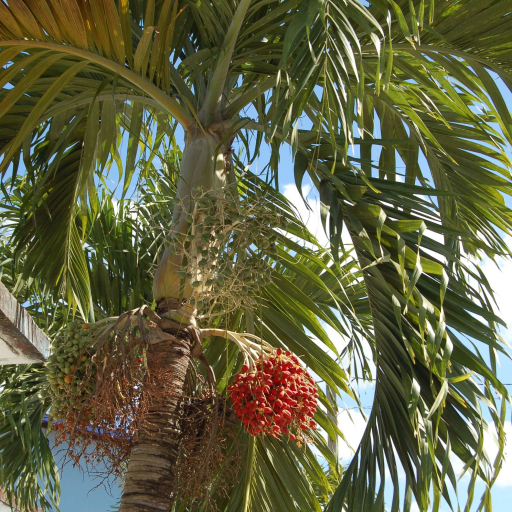
The Veitchia merrillii, better known as the Christmas Palm, is the Philippines' gift to tropical landscaping. Often called the "Manila Palm," it earned its festive nickname because its large clusters of berries ripen to a brilliant scarlet red just in time for the holiday season. It is the ultimate "look-alike" for those who crave the prestige of a Royal Palm but only have the space of a small suburban garden.
🔍 How to Identify
- 🌿 The Fronds: Feathery, arching leaves that grow up to 5 feet long. They have a "pinnate" (feather-like) structure and a rich, deep green color that stays vibrant year-round.
- 🪵 The Trunk: Slender, smooth, and light gray. It features prominent ring-like scars where old leaves have fallen off, giving it a neat, architectural appearance.
- 🍒 The Berries: Large, heavy clusters of 1-inch oval fruits grow just below the crown. They transition from a lime green to a vivid, glossy red as they mature.
🏡 In Your Garden
- 🧹 Self-Cleaning Nature: One of the biggest perks for hobbyists is that this palm is "self-cleaning." When a frond dies, it drops off cleanly on its own, meaning you won’t need a ladder and shears to keep the tree looking manicured.
- ☀️ Sun & Sensitivity: This palm is a sun-seeker and thrives in bright, direct light. However, it is very sensitive to the cold. If you live in a region where temperatures dip toward freezing, it must be kept in a large container and moved indoors, as frost can be fatal.
- 🏺 Container Friendly: Because it is a relatively slow grower with a compact root system, it is one of the few palms that can live happily in a large pot on a patio or in a sun-drenched atrium for many years.
⚠️ Safety & Toxicity
- ✅ Pet Status: Good news for pet owners! The Christmas Palm is generally considered non-toxic to cats and dogs, making it a much safer landscape choice than the look-alike Sago Palm (which is highly toxic).
- 🚫 Berry Caution: While not considered poisonous, the red berries contain small amounts of oxalate crystals. If chewed by curious children or pets, they can cause a stinging sensation in the mouth or a mild stomach ache. It’s best to admire the "ornaments" rather than eat them.
✨ Fun Fact
In its native Philippines, the seeds of the Christmas Palm were historically used as a substitute for the "betel nut" for chewing, though it is far more popular today as a global symbol of tropical luxury!

Detailed Care Instructions
| Humidity | Dry |
| Lighting | Full Sun |
| Difficulty | Medium |
| Temperature | 18°C - 30°C |
| Hardiness Zones | 10 - 12 |
Veitchia Merrillii, also known as the Christmas palm, is a tropical plant that thrives in warm, humid climates. Here are some tips on how to grow this plant successfully:
- Sunlight: Veitchia Merrillii prefers bright, indirect sunlight. Place your plant in a location where it will receive at least 6 hours of sunlight a day.
- Soil: Use a well-draining, nutrient-rich soil mix for your Christmas palm. Make sure the soil is kept consistently moist, but not waterlogged.
- Watering: Water your Veitchia Merrillii regularly, making sure to keep the soil consistently moist but not soggy. Allow the top inch of soil to dry out between waterings.
- Temperature and humidity: Christmas palms thrive in warm, humid environments. Keep your plant in a location where the temperature is consistently above 60°F (15°C) and provide some humidity by misting the leaves occasionally.
- Fertilizing: Feed your Veitchia Merrillii with a balanced, slow-release fertilizer during the growing season (spring and summer). Follow the instructions on the fertilizer label for best results.
- Pruning: Trim off any dead or yellowing fronds to promote new growth and keep your plant looking tidy.
- Repotting: As your Christmas palm grows, you may need to repot it into a larger container. Repotting is best done in the spring.
By following these tips, you can help your Veitchia Merrillii plant thrive and grow successfully.
To properly water the Veitchia Merrillii plant, you will need to consider several factors. First, it is important to check the soil moisture levels before watering. Insert your finger into the soil up to about an inch deep to ensure it is dry before adding water.
When watering, ensure that water is evenly distributed around the base of the plant. Avoid wetting the leaves as this can lead to fungal diseases. Use room temperature water to avoid shocking the roots.
During warmer months, the plant may require more frequent watering, while in the cooler months, you may need to water less often. It is essential to adjust the watering schedule based on the plant's specific needs and the environmental conditions.
Additionally, it is recommended to use a well-draining potting mix and a container with drainage holes to prevent waterlogging the roots. Proper drainage is crucial to prevent root rot and other moisture-related issues.
Overall, providing consistent, appropriate watering is essential for the health and vitality of the Veitchia Merrillii plant. Monitor the plant regularly, and adjust the watering regimen as needed to ensure it thrives in its environment.
To fertilize the plant, use a balanced liquid fertilizer and dilute it to half-strength. Apply the fertilizer once a month during the growing season, which is typically from spring to early fall. Avoid over-fertilizing as it can harm the plant. Water the plant well after applying the fertilizer to help it absorb the nutrients effectively.
Veitchia Merrillii plants prefer a well-draining soil mixture that is rich in organic matter. A suitable soil mix for this plant should consist of a combination of peat moss, perlite, and sand. The peat moss helps to retain moisture, while the perlite and sand ensure good drainage to prevent root rot. Additionally, adding some compost or fertilizer to the soil mix can provide the necessary nutrients for healthy growth. It is also important to ensure that the soil pH is slightly acidic to neutral, as Veitchia Merrillii plants thrive in slightly acidic conditions.
To propagate the Veitchia Merrillii plant, you can start by collecting seeds from mature fruits. Remove the outer fruit covering and clean the seeds before planting them in a well-draining potting mix. Keep the soil consistently moist and place the pot in a warm and humid environment, such as a greenhouse or a closed plastic bag, to encourage germination.
Another method of propagation is by dividing the plant. Carefully remove the plant from its pot and separate the individual offsets or suckers from the main plant using a sharp, sterile knife. Plant the offsets in their own pots with fresh potting soil and water thoroughly.
You can also propagate the Veitchia Merrillii plant through stem cuttings. Take a cutting from a healthy, mature plant, ensuring it has at least a few leaves. Remove any lower leaves and let the cutting callous over for a few days before planting it in a well-draining soil mix. Keep the cutting in a warm and bright location and mist regularly to maintain humidity.
Whichever method you choose, be patient and consistent with care to ensure successful propagation of the Veitchia Merrillii plant.








