Plant Overview
Often called the Dark-flowered False Hellebore, Veratrum maackii is the brooding aristocrat of the woodland world. Native to the damp, cool forests of East Asia, this plant is beloved by collectors for its rare, nearly-black blossoms that look like they belong in a Victorian "gothic" garden. While it possesses a structural elegance, it carries a dark secret—every part of this plant is highly potent and must be handled with respect.
🔍 How to Identify
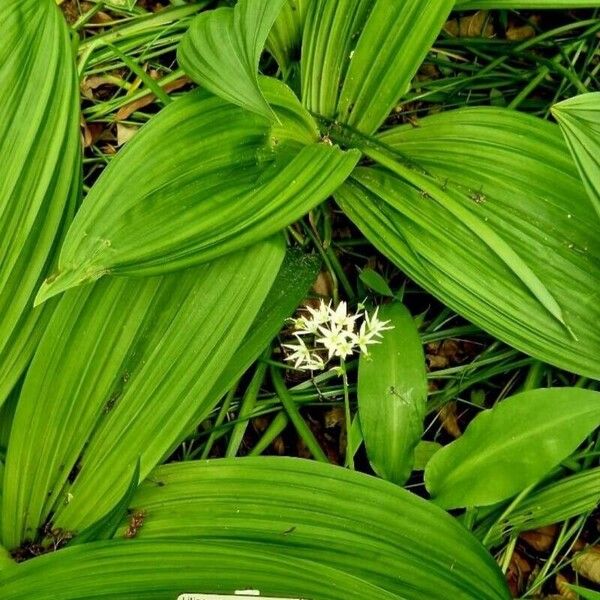
- 🌿 Pleated Foliage: The leaves are large, bright green, and deeply ribbed or "pleated" longitudinally, giving them a distinct accordion-like texture.
- 🖤 Midnight Blooms: The flowers are star-shaped and range from deep maroon to a purple so dark it appears black, arranged in airy, branching clusters (panicles).
- 📏 Architectural Stature: It grows on a sturdy, upright central stalk that can reach up to 3 feet in height, standing tall above lower-growing forest floor plants.
🏡 In Your Garden
- 💧 Moisture Seekers: This plant is not a fan of the "dry spell." It thrives in consistently moist, humus-rich soil, mimicking the damp meadows and forest edges of its Siberian and Chinese origins.
- 🐌 Patience is Key: It is a slow-growing perennial that can take several years to reach flowering maturity. Once established, it hates being moved due to its sensitive root system, so pick its "forever home" carefully.
- ☁️ Cool Shadows: It prefers dappled sunlight or partial shade. In harsh, direct afternoon sun, those beautiful pleated leaves are prone to scorching.
⚠️ Safety & Toxicity
- 🚫 Status: HIGHLY TOXIC. This plant contains a cocktail of potent alkaloids (including veratridine) that can be fatal if ingested.
- 🐾 Pet & Child Alert: All parts—roots, leaves, and seeds—are dangerous. Ingestion can cause a rapid drop in blood pressure, slowing of the heart rate, and severe gastrointestinal distress.
- 🧤 Safe Handling: It is wise to wear gloves when pruning or dividing the plant, as the sap can cause skin irritation or rashes in sensitive individuals.
✨ Fun Fact
The genus name Veratrum is derived from the Latin words vere ("truly") and atrum ("black"). This refers to the dark, soot-colored rhizomes (roots) found in many species within this family, which were historically used in very small, controlled doses in ancient medicine—though usually with high risk!

Detailed Care Instructions

Place in a window with dappled sun or a spot in the middle of a room. Or directly in a window facing west or east.

Some plants require more regular watering than others, which should be done every few days. It's critical to maintain the soil moist all of the time. The water requirements of the same plant placed in pots with varying sizes will differ. Because the water in the smaller pot evaporates faster than the water in the larger pot, it will require more watering. Regardless of pot size, the surface should constantly be maintained moist.







