Plant Overview
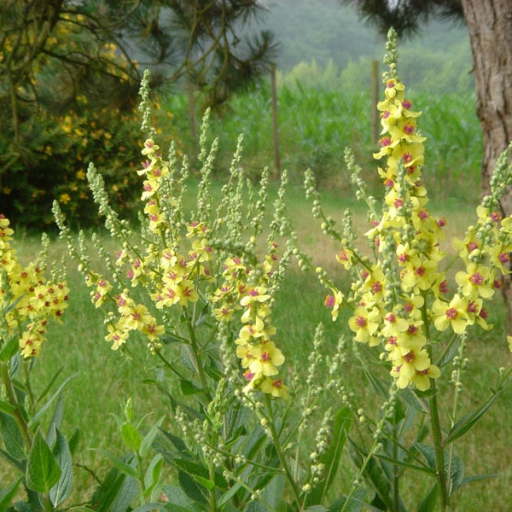
Often called the Nettle-leaved Mullein, this architectural beauty is a favorite for those seeking to add vertical drama to their borders without the fuss. Unlike its wild cousins that can look a bit "weedy," Verbascum chaixii stays tidy, offering elegant spires of soft yellow or crisp white flowers. It is a staple of the classic English cottage garden, prized for its ability to bridge the gap between low-growing perennials and tall shrubs.
🔍 How to Identify
- 🌿 Basal Rosette: Before the flowers appear, look for a low-growing cluster of large, grayish-green leaves with "toothed" or wavy edges that resemble nettle leaves (hence the name).
- 🗼 Flower Spires: It sends up sturdy, upright stems that can reach 3 feet tall, covered in small, five-petaled flowers that bloom from the bottom up.
- 🟣 Purple Hearts: A key identifying feature is the center of each flower, which features fuzzy, violet-purple filaments (stamens) that look like tiny tufts of wool.
🏡 In Your Garden
- ☀️ Sun Seeker: This plant thrives in "lean" conditions. It actually prefers poor, rocky, or gravelly soil; if the soil is too rich, the tall flower spikes may become floppy and require staking.
- 💧 Drainage is King: While it is incredibly drought-tolerant once established, it has a "weak spot"—wet feet. In winter, soggy soil will quickly rot the crown, so ensure it’s planted in a well-draining spot or a raised bed.
- 🐝 Pollinator Magnet: It is a high-value plant for bees and hoverflies, who are particularly attracted to the abundant pollen held within those fuzzy purple stamens.
⚠️ Safety & Toxicity
- ✅ Generally Safe: Verbascum chaixii is not considered highly toxic to humans or common household pets like cats and dogs.
- ☁️ Skin Irritant: The leaves are covered in tiny, fine hairs. For some gardeners, brushing against these can cause mild skin irritation or "contact dermatitis." It’s a good idea to wear gloves when pruning.
- 🐟 A Note on Seeds: Like many Mulleins, the seeds contain small amounts of saponins. While not harmful to humans in passing, historically, large quantities of crushed seeds were used to stun fish in still water.
✨ Fun Fact
In ancient times, the dried stalks of Mullein plants were dipped in tallow (animal fat) and used as torches. This earned the genus the nickname "Candlewick Plant," as the fuzzy leaves were also once used to make lamp wicks!

Detailed Care Instructions
To grow Verbascum chaixii, also known as nettle-leaved mullein, follow these steps:
- Planting: Choose a sunny location in your garden with well-draining soil. The plant prefers slightly alkaline to neutral soil pH (around 7.0) but can tolerate mild acidity.
- Soil preparation: Prepare the soil by loosening it and removing any weeds or rocks. You can amend the soil with compost or well-rotted manure to improve its fertility and drainage.
- Sowing seeds: Start by sowing seeds indoors in late winter or early spring, about 8-10 weeks before the last frost date in your area. Sow the seeds in a seed tray or pots filled with seed-starting mix. The seeds need light to germinate, so gently press them onto the surface of the soil without covering them.
- Germination: Ideally, maintain a constant temperature of around 70°F (21°C). The seeds should germinate within 2-3 weeks. Once they have two sets of true leaves, you can transplant them outdoors.
- Transplantation: When the risk of frost has passed, and the seedlings have grown to a suitable size (around 3-4 inches tall), gently remove them from their containers. Dig holes in your prepared garden bed, spaced about 1-2 feet apart, and place the seedlings into the holes. Backfill the holes with soil, firming it gently around the base of the seedlings.
- Watering: Water the newly transplanted seedlings well and provide regular watering. Verbascum chaixii prefers soil that is consistently moist but not waterlogged.
- Mulching and weeding: Apply a layer of organic mulch around the plants to help retain moisture and suppress weed growth. Keep the area weed-free, as competition from weeds can hinder the plant's growth.
- Maintenance: Once established, Verbascum chaixii requires minimal maintenance. However, you can pinch back any leggy growth or spent flowers to encourage bushier growth and further blooming.
- Harvesting seeds: In late summer or early fall, when the flowers have dried out, you can collect the seeds from the seed pods. Allow the seed pods to fully mature and dry on the plant before harvesting. Collect the seeds and store them in a cool, dry place for next year's planting.
- Overwintering: Verbascum chaixii is a semi-evergreen perennial plant that is hardy in USDA zones 5-8. In colder zones, it will benefit from a layer of mulch or straw around the base of the plant to protect it during winter.
By following these steps, you should be able to successfully grow Verbascum chaixii in your garden and enjoy its attractive spikes of flowers.

Place in a bright room that is sun drenched almost all day. Or directly in a south-facing window.

Verbascum Chaixii is a type of plant that requires proper watering for its healthy growth. To water this plant, you should first check the soil moisture level to ensure that it is not too dry or too wet. To do this, insert your finger about an inch deep into the soil near the plant's root ball. If the soil feels dry, it is time to water the plant.
When watering Verbascum Chaixii, use a watering can or a hose with a gentle spray nozzle to avoid disturbing the soil or damaging the plant. Pour the water directly onto the soil, aiming the stream towards the base of the plant. Avoid getting water on the leaves, as this could cause damage or encourage the growth of fungi or bacteria.
When watering Verbascum Chaixii, it is important not to overwater the plant. Allow the soil to dry out slightly between waterings to prevent root rot or other water-related issues. The frequency of watering will depend on a variety of factors, including the temperature, humidity, and sunlight in your garden. In general, this plant likes moist but well-draining soil and may require more frequent watering during hot or dry weather.
In summary, watering Verbascum Chaixii requires checking the soil moisture, using a gentle watering device and avoiding getting water on the leaves, being careful not to overwater, and adjusting watering frequency based on environmental factors.
- Choose a nutrient-rich soil that drains well.
- In early spring, before the plant starts to flower, apply a balanced fertilizer that contains equal parts nitrogen, phosphorus, and potassium.
- Water the plant thoroughly after fertilizing to ensure that the nutrients are absorbed.
- Repeat fertilization every 4-6 weeks during the growing season, using a balanced fertilizer or one that is higher in potassium to encourage flower production.
- Avoid over-fertilizing, which can lead to excessive growth and decreased flower production.
- Discontinue fertilization in late summer to allow the plant to prepare for winter dormancy.
Verbascum Chaixii prefers a well-draining soil that is not too rich in nutrients, as it is adapted to grow in rocky and dry habitats. A sandy or loamy soil with a neutral to slightly acidic pH is optimal. It is important to avoid heavy clay soils that retain too much water and can cause root rot. Adding some perlite or coarse sand to the soil can increase the drainage and prevent waterlogging. The plant also benefits from a layer of organic mulch around the base to suppress weed growth and retain moisture. Regular watering is necessary to establish the plant, but it can tolerate some drought once established.
Verbascum Chaixii is a beautiful flowering plant that belongs to the family Scrophulariaceae. It is native to Europe and Western Asia and is commonly grown in gardens for its striking flowers.
Propagation of Verbascum Chaixii can be done through division, cuttings or seeds. Division is best done in the spring or autumn when the plant is not in bloom. Using a sharp knife or spade, divide the plant into smaller sections and replant them in well-draining soil.
Cuttings can be taken in early summer, using a sharp knife to cut a stem just below a node. Remove the leaves from the lower two-thirds of the cutting and dip in rooting hormone before planting in a pot of well-draining soil. Keep the soil moist and in a warm, bright location until roots have formed and the new plant is ready for planting in the garden.
Verbascum Chaixii can also be propagated from seed. The best time to sow the seeds is in early spring, either in a pot or directly in the ground. Seeds should be scattered on top of well-draining soil and lightly covered. Keep the soil moist and in a bright location until the seeds have germinated and the new plants are established.
Propagation of Verbascum Chaixii can be rewarding and easy if you follow these methods and care for your new plants properly.








