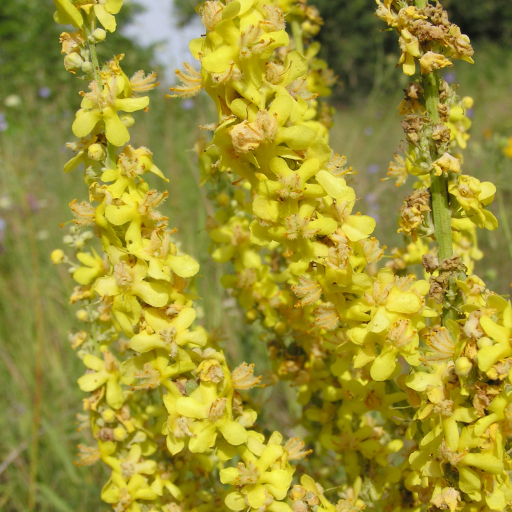
Plant Overview
Known affectionately as the White Mullein, Verbascum lychnitis is a statuesque biennial that commands attention with its ghostly, silver-green foliage and tall, branching spires of snowy flowers. While its cousin, the Common Mullein, is a single unbranched spike, the White Mullein looks like a multi-armed candelabra lit up with tiny floral flames. It has been a companion to humans for centuries, often found guarding the edges of dry meadows and ancient ruins.
🔍 How to Identify
- ❄️ The Flowers: Unlike many yellow mulleins, this species features small, creamy-white flowers (occasionally pale yellow) with striking orange-tipped stamens covered in white woolly hairs.
- 🌿 The Foliage: The leaves are green on top but covered in a fine, "hoary" cobweb of white hairs underneath. They form a flat rosette against the ground in their first year before shooting upward in their second.
- 🔱 The Structure: Look for a distinctive branched flower head (panicle). The stem is noticeably angled or ridged, rather than perfectly round.
🏡 In Your Garden
- ☀️ The Sun Seeker: This plant is a specialist in "tough love." It thrives in poor, stony, or calcareous soil where other plants might struggle. It requires full sun and excellent drainage; if its "feet" stay wet during winter, the root will likely rot.
- 🐝 Pollinator Hub: It is a high-value plant for biodiversity. It acts as a magnet for specialized bees and the Mullein Moth caterpillar, whose colorful patterns are a delight for nature watchers.
- 🌱 Self-Sowing Nature: Because it is a biennial, it dies after flowering. However, it produces thousands of tiny seeds. If you don't want a forest of mulleins next year, be sure to cut the flower spikes before the seed pods dry out.
⚠️ Safety & Toxicity
- 🛡️ Low Risk: Verbascum lychnitis is generally considered non-toxic to humans and common household pets.
- 🌵 Mechanical Irritant: The plant is covered in tiny, star-shaped hairs (trichomes). These can cause mild skin irritation or "itchy skin" for sensitive individuals or curious pets who rub against them.
- 🐟 Aquatic Warning: Historically, mullein seeds were used to stun fish because they contain saponins. While not dangerous to touch, avoid letting large amounts of seeds enter small garden ponds with fish.
✨ Fun Fact
The species name lychnitis comes from the Greek word lychnos, meaning "lamp." In ancient times, the dried, felt-like leaves and sturdy stems were dipped in tallow or suet to create makeshift torches and candle wicks!

Detailed Care Instructions
| Humidity | Normal |
| Difficulty | Medium |
| Hardiness Zones | 5 - 9 |
To grow Verbascum lychnitis, also known as White Mullein, you can follow these steps:
- Choose a sunny location: Verbascum lychnitis thrives in full sun, so select a spot that receives at least six hours of direct sunlight each day. The soil should be well-draining.
- Prepare the soil: Loosen the soil in the planting area using a garden fork or tiller. Remove any weeds, rocks, or debris, and ensure the soil is loose and fertile. If the soil is heavy clay or lacks nutrients, you can improve it by adding organic matter like compost.
- Start seeds indoors (optional): Verbascum lychnitis can be directly sown in the garden, but if you prefer, you can start seeds indoors. Plant the seeds in pots or trays filled with seed-starting mix, and keep them moist and warm until they germinate. This process usually takes around 7-10 days.
- Plant outdoors (or transplant seedlings): Once the soil has warmed up and there's no risk of frost, you can plant the Verbascum lychnitis seeds directly in the garden. Make sure to space them about 12-18 inches apart. If you started seeds indoors, you can transplant the seedlings outdoors once they are 2-3 inches tall and after the last frost date.
- Water regularly: Verbascum lychnitis prefers moderate watering. Keep the soil consistently moist but not overly saturated. Water deeply once a week, allowing the soil to dry out between waterings.
- Mulch and weed control: Apply a layer of organic mulch around the plants to help retain moisture, suppress weed growth, and maintain a more even soil temperature. Regularly remove any weeds that compete with the plant for nutrients and water.
- Fertilize (optional): Verbascum lychnitis generally does not require much fertilization. However, if your soil is lacking in nutrients, you can apply a balanced, slow-release fertilizer in early spring as the plants start to actively grow.
- Provide support (optional): Verbascum lychnitis may benefit from staking as it grows taller to prevent it from bending or falling over. Insert stakes around the plants and gently tie the stems to the stakes using twine or plant ties.
- Monitor for pests and diseases: Keep an eye out for common garden pests like aphids or slugs. If any signs of infestation or disease occur, promptly address the issue using organic pest control methods or consult with a local gardening expert.
- Deadhead spent flowers: To encourage continuous blooming, it's recommended to deadhead or remove the spent flowers regularly. This will redirect the plant's energy into producing new flowers.
With proper care and maintenance, Verbascum lychnitis should grow vigorously and reward you with its tall, upright spikes of white flowers.

Place in a bright room that is sun drenched almost all day. Or directly in a south-facing window.

Verbascum Lychnitis is a plant that requires regular watering to promote healthy growth. When watering this plant, it is important to avoid getting water on the leaves or flowers as they are sensitive to moisture. To do this, it is recommended to water at the base of the plant, using a watering can or hose with a gentle flow.
The frequency of watering will depend on the climate and soil conditions, but as a general rule, the plant needs to be watered deeply once a week, rather than light watering more frequently. This will ensure that the water penetrates the soil deeply, encouraging the plant's roots to grow deeper and making it more drought-resistant.
It is also important to avoid overwatering the plant, as this can cause root rot and other diseases. To prevent this, it is recommended to check the soil moisture level before watering and only water when the top inch or two of soil feels dry to the touch.
In addition to watering, Verbascum Lychnitis also benefits from regular fertilization to promote healthy growth and beautiful blooms. A balanced fertilizer can be applied every four to six weeks during the growing season.
- Choose a well-drained planting location for your Verbascum Lychnitis plant.
- Prepare the soil by loosening it with a garden fork or tiller.
- Incorporate organic matter, such as compost or well-rotted manure, into the soil to improve fertility.
- Prior to planting, apply a balanced slow-release fertilizer according to package instructions. This will ensure a steady supply of nutrients for your plant.
- After planting, water the Verbascum Lychnitis plant thoroughly to help the fertilizer penetrate the soil.
- Throughout the growing season, consider using a liquid fertilizer, such as a balanced water-soluble fertilizer, once every 2-3 weeks. Dilute the fertilizer according to package instructions and apply it directly to the soil around the plant.
- Alternatively, you can use an organic liquid fertilizer, such as fish emulsion or seaweed extract, following the recommended application rates.
- Make sure to water the plant after fertilizing to prevent potential root burn.
- Monitor the plant's growth and adjust the fertilization schedule as needed. Avoid over-fertilizing, as it can lead to excessive green growth at the expense of flowering.
- In late fall or early spring, apply a slow-release granular fertilizer around the base of the plant to provide nutrients for the upcoming growing season. Follow the manufacturer's instructions for proper application rates.
- Regularly remove any weeds competing with your Verbascum Lychnitis plant for nutrients and water to maximize its growth and health.
- Additionally, consider mulching around the base of the plant with organic materials, such as straw or wood chips, to conserve moisture and regulate soil temperature, which can indirectly support healthy growth.
Verbascum Lychnitis plant is a flowering plant that requires well-draining soil with excellent moisture retention capacity. The soil should have a pH range between 6.5 to 7.5 and should be rich in organic matter with a balanced nutrient profile. The plant prefers slightly sandy to loamy soil types that are free from excessive clay and rocks. It is recommended to avoid heavy soils as they tend to retain moisture for a long time and can cause root rot issues. The soil should also be loose enough to allow for proper root development and air circulation. In terms of fertilization, the plant responds well to a balanced organic fertilizer applied during the growing season. Overall, the recommended soil for the Verbascum Lychnitis plant is loamy, well-draining, and rich in nutrients.
To propagate this plant, you will need to collect seeds and prepare them for planting. Once the seeds are planted, you will need to provide the right amount of water and sunlight to help them grow. You can also propagate the plant through root cuttings or stem cuttings. For root cuttings, you will need to select healthy roots from the parent plant and cut them into sections. For stem cuttings, you will need to select healthy stem segments and stick them into soil or water until they begin to form roots. With proper care and attention, your propagated plants should grow into healthy specimens that will thrive in their new environment.








